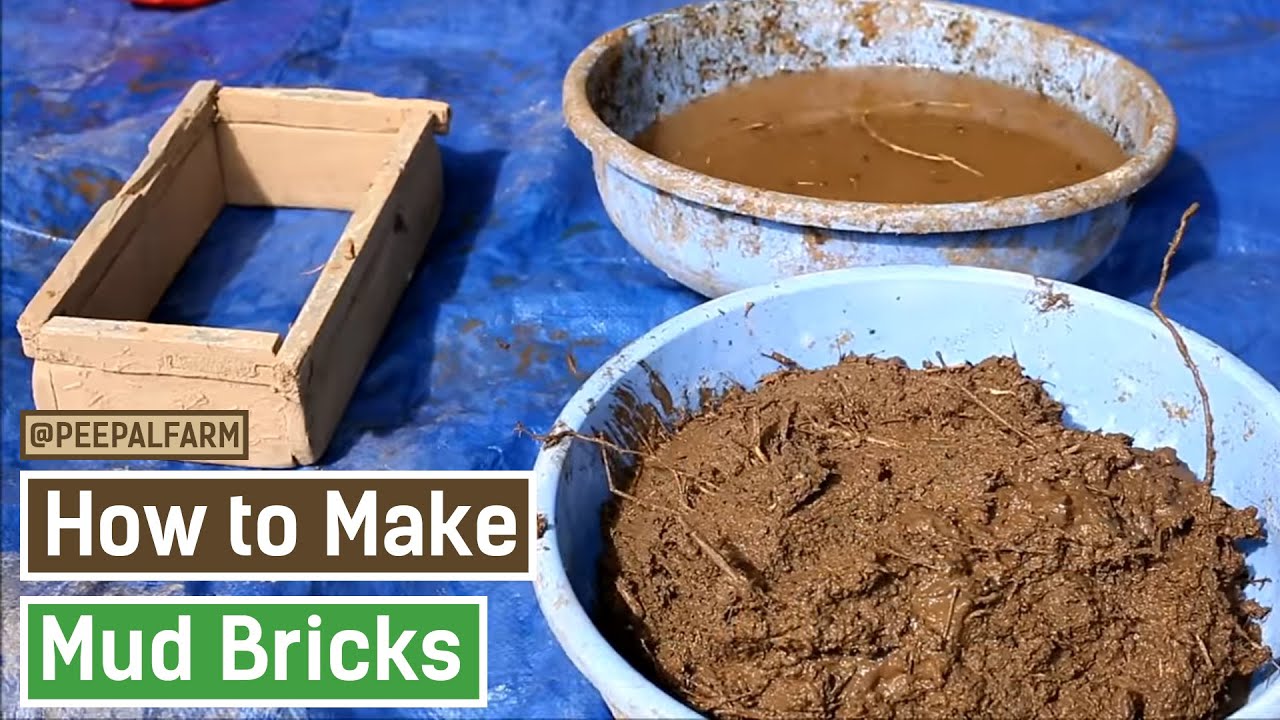
Actually baked bricks were used in Egypt, but mud bricks were more common.
Even if the straw content was “only 0.6 per cent” when you are responsible for making bricks all day long (no 8 hour work day) to make your tally of bricks having to gleam the fields every day for the straw you needed to use was a greatly increased burden on the slaves. An article I read indicated the construction of a stone pyramid required the use of millions of mud bricks.
Edit to add:
The straw is not optional. Without straw mud bricks crack when dried and have reduced strength.
@aarceng
I think I missed it in this thread so to help me I’ll ask here
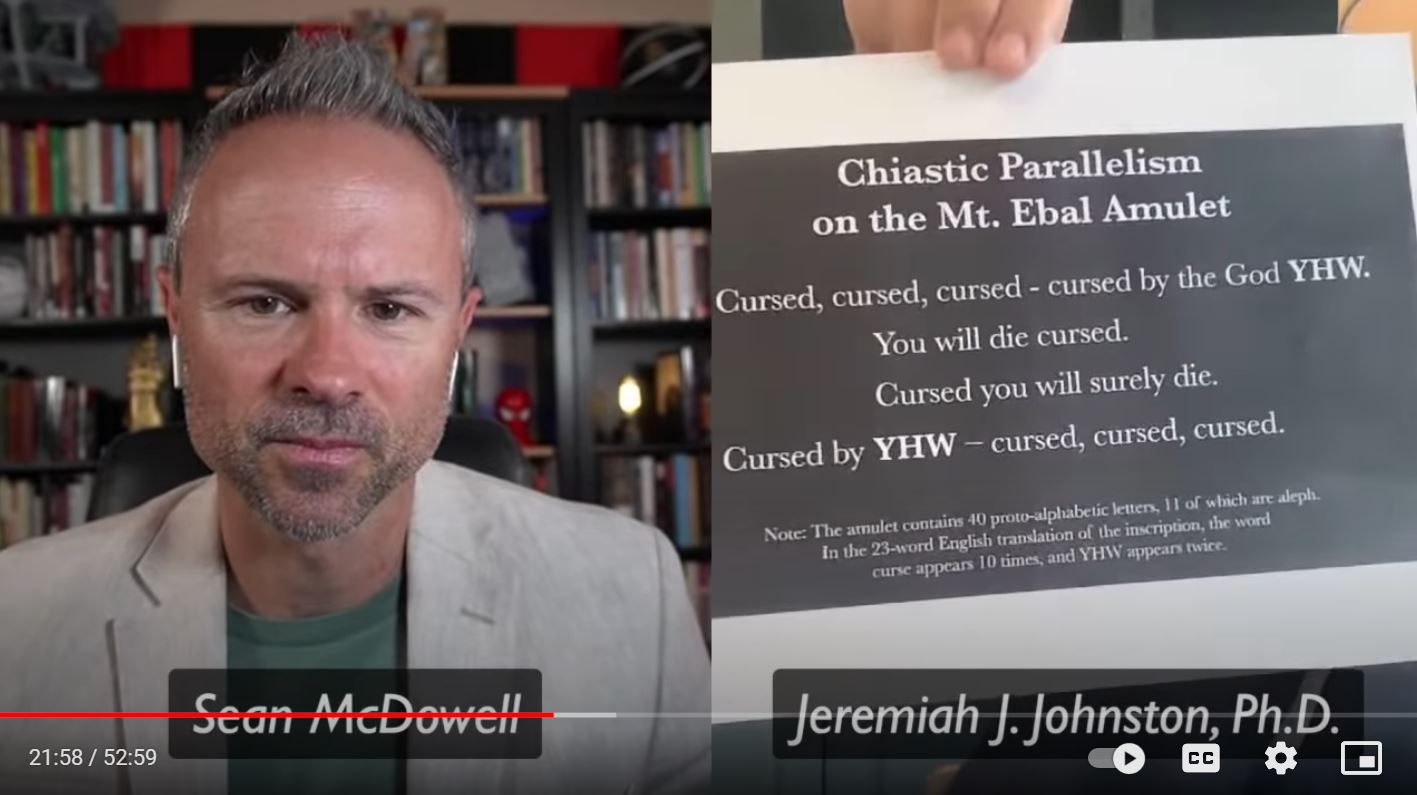
I looked up ‘curse tablet” at Mt Ebal’ and google map claim location Israel, I look in thread and hadn’t found location of Mt Ebal, is it in Israel or Egypt or where? Maybe video shown too. I watch a little bit of video I need to watch all of it, which I will more slower. I’ll catch up ok, to what your talking about cursed tablet. But for now where is MT Ebal., Israel, or Egypt or?
I do understand that Moses went to volcano in Iran at Taftan Volcano that is Mount Sinai, but I hadn’t heard of a curse tablet, I only known that Hebrews ended up with 613 laws
I wonder what the Yadavas thinks of this cursed tablet that is shown in this video., what are your thoughts about the Yadavas who traveled to Yisrael?
Joshua 8:30 Then Joshua built on Mount Ebal an altar to the Lord, the God of Israel, 31 as Moses the servant of the Lord had commanded the Israelites. He built it according to what is written in the Book of the Law of Moses—an altar of uncut stones, on which no iron tool had been used.
Mount Ebal is one of the two mountains in the immediate vicinity of the city of Nablus in the West Bank, and forms the northern side of the valley in which Nablus is situated, the southern side being formed by Mount Gerizim
Monumental buildings, such as temples, were built with stone but mud bricks were a common material for other buildings, including forts. Mud bricks typically included significant straw which acted as reinforcement against cracking and also made the bricks lighter. Thus when Pharaoh said the slaves would no longer be supplied with straw but kept their quota it had a double effect; more time was required to scavenge straw for the bricks and with less straw the bricks were heavier.
I doubt there were any. The Indus valley and Egypt are a long way apart. Abraham left Ur, in Mesopotamia, and his descendants ended up in Egypt so it’s not impossible that some people migrated from the Indus valley to Egypt, but I don’t know of any evidence for it.
It did refer to " the God YHW. ". For the people of that time that WAS God as He is. With progressive revelation since then, and particularly the incarnation of God in Jesus, our understanding today is different. But God himself does not change.
Why would you expect something written ~2000BC to refer to Jesus?
Klax
(The only thing that matters is faith expressed in love.)
70
@Bill_II
I watch this video showing straw when making mud bricks, let me know what you think when I’m learning about how much straw is needed and in relation to bible
Mud bricks are made today the same way as they were made in Egypt. If you want to learn about mud bricks in Egypt I suggest you consult an actual paper on the subject, such as
And according to this paper for burnt brick the optimum straw content is just 1 percent which isn’t that different from the 0.6 percent for sun dried brick. It is possible that the Egyptians favored sun dried brick for the simple reason that there was abundant sun light but fuel to fire bricks was scarce.
This does not explain why mud bricks were needed to make stone pyramids. Further even if this was the case, on comparative evaluation Indus valley is much much better fit than egypt
Looked through my browser history and can’t find the web page where I read that. It was just something I noticed in passing. Sorry.
Where do you think the workers lived and ate? Where was the food to feed them stored? Saw a National Geographic (or something similar) on the pyramids and it mentioned archeologists have unearthed the living quarters built near one of the pyramids. The workers certainly did not live in stone buildings. And if you accept Exodus the Hebrews actually didn’t build pyramids.
And mud bricks were used to build storage buildings. Which is mentioned in the paper I linked.
I read somewhere that although the pyramids themselves were made of stone, mud bricks were used to construct the construction ramps. Probably a composite construction with some parts brick and some parts earth infill. Besides that the workers huts and workshops would have been made of mud brick. So millions of mud bricks could have been used in the construction of a 100% stone pyramid.
It’s not a case that the Egyptians would have used stone for ALL of their buildings OR mud bricks for ALL of their buildings.
hmmm,whilst I don’t necessarily subscribe to what the content of said articles is or whether or not I agree with its conclusions, I seriously question your statement. For a “non professional archeological journal” as you claim, it sure has a lot of well educated university academics involved in its administrative, editorial, and production staff. Are you saying the individuals listed below are all false names part of an elaborate fabrication that publishes regular articles of tripe and that none of these academics are appropriately qualified to write about these things?
the first member of the editorial board (Dr Navras Aafreedi) in the list below is more than qualified to talk on such topics (I refer you to his profile…https://sites.google.com/site/aafreedi/home ). Dr Aafreedi is an Jewish Historian who has studied at institutions such as Tel Aviv University, Woolfe Institute Cambridge, St Johns College in Oxford and Sydney University!
Nathan Katz, Florida International University, Emeritus
Braj Mohan Sinha, University of Saskatchewan
Managing Editor
P R Kumaraswamy, Jawaharlal Nehru University, New Delhi
Editorial Board
Navras Jaat Aafreedi, Presidency University
S R Bhatt, Delhi University
Alan Brill, Seton Hall University
David R Blumenthal, Emory University
Ranabir Chakravarti, Jawaharlal Nehru University
T S Devadoss, University of Madras
Arthur Green, Hebrew College of Boston
Barbara A Holdrege, University of California at Santa Barbara
Boaz Huss, Ben Gurion University of the Negev
Alan Mittleman, Jewish Theological Seminary of America
David Novak, University of Toronto
Tudor Parfitt, Florida International University
Anantanand Rambachan, St. Olaf College
Joan G Roland, Pace University
L N Sharma, Benares Hindu University,
Frank Joseph Shulman, College Park, MD
Mahavir Singh, Gautam Buddha University
Priya Singh, Maulana Abul Kalam Azad Institute of Asian Studies
Ithamar Theodor, Haifa University
Shalva Weil, Hebrew University of Jerusalem
Brian Weinstein, Howard University
Heinz Werner Wessler, Uppsala University
In Memoriam: Founding Editorial Board Members
Shlomo Deshen, Tel-Aviv University
Daniel J Elazar, Bar-Ilan University
M L Sondhi, Jawaharlal Nehru University
D Venkateswarlu, Osmania University
Bibhuti S. Yadav, Temple University
Not at all. I think it’s a nice editorial board. How many are archaeologists? Anyway, the first link has no articles about archaeology!
The second link has one article that purports to be about archaeology but is very, very suspect! Right up there with “Chariots of the Gods.” Did you bother to read it? What do you think of the content?
I don’t view the issue here as purely an archeological one these guys are historians with extensive academic credentials. I would argue that it is impossible that many of them are not also educated and experienced in archeology (even if that was not their primary academic qualification)
I sense that a with your view on this, is that you are refusing to accept that anything other than a scientific result as being valid (ie an archeological find is valid because that is science, however, an historians find is not valid because that is not science).
I have read half of one of the articles…enough to determine that it is an academic work written of a standard good enough to demonstrate to me that esearch has gone into it. It contains referencing to other sources (which it should) and makes caveats on why certain positions and practices of its authors have been taken.
For example, the article I read focused on an attempt at finding common ground among differing world views of Christianity, Hinduism, and Islam. It is clear the writer is really trying to focus on finding similarities between characters of Judaism and Hinduism. I was intrigued to read the author’s statement that in its original writings, Hinduism is against Idol worship and yet the contemporary view has extensive idol worship in its practices! this was a real surprise for me as I had simply made the assumption that the contemporary model of Hindu practice was largely unchanged from its origins. This would seem to be a fundamental shift…indeed a corruption of the entire religion.
anyway, I have quickly found a couple of google search references on this to help me understand how the contemporary version of idol worship for hindus is justified.
In Abrahamic religions, idolatry denotes the worship of something other than God — a false God, to be exact (note: there is some leniency in this, as some branches of Christianity permit the use of holy paintings and images of Christ on the cross). This belief is expressed in the Bible in Leviticus 26:1-2: “Ye shall make you no idols nor graven image, neither rear you up a standing image, neither shall ye set up any image of stone in your land, to bow down unto it: for I am the Lord your God. Ye shall keep my sabbaths, and reverence my sanctuary.”
But in Hinduism, idols ( murti ) are worshipped as reminders of God. For example, every year, in Mumbai, Hindus bring clay images of Lord Ganesha to their homes, and worship him for a day or two before immersing the image in the sea. The ritual includes veneration ( aradhana ) which involves welcoming the divine, bathing him, offering him food, clothes, perfumes, lamps, incense, and finally words of praise. Here, the idol is seen as a vehicle — a physical, tangible carrier — of God.
Thus, an important point is made: Hindus don’t worship idols, believing them to be Gods. Rather, they view the statues and images as physical representations of God to help them focus on an aspect of prayer or meditation.
Idol worship (murthi puja) or image worship in Hinduism refers to the worship of the names and forms (murti) of God, any divinity or reverential person such as a guru or a saint. The practice is unique to Hinduism. Image worship is also practiced in Buddhism and Jainism. Buddhists worship Buddha, Bodhisattvas and several deities. Jains worship the Thirthankaras and other Jinas. However, both religions do not believe in creator God. Hence, image worship of God is found only in Hinduism.
According to Hinduism, the whole creation is a form of God. Every aspect and form in it reflects his glory because God is hidden in each of them.