Heard from the Roys Report Craig is now denying the idea of Christ being eternally begotten of the Father he says on biblical grounds.Is this the case?
My feed has been going crazy with the conversion of Joe Schmid of the majesty of Reason podcast so I’ve been all over YouTube and watched a video on this topic with Craig last night actually. First time watching this podcaster.
I’m not a big fan of Craig as he is a theistic personalist. If I wanted to see a defense of the KCA, I’d probably go to him but not so much for anything besides that.
Vinnie
1 Like
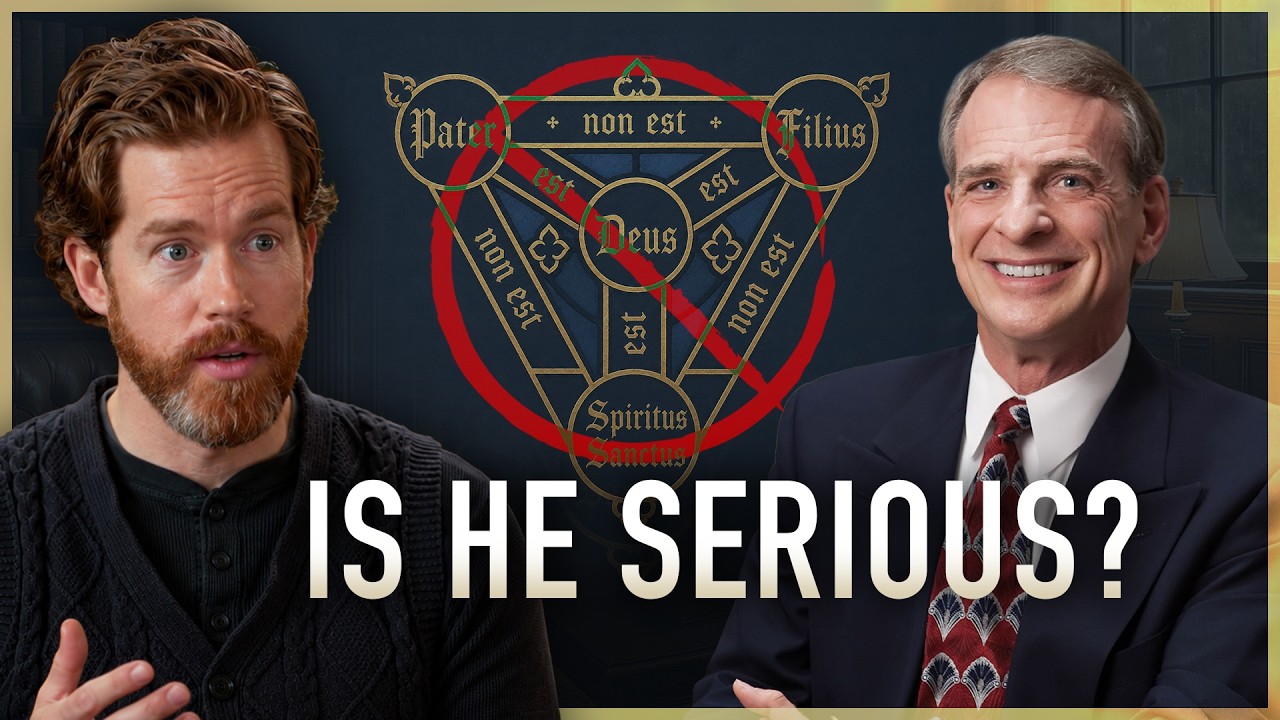
Yes, this is correct. Prominent Christian apologist and theologian William Lane Craig sparked significant controversy by publicly stating that he does not believe or confess that the Son is eternally begotten from the Father in his divine nature, a core tenant of the historic Nicene Creed. [1, 2]
The debate went viral following a video published by his ministry, Reasonable Faith, which was subsequently covered by outlets like The Roys Report and [The Christian Post]. [1, 2, 3]
Craig’s stance on this issue relies on specific biblical and historical arguments: [1]
1. His Biblical Grounds
Craig argues that there is a modern consensus among New Testament scholars that the doctrine of eternal generation—the idea that the Son’s divine nature is eternally derived from the Father—is simply not found in the New Testament. [1, 2]
- The Meaning of Monogenes: Critics of eternal generation, including Craig, argue that the Greek word monogenes (historically translated in verses like John 3:16 as “only begotten”) actually means “unique” or “one of a kind,” carrying no connotation of biological or ontological derivation. [1, 2]
- Human vs. Divine Nature: Craig maintains that according to books like Luke and John, Christ is only “begotten” in his human nature via the virgin birth and incarnation, not in his eternal divine nature. He views the titles “Father” and “Son” as roles voluntarily assumed by the Trinity for the plan of salvation (the economic Trinity), rather than definitions of their eternal, ontological relationship. [1, 2, 3, 4]
2. His Philosophical and Historical Arguments
Craig argues that the concept of eternal generation is a philosophical intrusion rather than a biblical one. He traces the doctrine back to 2nd-century Greek apologists (such as Justin Martyr) who merged biblical texts with Greek philosophical concepts of the Logos (the mind or reason of God emanating outward). Craig believes that claiming the Son is “derived” or “dependent” on the Father—even eternally—accidentally introduces a form of subordinationism that weakens the true co-equality of the Trinity. [1, 2, 3, 4]
What Craig Still Affirms
It is important to note that Craig is not rejecting the Trinity or Christ’s divinity. He strongly defends the doctrine that God exists as three co-equal, co-eternal persons. He simply rejects the traditional Nicene framework explaining how those persons relate to one another eternally, preferring a model where all three members possess independent self-existence (aseity). [1, 2]
6 Likes
Does the wording of the creed imply or dictate what was begotten physically or spiritually?
It would seem to me that the creed is trying to justify the existence of the human Jesus.
By suggesting that God has three distinct persons has always produced the claim that God is fractured into three separate (physical) entities where as the word “person” is understood in a non physical manner, almost like personaities.
The creeds are the church equivallent of a legal declaration limited by language, trying to be unequivocal, but, like any legal document, the interpretation nneds to be understood in a legalistic manner.
It would seem that the upshot of this is that the creeds can be missinterpretted and denied, for no other reason than they are being accepted in the wrong understanding.
Perhaps William Craig is being criticised unjustly for speaking a common misunderstanding of what the creed is trying to express.
Richard
I would say I’m surprised but I’m not surprised at all. It was only a matter of time before some famous christian apologist woke up and found out that he couldn’t even accept the Nicean creed anymore.
I understand that wants to protect the full, uncompromised deity of Jesus Christ against Islamic and atheistic critics and that, in his view, if the Son’s divine nature is “derived” or “generated” from the Father, the Son becomes inherently dependent and secondary. To fix this, Craig removes the doctrine of eternal generation and grants independent self-existence (aseity) to all three Persons.
The problem is that, by trying to save Christ’s equality, Craig inadvertently destroys the mechanics of Christian monotheism.
Let’s start from one premise: God’s essence is a simple, undivided unity. Because God cannot be divided into pieces, the only thing that distinguishes the Father, Son, and Holy Spirit is their relations of origin (the Father eternally begets, the Son is eternally begotten).
If you eliminate these internal relations, you remove the very mechanism that keeps the three Persons bound to the same singular substance, and without eternal generation, the divine essence becomes an abstract generic category (like “human nature”) rather than an indivisible reality.
Because Craig rejects relations of origin, his alternative model, known as Trinity Monotheism, posits that God is a single soul endowed with three distinct centers of consciousness, three distinct minds, and three distinct wills.
And this right here is the textbook definition of tritheism: if you have three distinct centers of consciousness that exist completely independently of one another, you no longer have one God in the monotheistic sense; you have three divine individuals instead.
Also Craig defends his monotheism by arguing that the three Persons are perfectly aligned in love, thought, purpose, and will, but the thing is thwt Harmony is not unity. A committee of three divine beings who always vote unanimously and love each other perfectly is still a committee of three separate gods. Their oneness becomes social and voluntary rather than essential and metaphysical.
By severing the eternal generation of the Son, Craig’s model effectively replaces the singular God of Nicaea with a perfectly unified, celestial team of three self-existent deities.
One question I would like to ask him is: how about we don’t assume that we “know better” by virtue of being “modern”, making a mockery out of Christ’s promises in the process?
4 Likes
The innate problem is twofold
- Trying to fathom or describe God in human language
- Trying to rectify physical appearance with noncorporeal existence
I wonder how God was supposed to appear in human form and still be God?
Unless you are going to make Christ some sort of Tardis whereby the physical presence can contain all of God, then you are left with the conundrum of how God can be in two (physical) places at once and “appear” to “need” to communicate between the two.
In truth the conundrum is only necessary to satisfy the human need to know and understand. Why on earth does God have to “prove” or conform to any human concept, be it unity, singularity or Justice. it should not matter. But for some strange reason the human mind needs both clarity and understanding before daring to believe in God.
In many ways it would be better if God’s full Nature remained a complete mystery instead of being crammed into a human created one.(The Trinity).
Richard
That’s already there in the OT. The Jews had no problem with the idea that Yahweh could walk on Earth as a man while there was also a Yahweh in heaven, the problem was Yahweh being born as a man.
The Trinity is merely a summation of how the scriptures portray God; it isn’t an explanation of anything. Anyone who claims to understand the Trinity demonstrates by making that claim that they’re in the same boat as the rest of us – except they’re deceiving themselves.
2 Likes
- Some see the Incarnation and the Trinity as human attempts to comprehend God, then offer our own human understanding of God as Unfathomable Mystery.
2 Likes
There is an irony in Richard’s TARDIS analogy that Benjamin D. Sommer’s The Bodies of God and the World of Ancient Israel brings rather sharply into focus.
Sommer argues that significant strands of the Hebrew Bible preserve an ancient Near Eastern conception of divine “fluidity” in which the one God could have multiple embodiments and be present in more than one place without ceasing to be the one God. What strikes the modern Western reader as bizarre may not have struck an ancient Israelite that way at all.
That doesn’t prove the Incarnation or the Trinity.
Sommer’s work provides good reason to question whether some biblical writers shared that assumption at all.
. Human beings must not “cram” God into human concepts such as Trinity or Incarnation; God’s nature should remain a complete mystery.
There may indeed be profound mysteries involved in saying that the one God can be simultaneously transcendent and bodily present. But “I cannot imagine how one being could do that” is a statement about the limitations of human imagination. It is not yet a statement about the limitations of God.
And Sommer supplies the historical coup de grâce: apparently some ancient Israelites had less difficulty imagining it than some tend to do.
moderator edit-Phil
1 Like
Oh yes? Where!
The only time God so say walks on the earth in the OT is in the Garden and there is no indication that He is anywhere or anything else. That is one of many points about taking that narrative as real. It isn’t! Later on His presence is deemed impossible to be seen without death, and certainly not walking around for all to see. I see no indication of God being in two places at once, rather He is everywhere at the same time (Which is not the same thing)
The question Benjamin D. Sommer spends an entire book answering in The Bodies of God and the World of Ancient Israel is where Yahweh could walk on Earth as a man while there was also a Yahweh in heaven.
And no, Sommer is not talking merely about divine omnipresence. He argues that some strands of the Hebrew Bible reflect an ancient conception of divine “fluidity” in which the one YHWH could have multiple localized embodiments or manifestations without thereby becoming more than one God.
Interestingly, Sommer is Jewish, not Christian, and concludes that this feature of biblical theology means that neither Incarnation nor Trinity can simply be ruled out as incompatible with the Hebrew Bible’s conception of the one God.
4 Likes
Some also claim scripture isn’t binding and then quote scripture. Or claim there is no correct interpretation of scripture then offer an interpretation of scripture. It makes having a fruitful discussion a bit difficult.
5 Likes
Nice obtuse dig.
Just because there is no definitive interpretation of scripture does not mean that no interpretation is valid, in fact it means the opposite.
Clinging to a specific view would seem to be dogmatic. And as for ignoring a view instead of arguing… well it is easier to just refute it completely and make snide remarks.
Richard
There were a diversity of beliefs related to this in ANE.
One belief was that behind the pantheon of gods, there was a primary god/spirit and the rest of the gods were like ‘limbs’ of the primary god or spirit. Because the background god was a spirit, or had formed the other gods from his ‘life force’, being/acting through the other gods was possible.
The ‘fuidity’ belief described by Sommer is also within the diversity of ANE beliefs.
I agree that the ANE people would have understood the teachings through their worldview, in quite a different way than we do. It does not necessarily mean that their understanding would be more correct than our interpretation, or vice versa.
- Genesis 18–19 and the Angel-of-YHWH passages are particularly important.
- Genesis 18:1–3, 10, 13–14, 17, 20–22, 33; 19:1, 24 — Genesis begins, “YHWH appeared to Abraham,” followed by the arrival of three “men.” One of them subsequently speaks as YHWH. Two depart for Sodom while Abraham remains “before YHWH.” Then comes the remarkable Genesis 19:24: “YHWH rained on Sodom and Gomorrah sulfur and fire from YHWH out of heaven.”
- Genesis 16:7–13 — The Angel of YHWH appears to Hagar. The angel says, “I will surely multiply your offspring” (v. 10), and Hagar subsequently identifies the speaker as God: “You are a God of seeing” (v. 13). The narrator likewise says she had been speaking with YHWH.
- Genesis 32:24–30 — Jacob wrestles all night with “a man” (v. 24), yet afterward names the place Peniel because, he says, “I have seen God face to face” (v. 30). Compare Hosea 12:3–5, which interestingly describes the same encounter using both “angel” and “God.”
- Exodus 3:2–6 — “The Angel of YHWH” appears to Moses in the burning bush (v. 2); two verses later God calls to Moses from the bush (v. 4), identifies himself as the God of Abraham, Isaac and Jacob (v. 6), and Moses hides his face because he is afraid to look at God. The identities “Angel of YHWH” and “God/YHWH” overlap in a way simple categories don’t accommodate very well.
- Exodus 24:9–11 — Moses, Aaron, Nadab, Abihu and seventy elders ascend Sinai, and the text says twice, extraordinarily explicitly, “they saw the God of Israel” and “they beheld God, and ate and drank.”
- Exodus 33:9–11, 18–23 — Particularly interesting because the apparent contradiction occurs within a few verses. Verse 11 says YHWH spoke to Moses “face to face, as one speaks to a friend”; vv. 20–23 have God tell Moses, “you cannot see my face, for man shall not see me and live.” Rather than simply quoting the latter as though it settles the OT conception of divine visibility, one has to explain why Exodus itself contains both formulations.
- Judges 6:11–14, 20–23 — The Angel of YHWH appears and speaks to Gideon; the narrative moves between “the Angel of YHWH” and “YHWH turned to him and said…” (v. 14). Gideon eventually realizes whom he has encountered and fears death: “Alas, O Lord YHWH! For now I have seen the Angel of YHWH face to face.” YHWH reassures him, “Do not fear; you shall not die.”
- Judges 13:3, 6, 9, 15–23 — Manoah and his wife encounter the Angel of YHWH, initially described as “a man of God.” After the angel ascends in the altar flame, Manoah concludes, “We shall surely die, for we have seen God” (v. 22). His wife points out, quite sensibly, that if YHWH intended to kill them, he wouldn’t just have accepted their sacrifice.
- There are other passages Sommer discusses.
3 Likes
An interesting detail in the story was that Abraham (or rather Sarah and a servant) prepared food for the three men and Abraham watched as the three men were eating. YHWH eating a meal prepared by Abraham - how well does that fit into our image of YHWH?
2 Likes
This smacks of AI.
To claim the Burning Bush is the actual form of God would seem to be a little far fetched
In fact there seems to be confusion between Angels and God. Exodus is inconsistent. On one hand God is supposedy standing on Lapis Lazula and on the other “No one can see God and live”. Later on Moses’ face becomes unbearably radiant due to the reflection of God.
You forgot Jacob fighting with… “I fought with God and prevailed”
IOW the imagery and precision is not there, and, as Genesis is mostly Oral Tradition we can allow a little latitude.
Richard
That’s a non-argument.
- Straw man!
- I didn’t claim that the bush was God’s body. Exodus 3:2 says the angel of YHWH appeared “in a flame of fire out of the midst of a bush.” Then 3:4 says: "When YHWH saw that he turned aside to see, God called to him out of the bush…” And in 3:6 the speaker identifies himself as the God of Abraham, Isaac and Jacob.
- The point isn’t that God was a shrub. The point is the remarkable angel/YHWH/God identification within the narrative.
- The passages either say what I represented them as saying or they don’t. Open your Bible.
- I don’t think you’ve noticed what just happened. You began by saying that the Garden was “the only time” in the OT and that you saw “no indication” of God being present in the ways under discussion.
- Now you tell us that Exodus has God being seen standing on lapis lazuli, acknowledge the strange interchange between God and the Angel of YHWH, and supply Jacob’s encounter with God as an additional example yourself.
- That’s the point.
- I didn’t suggest that God was the burning bush. Exodus 3 itself moves from “the Angel of YHWH” (v. 2), to “YHWH” (v. 4), to “God” speaking from the bush (vv. 4–6). Calling that “confusion between Angels and God” doesn’t dispose of the evidence; it identifies the phenomenon that needs explaining.
- And Jacob makes the point even better than you may realize. Compare Genesis 32:24–30 with Hosea 12:3–5, where the same encounter is described in terms of both God and an angel.
- So we seem to have moved rather quickly from “Oh yes? Where!” to arguing about what all these examples mean.
- You want to go to Exodus? Great! Let’s go to Exodus 13:21–22:
“YHWH went before them by day in a pillar of cloud … and by night in a pillar of fire…” - Notice what the text does not say: YHWH sent a pillar ahead of them. It says YHWH went before them, and tells us the mode of that presence: “in a pillar of cloud” and “in a pillar of fire.”
- Then Exodus 14:19–20 becomes even more interesting:
- “Then the angel of God who was going before the host of Israel moved and went behind them, and the pillar of cloud moved from before them and stood behind them…”
- Those two movements appear to describe the same event. The angel of God moves from front to rear; the pillar moves from front to rear. And then, only a few verses later, Exodus 14:24 says:
- “And in the morning watch YHWH in the pillar of fire and of cloud looked down on the Egyptian forces…”
- So within this short narrative we have:
- YHWH goes before Israel in the pillar (13:21) → the angel of God goes before Israel (14:19) → YHWH is in the pillar (14:24).
- And there’s more. Numbers 12:5 says “YHWH came down in a pillar of cloud.” Deuteronomy 31:15 similarly says “YHWH appeared at the tent in a pillar of cloud.” And Exodus 33:9–10 describes the pillar descending to the entrance of the tent while YHWH speaks with Moses.
- The pillar of cloud and fire was a localized manifestation of the presence of YHWH, and the biblical narrative can identify the divine presence associated with it both as YHWH and as the angel of God.
- Exodus 14:24 isn’t describing generic omnipresence, it specifically locates YHWH:
- “YHWH in the pillar of fire and cloud…”
- Presumably you don’t imagine Exodus to mean that YHWH had therefore vacated heaven.
3 Likes
When you can argue without just pasting AI I will respond..
Richard
1 Like