In case you aren’t aware, Artemis II is gearing up to bring humans back to the Moon as we speak! Although they are only completing a “fly-by” of our natural satellite, it will still be the first time humans have flown this far into space in decades.
It is quite unfortunate that such an incredible step in human history is currently being overshadowed by other events (especially the heated tail-chasing within politics). In the spirit of good news, what other exciting astronomy news do you have to share for the good of the group?
SkovandOfMitaze
(One 8 ounce steak used as much water as 6,000 ai searches. )
2
While not any one specific thing there are a few things that I am very interested in. So while abiogensis is still a hypothesis, or rather a series of hypotheses I believe it will eventually become a theory. Since I don’t believe in any particular magical/supernatual phenomena involved in the formation of the natural world it means I don’t really think God like frankensteined life but that it developed naturally.
Anyways we have found some cool stuff out about this. Such as we have found PAHs all throughout the universe. They seem to be abundant and very stable. They are even found in asteroids that travel through interstellar space and in dust floating throughout the universe. Them seem likely to create the components of dna and rna and we have found them in the earlier stages of galaxy developments.
Coupling this with the fact we are finding ribose, amino acids and other nitrogen compounds in space. Even in instellar clouds and meteors. We are finding oxygen, carbon, nitrogen and so on.
We are finding smaller planets with types of atmospheres. It seems that The Webb telescope is being able to detect oxygen rich or low oxygen areas of space. Obviously we are seeing the red shift of the earliest stars.
So while not a specific thing or even specifically in 2026 I look forward to us finding out more and more about these major components of abiogenesis in space including around some of the earliest stars. So I think we are getting closer and closer to making abiogenesis a theory for earth’s biological molecules and life and potentially closer to finding various types of life out in space beyond just water bears in a dehydrated state we accidentally or purposely sent off to lie “dead but dreaming” like states XD.
Side note, unrelated, but this year we have February and March both having Friday the 13th. The next time this happens is in the year 2037.
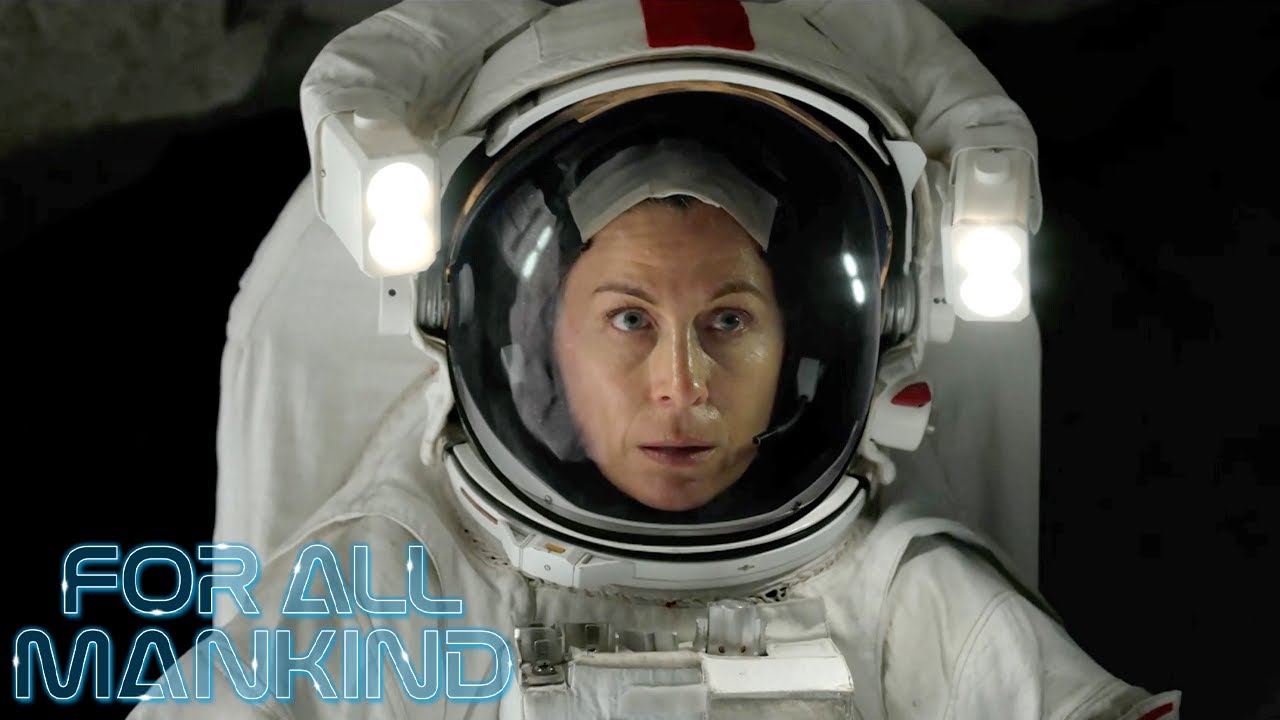
If you like science and astronomy I suspect you might enjoy For All Mankind on Apple TV. I think it is easily their best show and one of my all time favorites. Watch that scene and fall in love with it. And sorry for the spoiler if you do. Seems to be based on solid science but probably visually overdone.
So many difficulties, one of which is even if we could get up to something like .25 or .50c, what happens when the spacecraft collides over and over again with things a milligram or even significantly smaller at that speed…
Though, as someone whose life and friends’ and family’s lives have been totally upended by the massive cuts to health science research and USAID, I’m feeling pretty bitter about throwing taxpayer money at the space program for things that don’t seem to have a practical research value, especially when it just seems to enrich the companies of powerful criminals and their friends.
I read a paper once that argued rather impressively that any space vehicle traveling at over 8% of light speed would be doomed for the simple reason that our ability to detect things and then avoid them is too slow for useful evasive maneuvering at any higher velocity – backed up with a lot of math.
Even interstellar gas, which is unavoidable, would subject occupants of the ship to radiation inside an atom smasher. As well, heat akin to re-entry would build inexorably to loss of integrity.
I would appreciate it if humanity could ‘lock in’ to try and focus on tough engineering tasks like this! I often think of myself owing more allegiance to my species and planet than a single country (I don’t appreciate the tribalism that usually comes from extreme patriotism; I enjoy all countries equally and believe that we should work to make all countries free and focus on the wellbeing of our fellow children of God). If humanity could stop fighting over silly things and focus on helping each other move forward, I feel like we could achieve interplanetary status (as well as cures for most diseases and solved our energy needs) much sooner! Well, maybe one day this dream could come true.
I know of only one partial solution to this kind of challenges. The space vehicle could be built within a large rock and would act like an interstellar asteroid. If the front side would be massive enough, it could protect the travelers within the rock from small collisions.
The interstellar objects can reach fairly high speeds. Oumuamua had a speed of about 85,700 miles per hour (38.3 kilometers per second) relative to the Sun. Comet 3I/ATLAS was faster and traveled at the speed of around 130,000 miles per hour. The fastest human-made probe (Parker Solar Probe) had a calculated maximum speed of approximately 690,000 km/h (430,000 mph) or 191 km/s in December 2024.
That is low relative to the speed of light but might increase somewhat if there would be an engine that slowly increases the speed through decades but keeping the speed below the calculated point of breaking the rock. Risky but possible.