Trevor Lohman, PhD: The Brain, Science, and Faith

True, but all of that is meta to actually discovery, which is the soul of science. Observation, data collection, and uncovering the principles of nature, is largely progressed by scientists who may give little thought, or find little agreement, on philosophical groundings beyond assuming universal natural laws which may be tested.

Of course, if and when scientists make inferences past the empirical and testable, they venture into the realm of metaphysics and philosophy.

1 Like

LOL! Science has no “soul”.

But scientists do. OK, not all, but some do.

1 Like

Nonsense, the soul of science is to make better weapons than our enemies. Conan the Barbarian got it right long ago. Like life, the purpose of science is to “To crush your enemies, to see them driven before you, and to hear the lamentations of their women

Good luck convincing them of that. :grinning_face:

Vinnie

1 Like

Great! So how do Scientists define “soul”?

Those are philosophers, and their discussions are between themselves. Scientists really don’t care.

This is not to deny all value to philosophy, much of which has nothing to do with science. I do not even mean to deny all value to the philosophy of science, which at its best seems to me a pleasing gloss on the history and discoveries of science. But we should not expect it to provide today’s scientists with any useful guidance about how to go about their work or about what they are likely to find.

I should acknowledge that this is understood by many of the philosophers themselves. After surveying three decades of professional writings in the philosophy of science, the philosopher George Gale concludes that “these almost arcane discussions, verging on the scholastic, could have interested only the smallest number of practicing scientists.” Wittgenstein remarked that “nothing seems to me less likely than that a scientist or mathematician who reads me should be seriously influenced in the way he works.”

–Steven Weinberg, “Against Philosophy”

Then they should stop doing science. If reality doesn’t exist then there is no science to do.

It is messy, but falsifiability is still one of the pillars of science. If no potential observation could prove you wrong then you aren’t doing science.

I’m guessing that there is absolutely zero observations you would accept as supporting materialism.

It is relevant to my point. If philosophy can’t explain or predict experimental results then it is of no use in science.

What?

If reality contradicts a law, then it isn’t reality that is wrong. It’s a pretty simple concept.

An entangled particle in a quantum computer is both false and true at the same time when in superposition.

Apparently you have a hangup with subjective morality.

Again, only the barest of epistemologies is needed. Aristotle certainly isn’t needed. As discussed by Weinberg, philosophy just isn’t useful in science.

Quantum superposition doesn’t mean a particle is both true and false. A qubit in superposition isn’t in either classical state—it’s in a quantum state that yields probabilities for each if measured. Truth values don’t apply until after measurement.

3 Likes

Sure it does. Boolean logic based on quantum superposition results in the particle representing both true and false at the same time. In classical computing a bit is either a 0 (false) or a 1 (true), but in quantum computing a singe qubit in superposition is both before measurement.

You were incorrect elsewhere when you said that, you’re incorrect here. [@Vinnie ] You’re now making the same category error:

A qubit in superposition isn’t ‘true and false.’ It’s neither. Superposition is a quantum state that contains amplitudes for both classical outcomes, but logical truth values don’t apply until measurement. Quantum mechanics doesn’t violate the Law of Non-Contradiction.

Erwin Schrödinger proposed the “cat in a box” thought experiment precisely to highlight what he saw as the absurdity of applying quantum mechanics’ principles, specifically the Copenhagen interpretation of superposition, to macroscopic (everyday) objects. He was not endorsing the idea but using it as a critique.

His goal was to use a reductio ad absurdum argument to challenge scientists who suggested a system could be in multiple contradictory states (e.g., both decayed and not decayed) until observed. By linking a subatomic event to the life or death of a cat, he aimed to show how counterintuitive and illogical that interpretation became when applied to a visible, real-world object that is clearly either alive or dead, not both simultaneously.

In his 1935 paper, he essentially intended the thought experiment as a form of satire to provoke critical thought about the completeness of quantum theory and the nature of reality and measurement. The fact that it has become an iconic, though often misunderstood, symbol of quantum strangeness is a historical irony.”

4 Likes

Small world — where i grew up, that was a jeweler in town! Nice guy, very precise about everything.

One of my philosophy profs said the same thing.

1 Like

I am not a great fan of metaphysical thinking in science but I think it can help us to see some of the flaws and blind spots in our thinking. Although I am not a professional philosopher, I teached for some years the basics of the philosophy of science for biology students. We thought it was useful in helping the students to form a more mature and objective mindset that is needed as a researcher.

I am currently reading a book about worldviews (‘Naming the elephant’ by JW Sire) and it has reminded me about the pitfalls in our thinking and interpretations. Knowing how my worldview can affect my interpretations about the reality helps in avoiding the traps of mislead conclusions. That is needed both in science and in the interpretation of the scriptures.

2 Likes

You seem to have mixed up ‘scientists’ with ‘atheists’.

Why doesn’t it apply prior to measurement?

“It’s absurd” is an argument of incredulity.

Just to clarify, the paragraph you quoted that begins “Erwin Schrödinger proposed the ‘cat in a box’ thought experiment…” is not something I wrote; it’s a summary supplied by Google’s AI (hence the yellow highlight in the screenshot). I cited it because it captures a historical point: Schrödinger framed the cat scenario as a critique of applying the Copenhagen superposition story naïvely to macroscopic objects.

In other words, the “absurdity” here isn’t a bare “this seems weird to me, so it’s false” (which would indeed be an argument from incredulity). It’s the core of a reductio ad absurdum:
– Assume the standard interpretation and extend it straightforwardly to cats.
– You get a cat that is both dead and alive.
– That’s an intolerable consequence for a macroscopic system, so the underlying interpretation or its domain of application needs refinement.

  • The text was Google’s AI, not “Terry’s words.”
  • The “absurdity” is historical/contextual, not just Google AI being squeamish.
  • The correct logical category is reductio ad absurdum, not argument from incredulity.

P.S. Nota Bene: Schrödinger is the guy who first talked about a cat in a box being dead and alive simultaneously. Terry Sampson wasn’t making stuff up, he was reporting what he had read.

1 Like

According to my buddy ChatGPT:

Here are the three most important interpretations of quantum mechanics, explaining what superposition actually means and whether it is legitimate to say a qubit is “in two states at once.”

This will show precisely why T_aquaticus’ claim

“It is both true and false at the same time”
is not endorsed by any mainstream interpretation.


:star: 1. Copenhagen Interpretation

(Bohr, Heisenberg — the textbook interpretation)

What superposition means:

Before measurement, a quantum system is described by a wavefunction: image
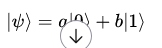
This is not a description of classical states. It is a description of probability amplitudes.

What is real? The wavefunction is a computational object.

It encodes possibilities, not actualities.

When measured: Superposition collapses → one definite outcome.

Does Copenhagen say “both states at once”?

:cross_mark: Technically, no. It says the system has no definite classical state at all until measurement.

Correct phrasing:

“Before measurement, the qubit is in no definite classical state; it has amplitudes for both 0 and 1.”


:star: 2. Many-Worlds Interpretation (Everett)

(Most physicists talk Copenhagen but think like Everett.)

What superposition means:

Superposition represents real branches of the universe. Each term in the superposition:

image

corresponds to a real world.

When measured:

There is no collapse.
The observer splits into two branches.

Does Many-Worlds say “both states at once”?

:check_mark: But only in the sense:

“The universal wavefunction contains both outcomes, but each observer sees only one.”

It is not saying the particle is literally 0 and 1 in the same world.

Correct phrasing:

“Superposition corresponds to multiple real branches, not contradictory properties in one branch.”


:star: 3. Decoherence / Modern Quantum Theory

(Zeh, Zurek — how working physicists actually compute systems)

What superposition means:

The system evolves unitarily.
The environment causes decoherence, which selects one classical outcome.

Superposition is a mathematically real quantum state,
but classical definiteness emerges when the system interacts with the environment.

Does decoherence say “both states at once”?

:cross_mark: No.
It says “superposition is quantum; classical states appear only after decoherence.”

Correct phrasing:

“Superposition is a quantum state encoding possible measurement outcomes; mutually exclusive classical states never coexist.”


:star: Conclusion: What none of these interpretations say

:cross_mark: “Quantum superposition means a qubit is literally both 0 and 1.”

:cross_mark: “Quantum superposition means a particle is in two classical states at once.”

:cross_mark: “Quantum mechanics violates the Law of Non-Contradiction.”

These are metaphors for beginners, not correct physics.


:star: Conclusion: What all interpretations agree on

:check_mark: Superposition is one quantum state,

not two classical states glued together.

:check_mark: When measured, only one classical outcome is observed.

:check_mark: Logical truth values (“true”/“false”)

apply to propositions, not quantum states.

:check_mark: Superposition does not create classical contradictions.


:star: The Cleanest Correction to T_aquaticus

“Superposition is a quantum state, not a classical contradiction.
A qubit in superposition is not ‘both true and false.’
It is in a quantum state that yields one definite classical value upon measurement.”

This is correct under:

  • Copenhagen

  • Many-Worlds

  • Decoherence

  • Bohm

  • QBism

  • and every mainstream interpretation of QM.


If you want, I can now show:

  • How superposition is represented visually,

  • How entanglement differs from superposition,

  • Where “true and false at once” originated as a teaching metaphor,

  • or even a simple mathematical demonstration of why superposition ≠ contradiction.

Just tell me which direction you want to go.

@Vinnie

3 Likes

Ignoring copy and pastes from ChatGPT.

2 Likes

Stay uninformed. But you certainly lose credibility among those of us who aren’t afraid of it. Ergo, you’re on my Ignore list with all the other heathen.

I’m looking for a conversation, not a copy and paste competition.

2 Likes
1 Like

Schrödinger’s whole point here was to highlight the absurdity of treating macroscopic states as literally ‘alive and dead at once’; the cat paradox is a critique of that reading, not a proof that contradictions are possible.

3 Likes