Reasons why Genesis is real history

How can one read Genesis as some kind of mythical or metaphorical writings when we have real archeological evidences that are completely contrary to that notion…im going to add to this post as i get time, although these days my time is limited on these forums, so rather than debating poor counter arguments with naysayers, i will mainly focus on adding to the real historical evidences already presented.

For example

Biblical Town of Zoar where Lot went too after Sodom and the cave he fled roo after fearing Zoar might also be destroyed
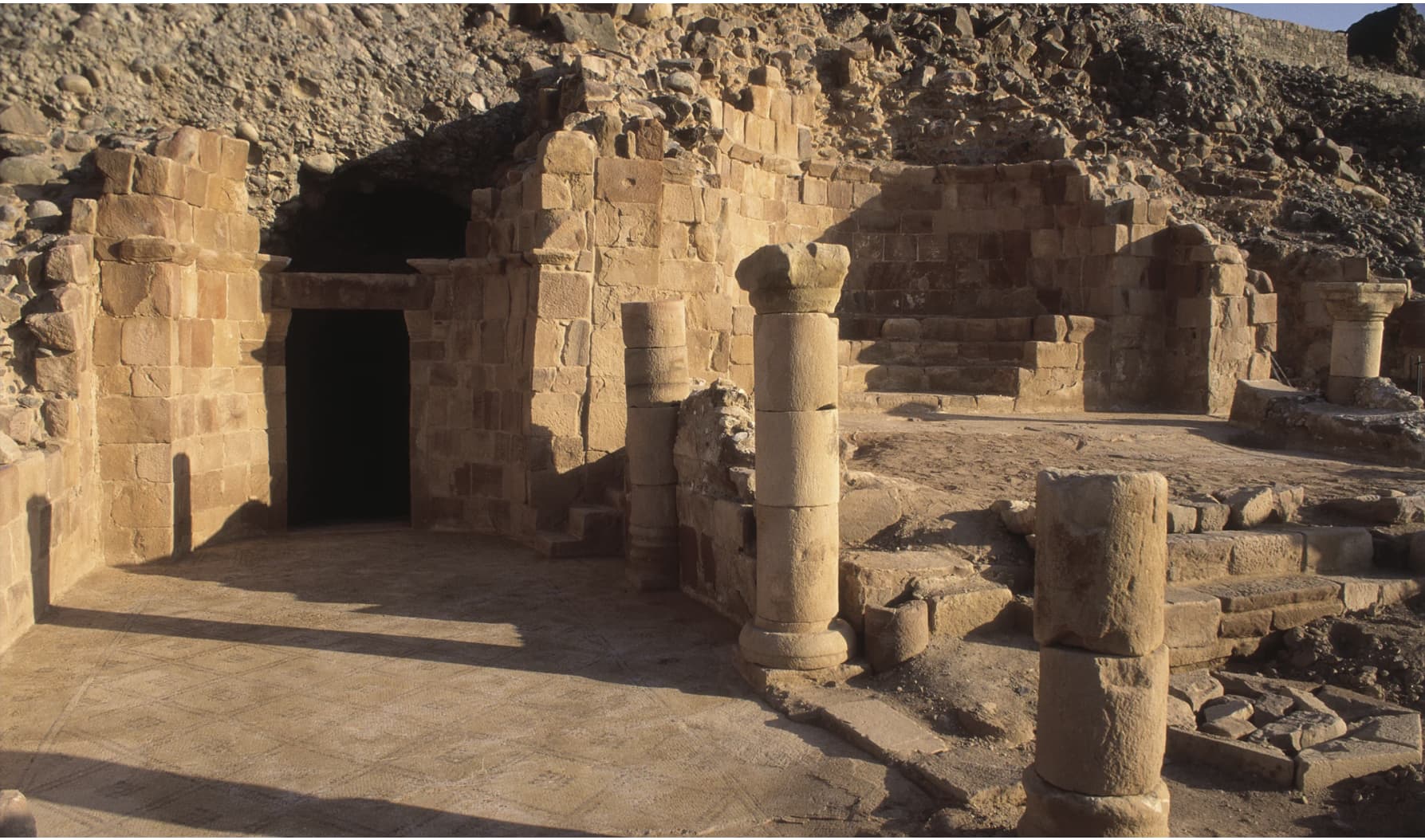
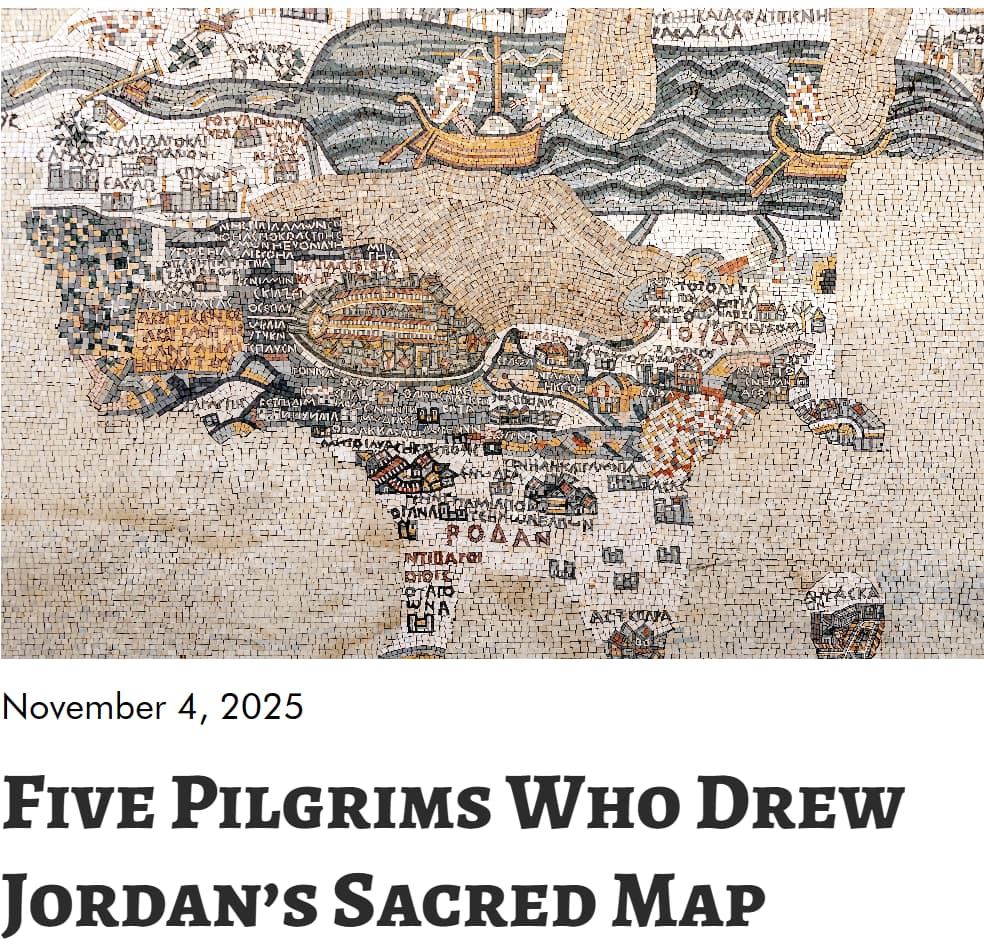
Greek inscriptions invoking Lot himself, confirm the Christian identification of the site.

The complex includes several domestic quarters typical of and essential to monastic life. These include a common dining room or refectory with long benches, a pilgrims’ hostel, and a common burial chamber. The burial chamber, which was once a cistern, contained the remains of twenty-eight adult males, one adult female, and three infants, suggesting that it may have also served as an infirmary or hospital for monks and pilgrims visiting the region.

At the southern end of the site, near a wadi, is a large water reservoir. This reservoir, 6 meters deep and covered with arches, was probably filled by aqueducts that brought water from higher up in the wadi. In addition, water was available from a spring at the foot of the mountain, to meet the needs of the monastic community, and the pilgrims visiting the sacred site.

Archaeological excavations in the early 1990s unearthed a wealth of artifacts, including Early and Middle Bronze Age pottery. These finds suggest that the site has been considered sacred for millennia, possibly in connection with Lot’s biblical narrative. Explore Lot’s Cave: A biblical sanctuary uncovered

The cave in the referencing above aligns with the map also shown in the mosaic map and is exactly the same as the location specified in Genesis 19

18 But Lot said to them, “No, my lords,[b] please! 19 Your[c] servant has found favor in your[d] eyes, and you[e] have shown great kindness to me in sparing my life. But I can’t flee to the mountains; this disaster will overtake me, and I’ll die. 20 Look, here is a town near enough to run to, and it is small. Let me flee to it—it is very small, isn’t it? Then my life will be spared.”

21 He said to him, “Very well, I will grant this request too; I will not overthrow the town you speak of. 22 But flee there quickly, because I cannot do anything until you reach it.” (That is why the town was called Zoar.[f])

23 By the time Lot reached Zoar, the sun had risen over the land. 24 Then the Lord rained down burning sulfur on Sodom and Gomorrah—from the Lord out of the heavens. 25 Thus he overthrew those cities and the entire plain, destroying all those living in the cities—and also the vegetation in the land. 26 But Lot’s wife looked back, and she became a pillar of salt.

27 Early the next morning Abraham got up and returned to the place where he had stood before the Lord. 28 He looked down toward Sodom and Gomorrah, toward all the land of the plain, and he saw dense smoke rising from the land, like smoke from a furnace.

29 So when God destroyed the cities of the plain, he remembered Abraham, and he brought Lot out of the catastrophe that overthrew the cities where Lot had lived.

Lot and His Daughters

30 Lot and his two daughters left Zoar and settled in the mountains, for he was afraid to stay in Zoar

What is even more interesting…there are literally millions and millions of sulfur balls found on the ground all around that area of the dead sea. Scientists already have concluded that its likely a geological event caused the sulfur to rise up from below and literally rain down on top of those cities in the plain (that are already known to have been clearly destroyed by fire…and yet smack in the very middle of these cities is the city of Zoar…it has no evidence of any burning or destruction by fire. Zoar has also been consistently inhabited throughout the ages since that time despite these other cities in the area around Sodom and Gomorah having clearly been destroyed.

Funny that also, the dead sea is full of tar which regularly floats to the surface from below…so clearly this is the likely cause of the catastrophe that destroyed those cities and the surrounding towns…God can and does have the ability to cause geological events to achieve his purposes…not random events, he directly caused this to happen as the Bible claims.

Its a little difficult to swallow the idea that Biblical history all the way back to Genesis 19 is accurate, and matches Genealogies and various Old Testament Historical timelines, and yet, what comes before that is not? (Moses wrote both…the idea he got part right and the beginning wrong is hardly a credible claim given the large wealth of evidence supporting the authenticity of the latter part of Genesis)

Scientists have described how fluid flow causes sulfur balls to form underground and are exposed by erosion, but no they did not say they fell from the sky.

From ChatGPT (and I was unaware of the flammable gases part)

Edit to add:
Just because a myth uses an actual location name does not make the myth actual history.

4 Likes

I tend to generally view Genesis as history mythicized and not mythology historicized but you need to be careful of how you make arguments.

I saw a movie of a 25 foot gigantic ape climbing the Empire State Building. This doesn’t mean I was watching a documentary about an escaped gorilla that actually climbed the Empire State Building in New York City before being shot down by military planes.

Just because some names and places are real, this does not mean you have historical narration or are getting a story that tells us what a film crew would have recorded had they been present at the time.

You have failed to take this distinction seriously over and over again. You are also ignoring that a singular Biblical work can have multiple genres inside and even multiple authors as most scholars believe Genesis does.

Vinnie

5 Likes

Elemental sulfur nodules “sulfur balls” occur in multiple settings worldwide. What’s distinctive about the Dead Sea examples is the public attention they get in Genesis/Sodom discussions—not that sulfur nodules are unique to that region.

1 Like

First, the cave wasn’t in Zoar.

Second, the inscriptions were in Greek and “confirm the Christian identification of the site” so this is a very after the fact identification. Also article says:

I can find nothing in Genesis 19 that would provide the exact location. Caves are not exactly rare and I don’t place much store in what religious pilgrims decided was the exact location.

3 Likes

@adamjedgar

Because it is relatively easy to disprove a global flood that supposedly
occured sometime between the Egyptian 3rd and 6th dynasties.

  1. How come there are no large mammal fossils mixed up with any
    dinosaur bones?

  2. How come there are no whale fossils mixed up with fossils of
    giant marinie reptiles?

  3. How come there are no fossils of Egyptians mixed in with dinosaur
    fossils - - particularly nowhere in the Nile Valley?

G.Brooks

2 Likes

Some of Genesis is based on real history. Some of Genesis is mythological.

It doesn’t have be all real or all mythological.

5 Likes

For what definition of based?

Frohliche Neujahr!

There’s the rub. Pete Enns used to lead Biologos. His book, “Evolution of Adam,” notes the following:

It is now increasingly agreed that the Old Testament in its final form is a product of and response to the Babylonian Exile. This premise needs to be stated more precisely. The Torah (Pentateuch) was likely completed in response to the exile, and the subsequent formation of the prophetic corpus and the “writings” [poetic and wisdom texts] as bodies of religious literature (canon) is to be understood as a product of Second Temple Judaism [postexilic period]. This suggests that by their intention, these materials are . . . an intentional and coherent response to a particular circumstance of crisis. . . . Whatever older materials may have been utilized (and the use of old materials can hardly be doubted), the exilic and/ or postexilic location of the final form of the text suggests that the Old Testament materials, understood normatively, are to be taken [understood] precisely in an acute crisis of displacement, when old certitudes—sociopolitical as well as theological—had failed.[

Peter Enns, The Evolution of Adam: What the Bible Does and Doesn’t Say about Human Origins

4 Likes

Using the names and characteristics of real people and events.

2 Likes

I suspect there is a certain amount of confusion going on here.

First of all, I don’t think any scientist or theologian would argue that there isn’t a physical similarity between places written in the Bible and found excavations.

Is it a precise match? That is the question. People didn’t label cities, towns, and villages back then with quite the same fervor and effort as is found in the modern world. Not giving a place mentioned in the Bible a specific name also makes it problematic at best. Finding an entry sign, specifically giving a name, as we would find now virtually everywhere, would be a plus on the side of the validity of a claim.

Some biblical scholars have proposed that “Moses” did not write any part of The Pentateuch. Some can’t even agree that there ever was a “Moses”, or for that matter, an “Exodus”.

Trying to tie this all together; just because there is a physical similarity between places found in the Bible and places that we know exist, in and of itself…doesn’t make the textual framework of Genesis…any more or less truthful as to its “content”…

3 Likes

What real Bronze Age people and events known by the late Iron Age? Although the Bronze Age collapse was obviously less severe in the Middle East, there was some continuity, especially in Egypt, although it was greatly reduced.

A good question, and one I can’t immediately answer. I’d have to do some research. I would be surprised if there weren’t some Genesean names that were historical.

Finding out that Genesis was 100% ahistorical wouldn’t greatly impact me.

1 Like

Because that’s being honest: it’s not honest to read any piece of literature as something other than what it is.

Really? It’s from archaeology that we know what kind of literature various sections are, so the evidence actually says to read various pieces as temple inauguration, royal chronicle, mythologized history, etc.

Treat the scriptures with respect by being honest about what they are and letting them be that.

1 Like

Defining “myth” is essential, as is “real history”. In a technical sense, “myth” is used for a story with cultural significance beyond just being a story. The Bible certainly includes elements of that. However, in popular usage, “myth” is used to mean “made up”.

The Bible is not “history” in the sense of a history textbook about Europe in the 1800’s. Much that would interest a modern historian is omitted. As the postscript to John highlights, the historical incidents recorded in the Bible are not intended to provide an account of the history of ancient Israel, but rather are selected to illustrate theological points. Details that make an interesting story or provide some historical context but do not have specific theological intent may be included, but the purpose is conveying the theological message. This is why, for example, Kings and Chronicles often have a different-sounding picture of the same ruler. Kings generally gives an overall assessment; Chronicles is more likely to pick out individual incidents where a particular king might sound better or worse than typical for the reign overall. The Bible is an authentic ancient Near Eastern document. It talks about real people in real places. But it summarizes and interprets selected events from that history, and it uses literary devices in conveying its message. It uses the writing conventions of the times and places where it was written. For example, many conversations in the Bible were not written down while the conversation happened as a stenographer would, and may be summaries, paraphrases, or inferred guesses as to the gist of what must have been said. Important information (such as prophecies) were typically written down in the ancient Near East. Given that people then were no better than us at heeding instruction, messages were likely given multiple times, not necessarily in exactly the same words. What we have preserved conveys the message rather than necessarily a verbatim transcript of a single occasion.

Making the entire Old Testament exilic to post-exilic, or insisting that a particular theological concept must be “late”, does not seem much different from making the entire geological record fit a young earth model; the data are forced into an assumed time frame rather than taken seriously. The exile was certainly quite influential theologically, but only because the Jews already had an established and written (though often not heeded) theological tradition that provided a center of continuity. Other deported nations disappeared, merging into the cultures where they found themselves. But exile was a familiar hazard of living in the ancient Near East, and various individuals experienced it at many points prior to the fall of Jerusalem to the Babylonians. Mention of exile is no proof of being written after 600 BC. Theology certainly developed over time. But people have all sorts of ideas all the time. There is no fixed trajectory of thought.

7 Likes

And to treat it otherwise is dishonest and thus disrespectful.

Is contrary to good historical practice. We were taught to assume that ancient traditions were accurate until and unless evidence pointed the other way, regardless of which ANE culture was involved.

1 Like

I await finding out that any of it is historical, any name. I know that drama, fiction can tell emotional truth better than history, but I fail to see any emotional, let alone theological truth in Genesis. Despite its immense, chilling, emotional, mythic power. Above all under the terebinth trees of Mamre. From our primal, forgotten, unknowable infancy.

Ed. Roy, I infer that you are enculturated in the Bible Belt. As nobody as smart and as educated as you, outside it, could possibly countenance that Genesis wasn’t 100% ahistorical. It was in the BB that civilization outstretched its elastic limit in matters of religion (and thus politics and law and education). Hell, it did in Connecticut.

Again, there is a lot of evidence for a worldwide flood. Again, I recommend the ICR website: https://www.icr.org/who-we-are and use their search feature by typing Genesis Flood. You can also go to creation.com.

@cewoldt

What is the ICR explanation for why:

  1. We never find large mammal fossils mixed in with dinosaur fossils?

  2. We never find marine mammal fossils mixed in with large marine reptile fossils
    (both of which are air breathers)?

  3. We do not find human Egyptian fossils mixed in with dinosaur fossils despite
    their being located within the Nile River valley? I know of no Creationist writing
    that proposes the flood occurred BEFORE humans moved into the Nile basin!

  4. If marsupial and placental mammals shared space on the ark, how is it that
    even the slowest marsupials (like moles) traveled faster to the coast of Australia (BEFORE it
    moved into the southern ocean) while even the fastest placental mammals (lions, tigers
    and bears) arrived too late too get on the Australian continent?

G.Brooks

4 Likes

Because Jesus had to die for your sins.