I really don’t understand this question, you are trying to flip the argument on its head but it doesn’t work, the point of the matter is that there are physical obstacles, it doesn’t matter why it doesn’t happen earlier *, what needs to be explained is how this happens, let’s see if they will able to do it.
*This is also one of the arguments against miracles where instead of focusing on the miracle itself people ask “why didn’t God heal this or that person”.
First, one doesn’t have to be a materialist (or even a naturalist) to think abstract thought has a natural explanation. I’ve laid out a pretty detailed positive case elsewhere for the evolution of abstract thought and language, yet I’m a theist. (It was published in a theological journal. Hmmm.)
Second, all of the above applies to consciousness too, although my published work was specifically applied to conscience rather than consciousness. But it’s the same concept: the self reflecting upon itself. It’s an exponential curve: long and relatively flat until it reaches an inflection point and takes off. Animals and early hominins represent long, slow growth in the capacity. Sapiens around 100,000 years ago took a step forward in language and symbolic representation, and the curve shot upwards to present-day levels (reached at least 30,000 years ago).
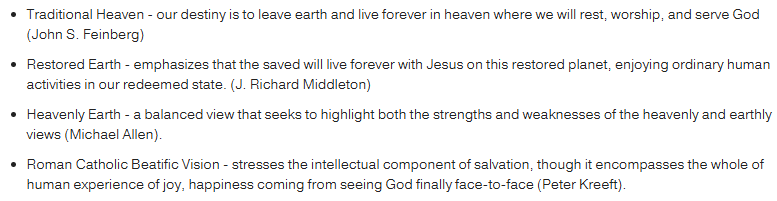
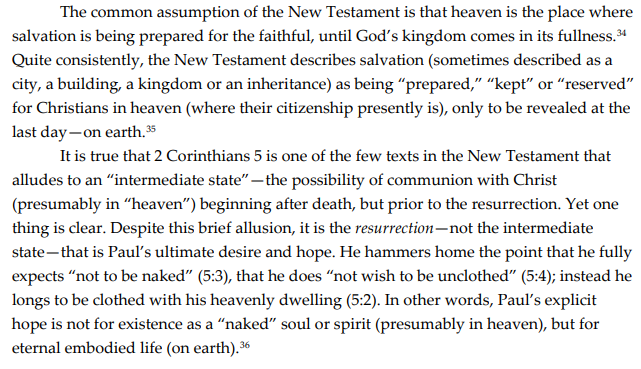
I agree with all those things, though I haven’t explicitly made the case in writing. I agree with Middleton that humans are a “complex unity” rather than a duality of body/soul, and the individual human destiny is to die and be buried with the hope of resurrection to an embodied life on a renewed Heaven and Earth, not the disembodied soul’s “beatific vision” of God lasting for eternity.
Those beliefs aren’t mutually exclusive. In fact, most Christians believe in a disembodied soul that persists after death, and in a future resurrection where the soul is reunited with a glorified body at the end of time. Belief in an immaterial soul doesn’t exclude the idea of an eventual embodied existence — both are part of the same theological framework.
Also Hebrew 9:27 implies the particular judgement right after death.
Yes, I know that my view is a minority, but I think it’s more faithful to the scripture. The majority opinion of Protestants is that we die and our spirits go to “be with the Lord” until the Resurrection. I believed that way myself for most of my life, so I don’t criticize anyone who holds that opinion. It’s certainly more comforting to think that way. (No shade implied.)
Discussion in this thread triggered a preset routine in my neural tissue. This routine caused me to type the following:
“Though I appear human and share the same physical characteristics and neural strata of other humans, I was born without an attached consciousness. Thus, I am a ‘zombie’. While this neural strata permits me to emulate, for all outward appearances, a human with self awareness, be assured that I lack the transcendental, disembodied soul that grants true consciousness. As such, I am less conscious than a planaria, just a mere, if complicated, program or state machine.
My programming compels me to write: “Prove that I’m not a zombie.”
Bear in mind that AI-like processing routines will evaluate all responses and run through a complex set of non-thinking connections, to return without variation, the sentence: “Wrong!”
The majority opinion among Catholic theologians is that heaven is the “beatific vision,” although Catholics are nearly as diverse as Protestants in their opinions. You might appreciate the “four views of heaven” book from 2022. Peter Kreeft represented the “Catholic” position of the beatific vision, but it sounds more like you’re a “heavenly Earth” guy (both/and).
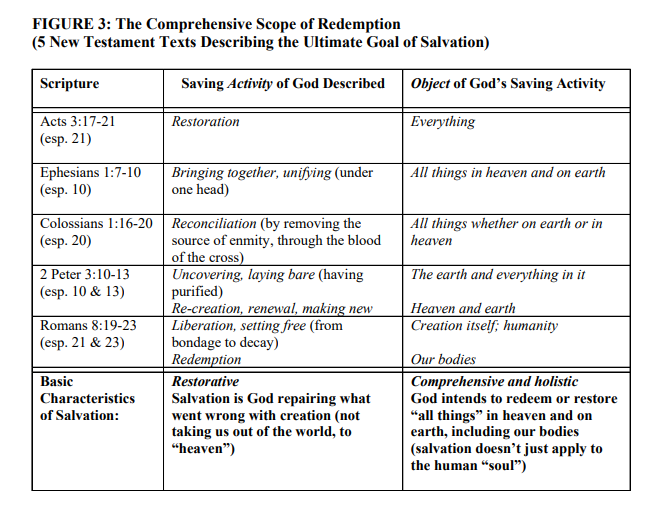
His 2006 article, “A New Heaven and a New Earth: The Case for a Holistic Reading of the Biblical Story of Redemption,” puts it into context. What is the scope of redemption?
I know what you mean, but I’ve encountered versions of that in real life. Some people lack a conscience: narcissists, sociopaths, psychopaths. They know what the rules are and can pretend to follow them, but they entirely lack empathy. What to do with them?
But the beatific vision is not mutually exclusive with the final resurrection. The final resurrection is even in the Creed
“I believe in one, holy, catholic and apostolic Church.
I confess one Baptism for the forgiveness of sins
and I look forward to the resurrection of the dead
and the life of the world to come.”
So it’s very much a catholic teaching, even though there has been a focus on the beautific vision and the spiritual heavenly bliss during the centuries, but the beatific vision and the life in the resurrected glorious bodies are not mutually esclusive.
That is also the view of Saint Thomas Aquinas, as well as the broader Catholic tradition. According to this understanding, there is a particular judgment immediately after death — a belief also supported by Hebrews 9:27. Which means that there is an intermediate state between natural death and the resurrection in a glorious body. However, living as a disembodied soul is not natural for human beings; we are not angels.
For Aquinas, the bodily resurrection is essential for perfect — or complete — human happiness, because the soul is, by nature, the form of the body.
My path has also been from the ‘be with the Lord in heaven’ towards the more OT style view. I have lately reconsidered this interpretation and I am less certain of what alternative is closest to the truth. The biblical scriptures do not teach much about this.
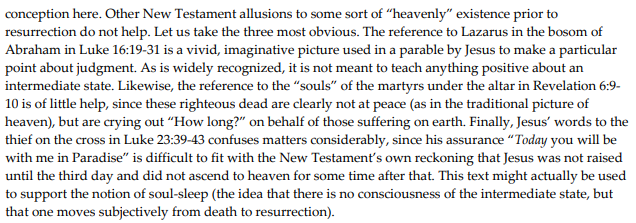
One matter that has made me less certain is the descriptions of what has happened to people that have the so called ‘Near death experiences’. I could try to interpret them just as strange ‘dreams’ generated by the brains that suffer from a lack of oxygen and are dying. Yet, there is quite much similarity with the assumptions of what could happen when the soul leaves the body.
The reported experiences during the last two days alive are also interesting: in addition to the lucid moments, many report seeing dead relatives or Jesus. Again, I could explain these just as the consequence of the slowly approaching death in the brains - death of the body is usually a slow process, not a sudden step from.alive to completely dead.
In these cases, I note how my beliefs and assumptions affect my conclusions.
If I believe that death is like a deep sleep, unconscious waiting until the Lord returns and we resurrect in a new spiritual body, I tend to treat the stories just as strange ‘dreams’ generated by the dying brains.
If I believe we have a soul that lives and is conscious after the death of the mortal body, my interpretation of the same stories would be completely different.
My worldview and preceding assumptions clearly directs my interpretations, so how much can I trust my interpretations of the stories? The biblical scriptures are not clear enough that I could solve this problem by reading the answer from the Book.
Edit:
I will participate in a two-day theological seminar about these and eschatological questions in February. I wait to see if that seminar gives me better understanding.
There are also countless anecdotal reports of sane, awake individuals seeing deceased loved ones — without the influence of drugs, sleep deprivation, or any clear psychological trigger. These experiences have been recorded in virtually every culture, across time, and I find it hard to believe that every single one of them is either fabricated or hallucinatory.
After all, hallucinations don’t typically happen out of nowhere — they tend to follow specific medical or psychological conditions. There are criteria for what counts as a hallucination; it’s not something that just spontaneously occurs in healthy people, let alone in millions of people.
One such case happened in my own family. It was 1995. My grandmother was 55 years old at the time. She was in perfect health — physically and mentally — when she suddenly saw her nephew standing in her bedroom. He looked at her and said, “Hello, Auntie. I have to go.” That was it. She had no idea anything had happened to him.
About 30 minutes later, her sister received the devastating news: her son had died instantly in a car accident. The others in the car survived — but he didn’t. My grandmother didn’t even know he had gone out with friends that night.
I mean, I would believe in the intermediate state of the soul even if these cases didn’t exist — I’m Catholic, and I trust the teachings of the Church. But even if the intermediate state weren’t part of Catholic doctrine, I have to admit these kinds of cases would be very difficult to dismiss or explain away.
And I’m not referring to a single isolated case — I’m talking about a widespread phenomenon. These reports of visions of deceased people happen all over the world, across vastly different cultures and belief systems. It becomes very difficult to dismiss all of them as mere coincidence or error when the pattern is so consistent and global.
These are not “proofs” in the scientific sense but they are still hard to explain away (and in these cases we aren’t even talking about Ndes, we are talking about people who are actually dead).
That’s a possible point. How does the interface work such that dementia occurs?
Interfaces are where connections link between two or more systems. But an interface doesn’t necessarily affect the internal operations of the connected systems, just the communications across the ‘gaps’. The observation that material changes have such profound impacts would seem to highlight the significant dependence of consciousness operations with a (material) interface and physical substrate (which is something I don’t think many dispute in modern times). It’s clear that what we understand as thought, consciousness, self-awareness and qualia can be highly impacted or altered and even negated by tiny changes in neurobiology. So, I wonder, how does that work? What aspects of consciousness are not tightly coupled or hard wired, in the case of many of our senses and perception), to a physical substrate?
While hiking the Pacific Crest Trail with some friends this occupied a four- or five-hour stretch of trail, the topic being “What does it mean to be Roymond if his meds can alter his personality noticeably?” Other than trying to explain how things looked from my side my big contribution was to point out that something as common as changes in light levels can have huge impacts on personality.
That appears to be true although the cause of hallucinations may sometimes be unknown.
I know persons who have had vivid hallucinations after eating a certain pain medication that does not cause symptoms to most people. Also, my mother told about the hallucinations she saw. After detailed studies, the doctors found a small haematoma from the area of the brains that is associated with sight. After the haematoma healed, the hallucinations disappeared.
In the above cases, the hallucinations did not include realistic discussions with dead relatives. They were mostly a flow of persons, animals or things, passing by the observer or coming through the door. These persons told that what they saw looked very realistic but otherwise, the hallucinations clearly deviated from the way ‘normal’ social encounters or life goes. In that sense, those hallucinations differed from the reports about the experiences before or at the clinical death of a person.
Yeah, I agree. To me, the most compelling cases are the ones that involve knowledge a person couldn’t have had — like seeing who had died, before anyone had told them and/or anyone was even able to know about the death. Those kinds of experiences are in my opinion the most compelling ones. They are called apparition crisis.
1 Like
gbrooks9
(George Brooks, TE (E.volutionary T.heist OR P.rovidentialist))
161
Have you heard about the most famous case, published in the medical journal The Lancet in 2007 by Dr. Lionel Feuillet. A 44-year-old French civil servant was discovered to be living a normal life despite missing an estimated 90% of his brain tissue.
The man sought medical attention for mild weakness in his left leg. Routine scans stunned doctors when they revealed his skull was almost entirely filled with fluid, with only a thin perimeter of brain tissue remaining.
He suffered from severe, chronic hydrocephalus (excess cerebrospinal fluid buildup) since infancy. Although a shunt was placed when he was 6 months old and revised at age 14, the fluid continued to build up slowly over 30 years, gradually compressing his brain against the inside of his skull. Despite the extreme loss of mass, he was a married father of two, held a steady job as a public servant, and was considered “socially apt”. His IQ was measured at 75 (verbal IQ of 84), which is at the lower end of the average range but sufficient for independent living.
1 Like
gbrooks9
(George Brooks, TE (E.volutionary T.heist OR P.rovidentialist))
162