Please Define Evolutionary Creationism? I am finding the Biologos website articles defining it a bit vague. Im left with more questions than answers

All of those concepts describe the bulk reaction. A single mutation happens in a single molecule, one of the two strands of the DNA genome of the bacteria.

If we started with genetically identical bacteria we would observe different mutations happening in different offspring, even though their ancestors were genetically identical. We can measure the mutation rate across many generations and many populations, but the individual mutations are not predictable and can only be described stochastically.

Artificial DNA synthesis might be helpful here. I often order short DNA molecules called oligonucleotides (a few nucleotides), or oligos for short, usually in nmole amounts. These are made synthetically by adding one base at a time in a non-enzymatic process. Most of the time I want all of the oligos to be the same sequence. However, sometimes I do order what are called degenerate oligos which can be more than one base at a specific position. For example, if I order an oligo with the sequence AAATTTB, that last base can be a C,G, or T. What they do is add all three bases to that cycle of the oligo extension so we get a random attachment of the different bases to different oligos. There is no way to predict ahead of time which specific oligo molecule will get which base. The same applies to mutations.

2 Likes

I am considering how you would get the single bacterium - I assume it is from a bulk sample. If so, there would be a probability that you may select a phage resistant strain or one that is not, since your comments indicate the mutation(s) are linked to the reproduction rate(s) while the phage would then knock out the non-resistant ones.

Is selection of the founder hit-and-miss?

This is the main reason I am participating in this exchange - this to me would demand a mechanistic approach and not random.

This is not a measure of a mutation rate, but simply obtaining a bulk sample after a specific time lapse.

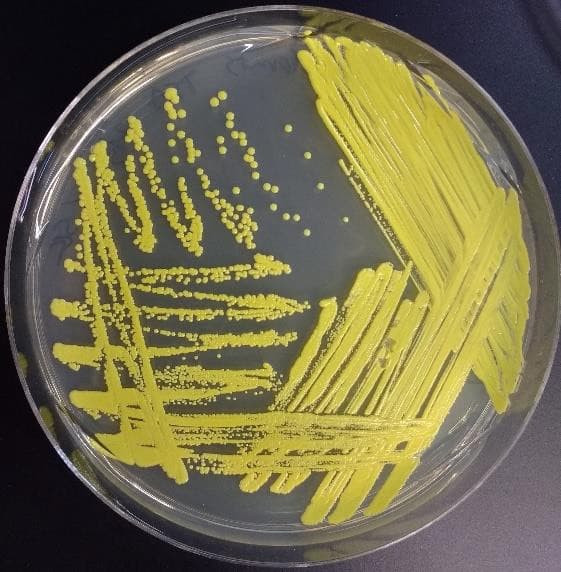
You spread the bacteria out and let them grow on an agar plate. The next day you will have isolated colonies which are the descendants of a single bacterium. It’s what I described as “streaking for isolation” in one of the earlier posts.

Those single, well separated colonies towards the top of the plate come from a single bacterium.

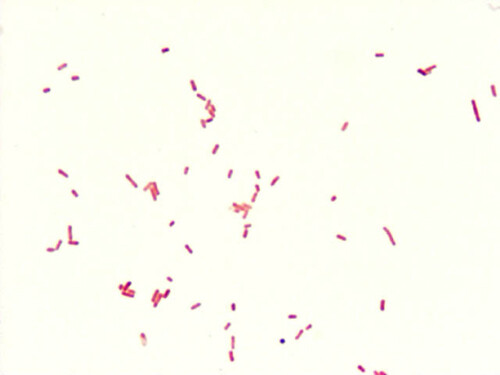
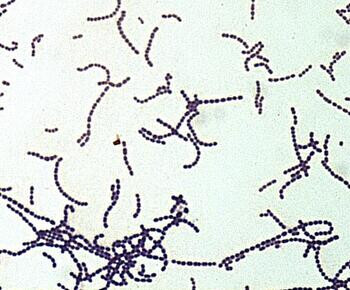
Note: E coli live as single rod shaped bacterium, so the above description does work for E coli. However, different species of bacteria can grow as chains/groups of individual bacteria that share very recent common ancestry. In these cases we would describe the multi-cellular chain as a colony forming unit.

E. coli:

Streptococcus:

There is a chance of picking a colony that came from a bacterium that recently acquired phage resistance mutation. However, it’s not very probable. We are talking a few hundred phage resistant bacteria out of billions, so something like 1 in 10 million colonies will be phage resistant.

Also, if the single bacterium founder was phage resistant then it would show up in the results of the experiment. Instead of getting just ~100 phage resistant colonies at the end of the experiment you would get billions.

Then we would expect to see the same mutation happen every time in identical reactions, but that’s not what we observe. We see different mutations occurring in different bacteria, even though they were genetically identical.

It’s counting the number of mutations and dividing by the number of DNA replication cycles, usually normalized by the number of bases that are copied. Reported mutation rates for E coli are around 2E-10 per nucleotide copied in a genome of ~4.5E6 nucleotide pairs. So there will be cell divisions where there aren’t any mutations, but a few will have a mutation.

3 Likes

I think we are still not getting to the main point, so I will say this - is the resistant mutation triggered by introduction of the phage? In your previous response you seem to indicate that mutations were spontaneous and accumulated with reproduction rates, while the phage deselected the non-mutated ones.

In other words, they are statistical.
Unless you’re saying that chemistry is done by taking one atom of this and another of that and putting them together into single molecules.
That they are statistical is inherent in the concept of moles.

If some given mutation is the result of a cosmic ray, of course it’s random: neither the cosmic ray nor the DNA string have any input as to where the cosmic ray will strike.
The same is true of any other mutagen or mutagenic process.

A rate is a distribution across a sample, e.g. the rate of traffic past a certain point is a matter of how many cars pass regardless of their speed. That means that a rate is the result of measuring a bulk sample. The same applies to lava flows, glacier movements, etc.

1 Like

Yes, an atom, or interimediate reacts with another - that is why we develop mechanisms. I have provided info for a simple kinetcs scheme for H2 and O2. The mechanism is well understood:

Step 1: Initiation The reaction starts with the breaking of the H₂ and O₂ molecules into their respective atoms. This step requires a significant amount of energy due to the strong H-H and O=O bonds.

H2→2H

O2→2O

Step 2: Propagation Once we have the hydrogen and oxygen atoms, they can combine to form intermediate species. These intermediate species are highly reactive and propagate the reaction further.

H+O2→HO2

HO2+H→2O

Step 3: Chain Branching In this step, the hydroxyl radicals (OH) formed in the propagation step react with hydrogen molecules to produce more hydrogen atoms and water. This step is crucial as it leads to a branching chain reaction, which rapidly increases the rate of reaction.

OH+H2→H2O

Step 4: Termination Finally, the reaction reaches a termination step where the reactive intermediate species are consumed, leading to the formation of stable water molecules.

H+OH→H2O

Summarizing the overall reaction mechanism:

  1. Initiation: Breaking H₂ and O₂ into atoms.
  2. Propagation: Formation of HO₂ and OH radicals.
  3. Chain Branching: OH radicals react with H₂, forming water and more H atoms.
  4. Termination: Formation of stable H₂O molecules.

This reaction mechanism shows how complex and fascinating the process of forming water from hydrogen and oxygen can be.

For about the 4th or 5th time, no. We observe a large amount of variance in the number of resistant bacteria from experiment to experiment which is the evidence for the mutation occurring prior to the bacteria being exposed to phage.

1 Like

and for the nth time, you have not shown that the single bacterium (the founder) was without the mutation - indeed it may be assumed from your previous comments that this was obtained from a batch containing both non-resistant and resistant bacteria.

A single bacterium is not a “batch”, and they start with a single bacterium.
And yes, it has been shown that the “founder” was without the mutation; the statistical results prove it. The results would be entirely different if " this was obtained from a batch containing both non-resistant and resistant bacteria", as has been explained multiple times.

You have misunderstood what I wrote. I am assuming that the “founder” single bacterium was obtained from some place or container with lots of bacteria which was the source of the single one. I also asked if they had a method to ascertain if the single bacterium so obtained was without mutation, and was informed there was none.

Since you seem so sure, please provide some details on where the bacterium was stored and how it was characterised - since this was, as I understand it, that there was a source of the “founder”.

BTW the contention is that the bacteria mutation(s) were spontaneous, in which case why should such spontaneous and random mutations not occur in any of this bactria store somewhere for the research discussed, prior to the studies as well as during.

Generally for such experiments the original population from which the single bacterium selected to be the founder of the experimental population is taken, is treated with the same phage or antibiotic to be used in the experiment to confirm that the original population is not already resistant. If the treatment is effective against the whole of the original population, it is considered that the treatment would also have been effective against the single bacterium selected from that population to be the founder of the experimental population. The alternative possibility is that the experimenter accidentally selected the only bacterium/bacteria from the source population which carried a mutation against the treatment - and did so in every experiment. This is astronomically unlikely.

Also, as @T_aquaticus has said, if the founder bacterium is already resistant to the treatment being used, that will produced different results than if resistance was gained later. If the founder is resistant, the experimental population will be largely resistant, with matches of bacteria that have lost resistance. If the resistance is gained during the experiment, less of the experimental population will be resistant.

If the original population was resistant, then every experiment would lead to almost all the experimental population being resistant. If that doesn’t happen, it indicates the mutation wasn’t present before the experiment.

2 Likes

Yes, we have. If the founding bacterium was resistant then nearly all of the bacteria would be resistant. This isn’t what is observed. We observe resistance in only a few hundred out of billions after 10 to 20 generations.

There is a method. You look to see how many of the founders descendants are phage resistant. If it is nearly all of them, then the mutation existed in the founder. If it is just a few hundred out of billions after 15 generations, then the founder didn’t have the mutation.

The difference is the method of selection. If only 100 bacteria out of 10 billion are resistant there is a very low probability of randomly selecting a phage resistant bacterium. When you streak for isolation in the absence of phage you are randomly selecting a single bacterium out of a whole population. And again, if we did have the bad luck of a 1 in a billion probability, we would still see resistance in nearly all of the bacteria in the experiment, but we don’t see that.

Prediction 1: If the founding bacterium had the phage resistant mutation then more than 99.99% of the descendants will also be phage resistant. Plating just a few thousand bacteria on a phage plate should produce an overgrown lawn of bacteria on the plate.

Prediction 2: If the mutation happened in the descendants of the founding bacterium, then much less than 0.01% of the descendants should be phage resistant. If you plated a few thousand of those descendants with phage present you probably wouldn’t get any colonies growing on the plate. You would have to plate billions of bacteria just to see a few bacteria that survive and grow a colony.

Observation: Only a few out of billions are phage resistant. Prediction 2 is supported.

2 Likes

ok, so we can agree that there is a negligible amount of resistant strain at the commencement

Now the next point - are significant amounts of phage resistant bacteria formed after the phage was added to the sample? From your comments, I would assume it is so.

Thus, would you agree that the formation of significant amounts of resistant bacteria is associated with what went on after the phage was added?

EDIT I am interested in any data that would show this:

bacteria + phage → dead bacteria + resistant bacteria + (used phage)

ie is the phage ‘used up’ as it kills bacteria, and if so what has it become.

also, the death rate of bacteria seems to be rapid - is there data that show a large population of bacteria would not be completely killed if a small amount of phage were used.

I will comment further once I see a response.

Do you know what a phage is?

2 Likes

The only phage resistant bacteria added after phage introduction are the descendants of the phage resistant bacteria that already had the resistance mutation at the time they were introduced to phage. This is what the colonies are, millions of bacteria produced by the reproduction of the phage resistant mutants, bacteria that had the phage resistance mutation before being exposed to phage.

The actual data:

(phage sensitive bacteria) + (phage resistant bacteria) + (phage) ----> dead bacteria + (the same phage resistant bacteria as before) + (phage)

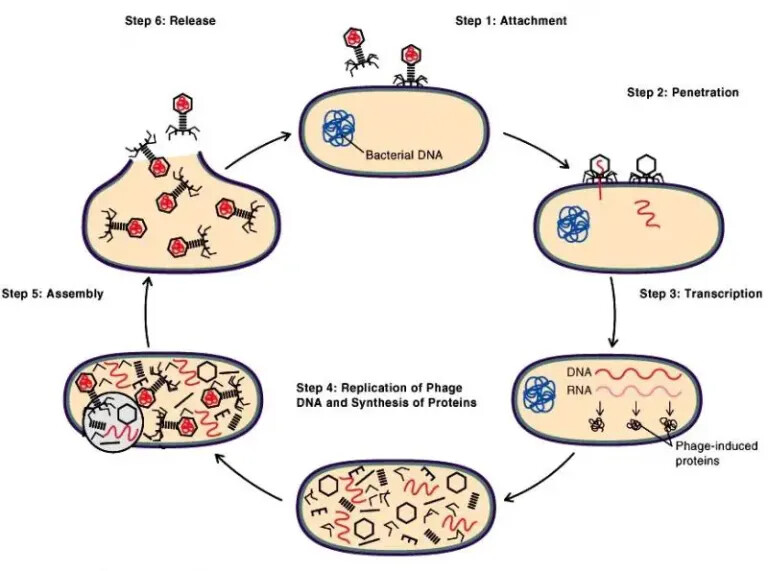
I’m not sure what you mean by used phage since the phage will infect and produce a whole bunch more phage that can kill bacteria it comes into contact with, assuming they are phage sensitive. Phage are viruses.

There were experiments where no phage resistance was seen. They ran many pilot experiments to demonstrate that there was enough phage to kill all phage sensitive bacteria on the plate. On top of that, they observed that the phage did not even bind to the phage resistant mutants so it was not a case of there not being enough phage. Also, the bacteria from phage resistant colonies was added to liquid media containing phage and no clearing was observed. They are fully resistant. For reals.

Of course, the Luria-Delbruck fluctuation experiment has a wonderful companion in the Lederbergs’ plate replica experiment. However, if you are confused by the fluctuation experiment it probably isn’t time to go over the plate replica experiment. But just in case, you can read the paper here:

An article written for a more general audience:
https://schaechter.asmblog.org/schaechter/2016/10/pictures-considered-41-replica-plating.html

2 Likes

Richard,
God didnt fail, man did by his transgression.

Please read the following texts… This is exactly why i regularly state on these forums that sound theology requires cross referencing…

Genesis 3.17-19 - cursed is the ground because of you

Isaiah 24.4-6 - Therefore a curse has consumed the earth

Jeremiah 12.4 - Because of the evil of its residents, the animals and birds have been swept away

Isaiah 55.12-13 - Instead of the thornbush, the cypress will grow, and instead of the brier, the myrtle will spring up

Isaiah 65.17 - I will create new heavens and a new earth. The former things will not be remembered

Rom 8.22 - We know that the whole creation has been groaning

2 peter 3.13 - in keeping with God’s promise, we are looking forward to a new heaven and a new earth

2 Cor 5.2-4 - so that our mortality may be swallowed up by life

Col 1.20 - and through Him to reconcile to Himself all things, whether things on earth or things in heaven,

Rev 21 Then I saw a new heaven and a new earth, for the first heaven and earth had passed away, and the sea was no more.

Rev 22.3 - No longer will there be any curse

I a fully aware that you can argue the universal “fall” of humankind from Scripture, The problem is that it does not reflect reality. People are not all corrupt, and can do good whether they have a faith or not

An in claiming that sin rues you are completely undermining and dismissing God’s gift of forgiveness. Sin does not rule. God, through Christ, defeated it…

Your “sound theology” is based on misunderstanding the whole of Scripture and honing in on the details. That is the flaw of your “cross referencing”!

I could take apart some of your references because they do not mean what you claim, but that is not why I am here. I am here to learn and understand other points of view, it seems most people are here to correct mine.

Sorry.

Is 42
his is what the Lord says—
he who made a way through the sea,
a path through the mighty waters,
17 who drew out the chariots and horses,
the army and reinforcements together,
and they lay there, never to rise again,
extinguished, snuffed out like a wick:
18 “Forget the former things;
do not dwell on the past.
19 See, I am doing a new thing!
Now it springs up; do you not perceive it?
I am making a way in the wilderness
and streams in the wasteland.
20 The wild animals honor me,
the jackals and the owls,
because I provide water in the wilderness
and streams in the wasteland,
to give drink to my people, my chosen,
21 the people I formed for myself
that they may proclaim my praise.

22 “Yet you have not called on me, Jacob,
you have not wearied yourselves for[c] me, Israel.
23 You have not brought me sheep for burnt offerings,
nor honored me with your sacrifices.
I have not burdened you with grain offerings
nor wearied you with demands for incense.
24 You have not bought any fragrant calamus for me,
or lavished on me the fat of your sacrifices.
But you have burdened me with your sins
and wearied me with your offenses.

25 “I, even I, am he who blots out
your transgressions, for my own sake,
and remembers your sins no more.

Everyone, not just the favoured few!

There is no need for sacrifice (v23)
There is no need even to identify God (v22)

God got so weary of transgressions He blotted them out (v25) Not through anything man has done, but by His own Hand (v25)

Grace has no validation. A gift has no validation.

The only one who suffers is the one who refuses it and still counts it. ((If they do not count sin as valid then they do not worry aout it, or the need for it to be forgiven)

God does not count people’s sins but it apears that you (et al) do.

The Good News is that God has forgiven sins. but you appear to want to keep that news for yourself and other “Christians”

Richard
Honestly Richard,
Christians should not care about human moral reasoning…thats the entire point of being a Christian…recognising that this existence did not happen by chance, that there is a God, and that He did not intend for it to be this way and that He intends to restore that which was corrupted and ruined.

If you want to stick with the dilemma that Hitlers evils were a product of evolutionary social experimentation…go for it.

I beg to differ in that Hitler was a consequence of evil and sin and that freewill is what allows men to be influenced into doing bad things.

It seems in your above statement that you are attempting to claim the biblical notion of corruption and ruin is unscientific therefore untrue. I do not accept that because it is antibiblical as i have proven by a host of texts across more than 7 centuries of inspiration of bible writers (exc Moses…Isaiah to apostle John) in previous post.

I have excluded Moses in time because some here infer he didnt exist!

Oh btw…Isaiah reference there is foretelling the future…not the past.

Finally…the cross references i provided come straight out of Strongs concordance…so they are not mine…they are theologically recognised as the appropriate interpretation.

Forgiveness of sin does not detract from the wages of sin. The wages of sin is death…that remains unchanged. The difference is, we cannot earn our own salvation from death…that is the free gift. Ultimately, desth still remains the consequence for all who.do not take up the offer.

So evil still dies…permanently. your claim is that Christs death covers the sins of those who do not confess…that is absolutely false.