Continuing the discussion from Does anyone have a paper on Genesis 6 and how it may support the TEism world view?:
So you are able to accept that Earth is most likely millions of years old?
G.Brooks
Continuing the discussion from Does anyone have a paper on Genesis 6 and how it may support the TEism world view?:
So you are able to accept that Earth is most likely millions of years old?
G.Brooks
Why not? Bible scholars for over two millennia have regarded it as being as much as a trillion years old.
Yes, that one’s a bit silly, but billions (a thousand thousand thousands) was common. Anyway, nothing in the text is contrary to a vast age.
Though as most here know my favorite is the position that just says the earth is uncountably old and the universe older still, the latter having begun as the smallest size possible and rapidly expanded vastly until the fluid it consisted of was thinned enough for light to shine, at which point YHWH-Elohim commanded light to be (that’s from the eighth through tenth centuries, though possibly also the sixth and perhaps older).
That all comes from Genesis 1, BTW.
I think someone INSERTED a global flood into Genesis in order to “keep up with the Babylonians”…. what do you think? There’s nothing about the dating of the flood, the description of the flood, or the reason for the flood that makes much sense.
I would say the world is old as in 4.6 billion compared to 10k. But normally I see OE and YE as forms of creationism involving some form of intelligent design. But I do see evidence of ID. Would love to. Despite not still have faith.
There is no global flood in Genesis, not in the Hebrew. The idea that it was global came about via translation into Greek and later Latin.
@St.Roymond I believe you have taken a “click bait” summary and blown it way out of proportion.
Yes, the Hebrew view of the “whole world” is an abridged one…. especially if you accept the idea that the ancients thought the world was smaller than we know it is today. But some elements reflect the TOTALITY of even a smaller, flatter world. Do we need animals to be brought aboard for livestock purposes (and for eating)? Or are we replacing ALL the animals of the world after the flood? A regional flood would have been indicated by the first birds NOT COMING BACK. And a regional flood would have left perhaps millions of people who were not eliminated.
This is a summary that revises your statement back into a more realistic understanding:
Extensive scholarship exists on the portrayal of the flood in the original Hebrew, with a general consensus among secular and many biblical scholars that the text describes a “cosmic” or “universal” flood within the ancient Near Eastern understanding of the world, rather than a “global” flood in the modern geographical sense.
Key points from the scholarship include:
Ancient Cosmology: Scholars argue the Genesis narrative reflects an ancient, pre-scientific cosmology where the world was perceived as a flat disk under a solid dome (firmament), with cosmic waters above and below. The flood is described as an “un-creation” or “de-creation,” where the boundaries established in Genesis 1 (separating the waters above from the waters below) are removed, returning the world to a state of watery chaos.
Meaning of “Earth”: The Hebrew word eretz (often translated as “earth” or “land”) can refer to the entire planet, but it can also simply mean the ground, land, or a specific region/country (e.g., the “land of Israel” or the “land of Egypt”). To the original audience, the phrase “all the earth” might have meant the “entire land” in their known vicinity or the entirety of their perceived world.
Hyperbole and Literary Context: Many scholars interpret the language of the flood narrative, including phrases like “all the high hills, that were under the whole heaven,” as consistent with ancient Near Eastern literary hyperbole used to emphasize the totality of the event from the perspective of the people in that region. The narrative uses powerful, universal language for the scope of the disaster relative to the inhabitants of that world, not necessarily every square mile of the planet’s surface as known today.
Comparison to Mesopotamian Myths: The Genesis story is recognized as being based on earlier Mesopotamian flood myths (like the Epic of Gilgamesh), which also depict the flood as destroying the whole world known to them. This shared context suggests a common understanding of a vast, all-encompassing regional or cosmic event, rather than a modern “global” one.
Focus on Theology: Ultimately, many contemporary biblical scholars view the primary purpose of the flood narrative as theological (focusing on God’s judgment on human wickedness, covenant, and re-creation) rather than a precise historical or scientific description of a global geological event.
While some contemporary evangelical and creationist scholars insist the original Hebrew text clearly dictates a global, historical flood, the broader academic consensus within biblical studies leans towards the cosmic/universal interpretation within an ancient worldview.
None of that “revises” anything about my statement.
???
To wit: There is nothing PARTIAL about the Bible’s flood, nor the other descriptions of a massive flood. EVERYTHING and EVERYBODY ALIVE is affected.
I have to go with the overall body of evidence. Much of the evidence put forth by the YE supporters focuses on cherry-picked evidence, weak arguments and straw-man statements. They have not offered solid and comprehensive evidence or argument for their position in my opinion. In addition, they have made statements and edited videos that ridicule the Old Earth supporters. Not the approach you want to engage in rational discussion.
Agreed. But “want” is different from “need”. Young Earthers is certainly a target audience for BioLogos.

Their arguments about scripture are the same. They harp on being faithful to the Bible but as far as I can see they have no actual respect for the text, only for their caricature of it.
In context “the earth” means “the land”, i.e. the known world.
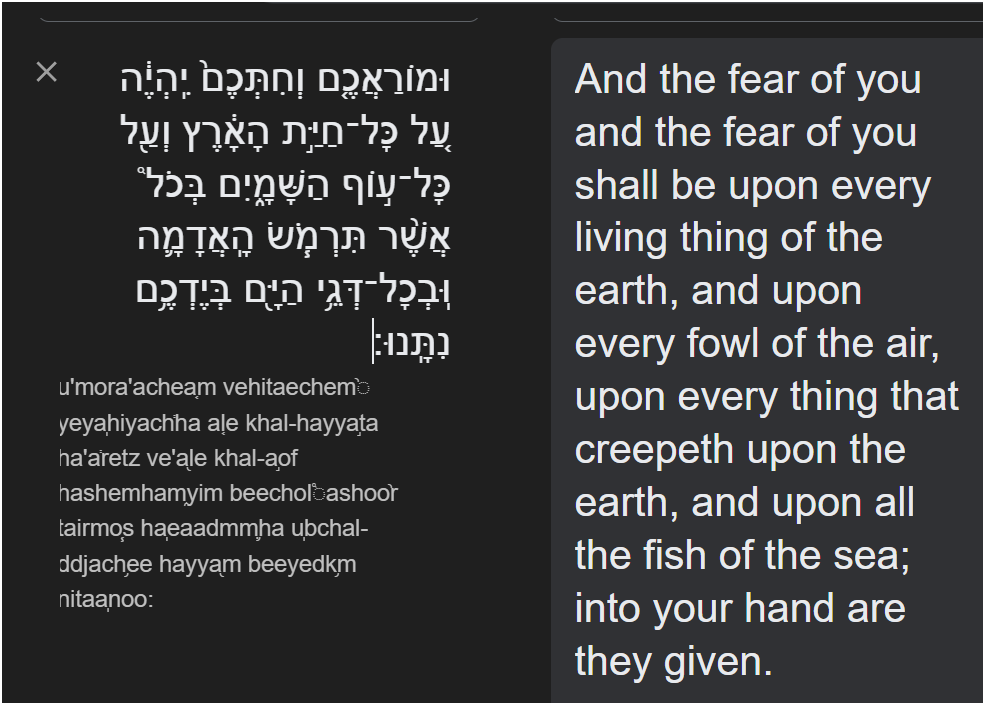
Your all-caps claim ignores ordinary use of language – or do you think that every use of “all” even in Genesis means “every last one”? It doesn’t; consider Genesis 9:2 for starters.
welcome to the forum, John. It is good to hear your voice.
In the ms of a new book I have a chapter on Genesis 1 - 7. It’s based on the Hebrew text and an ancient rabbinical understanding, but is not focused on ch 6. If you’re interested let me know at
You just did – “all” does not mean “every last one”.
Sorry, but what have endlessly, unresolvably debatable subjective nuances of ancient Hebrew got to do with geology?
Well if the Bible says the entire globe was covered in water then obviously it actually happened and all of the science that says otherwise is simply wrong and should be thrown out.
Ah HAH!!! Yeah but it wasn’t just global! ‘Scholarship’ sez it was universal, cosmic, man! The universe got drownded! It’s a cosmological FACT!
If that’s relevant to the revelation of transcendentalisticalist Love and the basis of all morality, I don’t know what isn’t!
One YEC website did briefly post the claim that sedimentary deposits on Mars were from Noah’s flood. Ironically, Martian sedimentary deposits do have a decent chance of being Noachian, but that’s because of a region on Mars getting named for Noah.
“Let your conversation be always full of grace, seasoned with salt, so that you may know how to answer everyone.” -Colossians 4:6
This is a place for gracious dialogue about science and faith. Please read our FAQ/Guidelines before posting.