That first photo of the tree! My favorite lighting situation outdoors. We see it fairly regularly in the fall. Dark, overcast sky with the sun shining from under the clouds.
2 Likes
That is true. What I was thinking was the cold arctic air that flows from the north but can affect temperatures perhaps thousands of km towards the south, depending on how the polar vortex is tilted.
But yeah, Florida, Texas or south California are probably seldom affected by the arctic breeze. My bad - I am a subarctic creature and that distorts my thinking.
I guess there are some differences between Europe and USA in this respect.
One reason for this is the direction of the mountain ranges, W-E in Europe but S-N in USA. The Alps may divide the weather in Europe so that the SW and NE parts have strikingly differing weather.
The second reason is the ocean currents. Warm currents affect the weather in much of Europe but Europe also gets winds from the cold Siberia and warm Sahara. USA is surrounded by oceans (excluding Canada) but the ocean currents might not affect the climate as deep inland because of the mountain ranges (just a guess).
4 Likes
The Finns and other northern folk astonish me at their hardiness!
It is a matter of adaptation - learn to cope or die!
Cold nature is absolutely merciless so it might really be a matter of life or death.
The other side of the coin is that subarctic creatures may be poorly adapted to warm climate. My brains start to shut down at 25 C (77 F), which is the reason I could not go to work to some university in a warm location. Above 30 C (86 F), I start to feel wider problems with overheating - above 90 F I am barely alive and just waiting that the heat would stop…
Maybe even I could adapt to a warmer climate but that might take a looong time.
It is a bit funny that warming from really cold to the temperatures in a freezer (-18 C / zero F) may feel like a warm breeze. I take anytime freezer temperatures compared to -40, life is much more complicated when temperatures drop below -40. Although life at -40 is much easier than life below -50 because the worst technical problems start when temperatures go below -50 F.
5 Likes
I am the same way. Really hot weather sends me into retreat but I am a real hot house tomato in that I also shut down in extreme cold. We get either extreme only very rarely and for that I am grateful. In Berkeley we get only 7 days yearly on average that make it over 90 F and only a few nights that drop below 40 F. That means I can take walks and putter in the garden almost any day of the year. I am spoiled.
5 Likes
We had a string of -40 days when I was in grad school in Indiana; one fell on a weekend so we organized a skating party and invited the nurses from the nursing college across town. People generally spent more time in the cottage around the fire than actually skating, but there were a few – including a Norwegian – who spent hours out on the ice on the lake.
3 Likes
I’ve been getting the same way. Mostly I retreat to one of the swimming holes where I can float on an inner tube; on the really hot days that means letting my legs dangle while supporting myself with my arms on the tube.
3 Likes
That seems like the best use of a hot day. We sought out waterholes at one time and have hiked Hall’s Creek and other dessert paths which included water.
2 Likes
Interested where those paths are, though I like coffee or tea with dessert as well. 
1 Like
Not to nitpick too much but apparently the coldest temperature ever recorded in Indiana was -36 F (New Whiteland on Jan. 19, 1994). That is certainly brutally cold. But based on my experience in Saskatchewan, Canada, temperatures in the -40s are indeed, oddly, another entire “level” beyond those in the mid -30s as @knor noted 
I conducted a Christmas bird count in Saskatoon at -43 C (-45 F). Needless to say, binoculars let alone humans do not function well in those conditions…
5 Likes
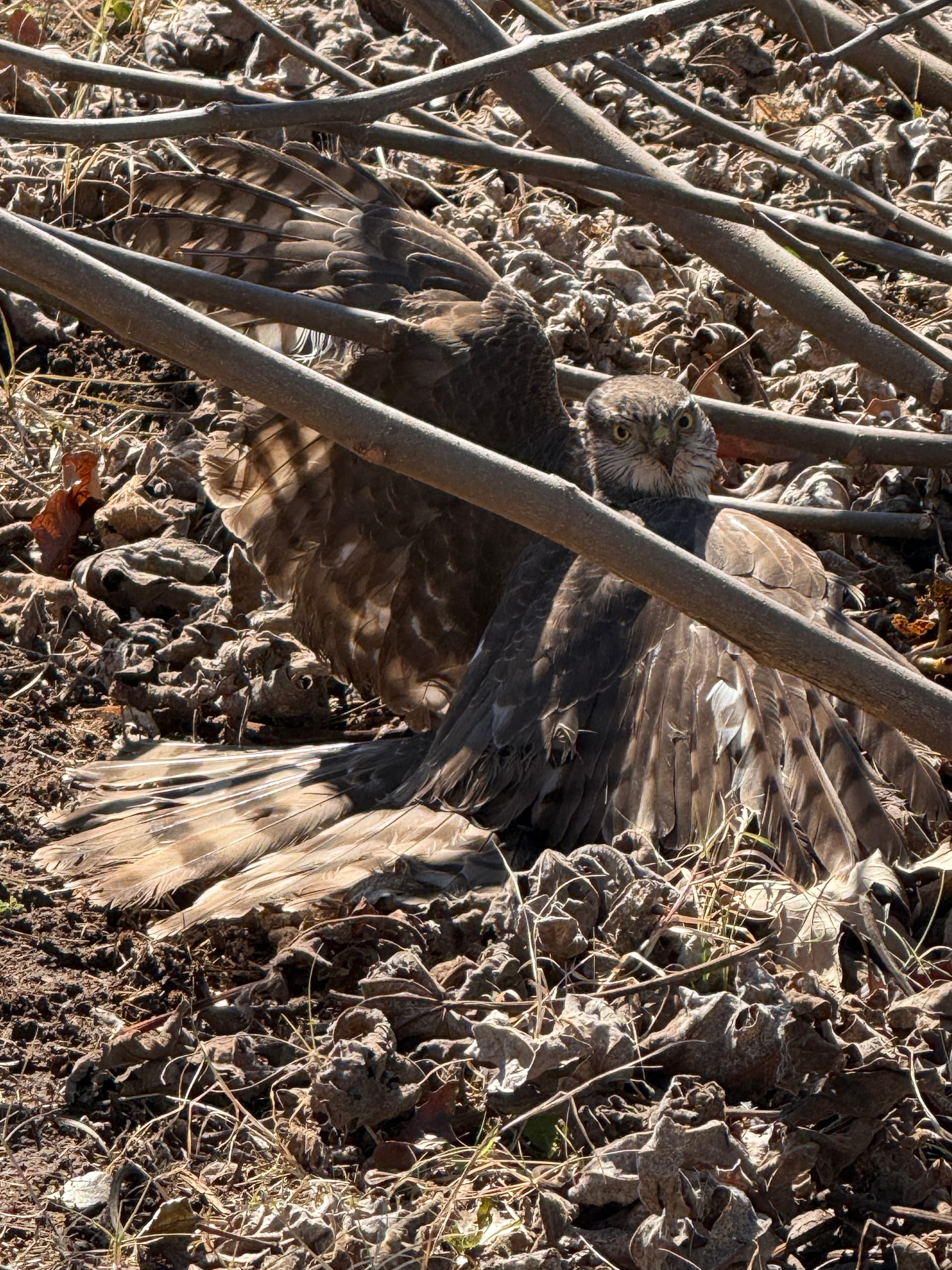
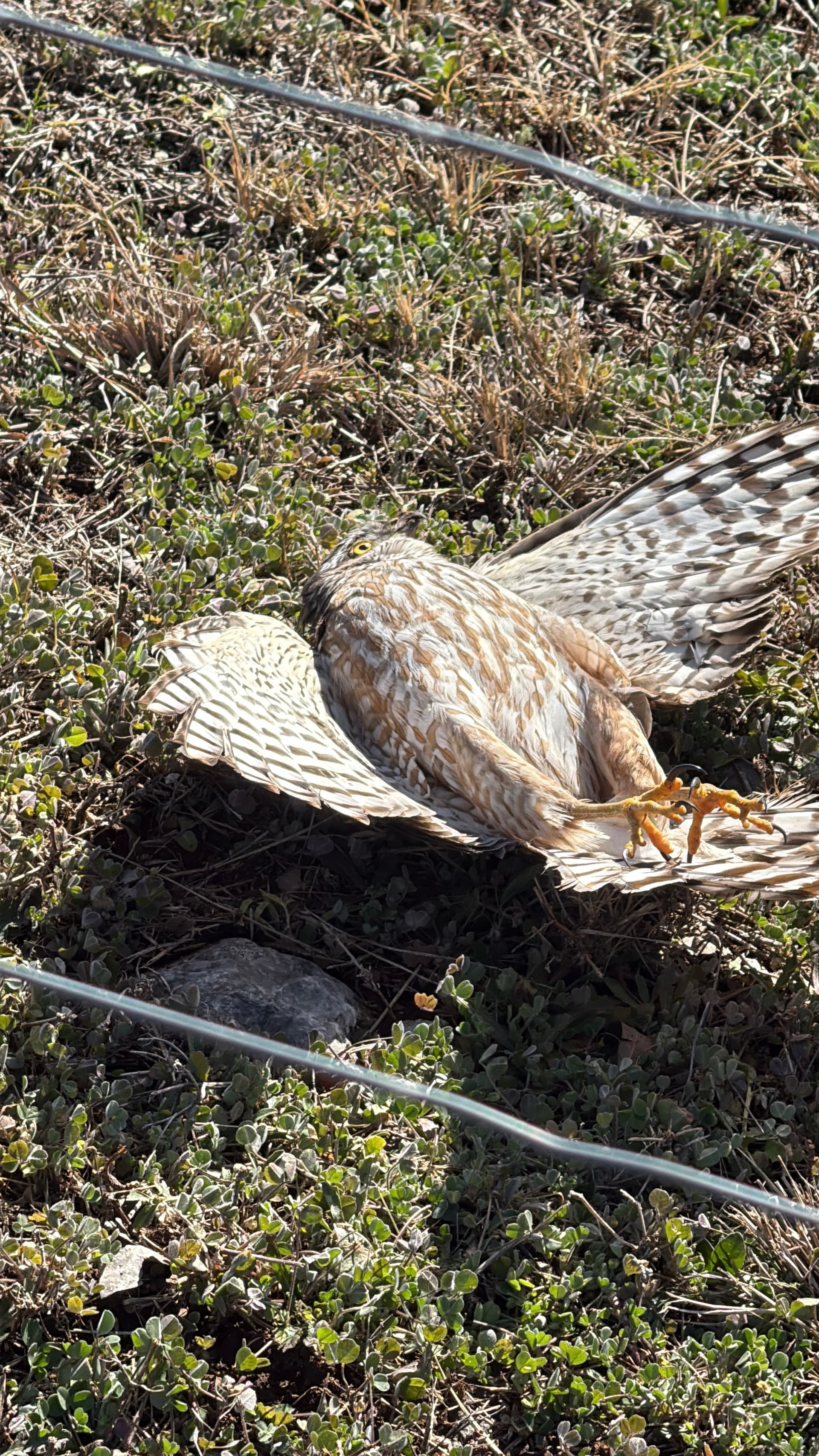
Small hawk, possibly a sharp shinned hawk, apparently recovering from the cold. It seemed to move its wings well as it moved away when approached, so hopefully will be fine after warming in the sun.
3 Likes
Good to know. I’ve placed myself on a travel ban to Saskatchewan and Norway in the winter. Is sub -40 F spit freezing in the air cold?
2 Likes
Official records and experienced temperatures may differ. I learned it as a young schoolboy when an unusually wide cold pocket surrounded the village where we lived. There were no official temperature measurements but a comparison of several mercury thermometers suggested that the morning temperature was about -52-53 C (-61-63 F) at the height of 2m, a temperature that is slightly colder than the national record. The closest official weather station was about 30km away, well outside the cold pocket. There the temperature was just -40 C/F and in the official national temperature statistics, that winter was classified as ‘normal’, not very cold.
When the official temperature went below -60 F, my guess is that some cold pockets may have reached -75 F or even colder. That is just a guess as the official temperature measurements are not done in places where cold air accumulates - nobody knows what the real minimum temperatures have been.
What we know is that such record temperatures are unlikely in the future. In northernmost Finland, climate change has already increased average temperatures by +2.5 degrees C and I expect that to rise to +4 C within the next decades.
4 Likes
Yes, there is slight variation “on the ground” in temperatures, and I have heard of “cold pockets” like valleys but these are variations on a fairly small spatial scale so I guess one would need a personal thermometer with them to show differences from the meterological stations. The windspeed also affects how one perceives the cold (how fast frostbite occurs on the skin). In Saskatchewan, the winter weather reports usually report the “straight” temperature and the “temperature with windchill”.
3 Likes
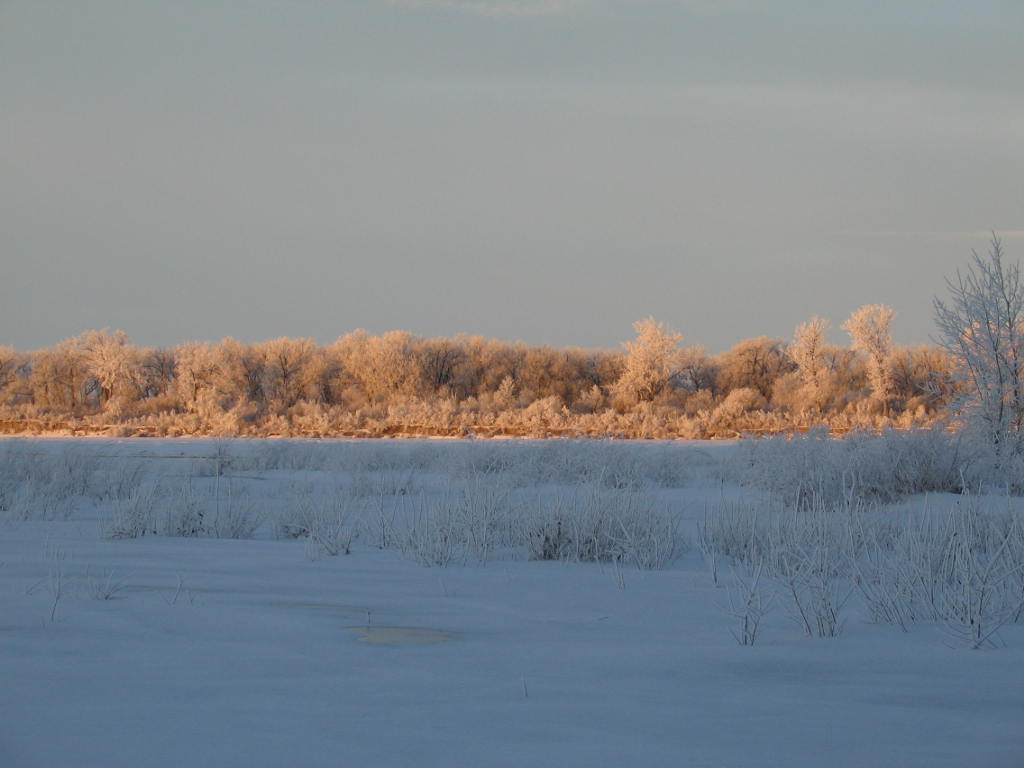
Yeah..spit freezing and hair freezing. A friend with long hair once went outside at -30 after her morning shower with wet hair.–it froze stiff like icicles after only a minute or so! Here’s a typical Saskatchewan winter landscape at sunrise… (the frost can be pretty at times).
8 Likes
As a schoolboy, I used to go out into cold after a shower. When it was -30 C, the water in the hair froze rapidly and I could comb it* away. A natural instant drier 
Edit:
it = the frozen water
3 Likes
At first I thought you meant combing it would cause your hair to fall out. Instant drying sounds a lot more accommodating.
2 Likes
I was born and grew up in sub Saharan Africa most of my life prior to 20 (my parents were missonaries), so it was often 100 degrees Fahrenheit by 9 am. I really liked the temperature, and would prefer to sweat compared with freezing. However, there were missionaries also from midway up Saskatchewan, who were probably equally at home with those low temperatures. The first full year I was back after 19 years of age in Michigan (temperatures sometimes drop to negative 10 or so in the winter, and rise up to 90 only rarely in the summer), I felt cold most of the year. Even now, with some recent lows of negative 15 F, I find this cold a bit difficult. I’m impressed at you hardy Northerners. We’ve had much warmer winters than 20 years ago, but this winter is a reminder of what it used to be like.
Speaking of regional variations, it’s interesting to talk to my mom and sister, who live right on the shore of Lake Michigan. They tend to have much more snow, and the temperature there was 10 degrees F above zero when ours was negative 15–about 30 miles further inland. Grapes and other fruit seem to grow better along the lake, too. Some have compared West Michigan’s coast to California, being more moderate with the water nearby
4 Likes
Yeah, adaptation matters. Remember one night in the warm India when the locals made fires, were wrapped in blankets and complained how cold the night was. Temperatures dropped down to 17 C (63 F). It was one of the few moments on the trip when I felt that the temperature was comfortable.
3 Likes
From down here in Michigan we look to the folks in northern Canada and my cousins in Alaska with awe. And now those Finns. At least one, @knor
Part of the matter is being ready for it. Having the right clothes and home set up and knowledge about how one goes outside and what one does there.
The unfortunate folks in our southern states in the US don’t even have the right clothes or home insulation for a typical winter in Michigan, much less this crazy deep freeze (relatively speaking of course) winter we’re having right now. Losing power in an area that is already inadequately prepared to heat homes in this weather has got to be devistatting and terrifying. At my house we are better prepared with a generator, since we lose power with most summer storms and have a well. Normal people aren’t set up like this.
8 or 9 years ago (?) we gained a greater respect for the U.S. southern states that shut down completely for ice storms. We’d never had much ice before. It’s nothing like snow. You can barely walk on top of the snow without cleats, or witout punching through the crust of ice to get to the snow.for traction.
Ice destroyed loads of our trees, and we were without power for 2 weeks during a long cold stretch. We were grateful for our generator. And we really missed being able to run our coffee maker!
5 Likes