How can something that isn’t written down be an OBJECTIVE
moral code? Even the word “code” (aka codex) implicitly describes
something written.
G.Brooks
How can something that isn’t written down be an OBJECTIVE
moral code? Even the word “code” (aka codex) implicitly describes
something written.
G.Brooks
Gary, I moved this to the Morality and Subjectivity thread as @Roy had asked folks to keep to the OP of his thread, which is fair. Mods created this one for the morality discussion, but remnants are scattered hither, thither and yon.
I think you may have oversimpified the Debate on Morality. Speaking as a christian sort of theist, I see a great deal of disagreement just among Christians regarding many facets of morality.
I agree that this will likely not be resolved, even among Christians, barring further revelation from God, which could include the return of Christ.
I see some value in the discussion, though. Sometimes people realize that there are other perspectives worth considering, or outcomes of views worth rejecting or pursuing. This can lead to constructive (self) criticism, which I see as valuable.
[6] A Deeper Dive into final causality (and Induction)
Considering that final causality provides the rational basis for objective morality and it bridges the so-called “is/ought” divide, it is worth exploring a little further. Bridge is not the best word choice as intrinsic meaning or telos means the is/ought divide doesn’t exist for classical theists.
David Hume is famous not only for the is/ought divide, but also for the problem of induction. Hume’s argument basically says that just because the sun may have risen the last ten-million days, there is nothing logically necessitating or even stating that it will do so tomorrow. We must assume a uniformity of nature that cannot be proven by logic or experience alone. Any attempt to justify induction becomes circular. For example, saying “it has always worked before” assumes it will continue to work, which is the very premise being questioned. Induction is then demoted to habit and the logical basis for assuming unobserved instances of something (e.g. gravity) resemble observed ones is lost.
This stems from Hume’s mechanistic view of nature. In an A-T framework, things have inherent natures (formal causes) that are directed toward specific ends (final causes). The end of an acorn is directed at becoming an oak tree and so too is a struck match directed toward the generation of fire. The basic idea is that A produces B because barring outside interference, it is in A’s nature to produce B. We don’t have to be skeptical that fire might not burn cotton tomorrow even though we only know it does so today. This is because in the A-T framework, things have real, objective ends.
That A generates or is followed by B in a consistent and regular fashion should tell us this is not a chance occurrence. Feser wrote:
“Unless we suppose that an efficient cause A inherently “points” beyond itself to its typical effect (or range of effects) B as toward an end or goal, we have no way of making sense of why it is that A reliably does in fact generate B rather than C, D, or no effect at all.”
Physical things do consistently produce specific effects which means they have inherent directedness. It is not simply a happy accident that pushing a ball does not turn it into a frog some of the time. As Aquinas wrote:
“We see that there are things that have no knowledge, like physical bodies, but which act for the sake of an end. This is clear in that they always, or for the most part, act in the same way, and achieve what is best. This shows that they reach their end not by chance but in virtue of some tendency. (Summa Theologiae, Part I, Question 2, Article 3).”
Unless we suppose that an efficient cause A inherently “points” beyond itself to its typical effect (or range of effects) B as toward an end or goal, we have no way of making sense of why it is that A reliably does in fact generate B rather than C, D, or no effect at all.
The tendency of some modern thinkers is to deny the distinct nature of substances as composites of form and matter and reduce everything to atomic bits. Reality is nothing more than an arrangement of atoms or quarks. Things like table, chairs, acorns, people and so forth, are not real objects in and of themselves. Only the elementary particles or quantum fields making them up are truly real. If such mereological nihilism was true then we wouldn’t exist as distinct substances either since we would be nothing more than an aggregate of cells, molecules and atoms. It seems quite absurd for the self to deny the self exists but such is what happens when reality is atomized.
The regularity we observe in nature provides compelling evidence for built in teleology. That final causality avoids mereological nihilism and solves two very longstanding problems that vex modern philosophers is surely a good reason to consider it carefully. These two problems only arose when philosophy/science started its move to only considering material and efficient causes. For these philosophers and scientists, this was an act of sawing off the branch they were sitting on.
A Key Point About Final Causality:
Extrinsic/Intrinsic: Final causality can be classified as intrinsic or extrinsic. That the purpose of a vehicle is safe and reliable transportation has nothing to do with the nature of the metal and plastic parts making it up. This purpose is imposed from the outside and it is extrinsic to them much in the same way it is for the parts of a watch that is used for telling time. The metal bits making up the watch are just that and timekeeping is not intrinsic to them. Note that a table when left alone will eventually rot and lose its function. The individual atoms and molecules making up an acorn in and of themselves do not have becoming a tree as their end. It is the acorn itself as a substance --a composite of form and matter—that has this telos (as we saw earlier, denying this leads to denying the self exists). It is intrinsic to an acorn to become a tree. No one has to impose this meaning on it. All we have to do is leave it alone. A table, watch or car would be considered an artifact whereas an acorn is a natural substance. In one sense you can say that in an artifact, form is at war with matter. The table will rot as the wood naturally wants to decompose. But for an acorn, a natural substance, matter and form are allies.
Herd/pack animals possess basic rules of conduct (morality?) for all members of the herd/pack. An individual who violates those rules will either be killed or exiled. Herd rules have developed over tens of thousands of years until they are instinctual. An elephant who kills a member of his own herd is often expelled from the herd. All evidence indicates that morality is biologically driven.
As a Christian, I accept that God has a great plan and step by step, we will reach the telos of that plan.
That said, your description of the telos in an A-T framework makes me think that the A-T logic may work for many cases but not all (not a law-like general observation).
My understanding of the A-T framework is very shallow and I may misunderstand and be wrong. Yet, I do not see an inherent telos in everything, except perhaps as a part of God’s plan (extrinsic purpose).
I write this comment to get more understanding about the logic of the A-T framework. Sorry, if it is too ignorant.
You took as an example the rising sun, a star. What is the telos of a star that forms from a cloud of matter?
We may think that stars produce raw material that is needed for building such creatures as us - we are made of star dust. That explanation is very human-centered, not something that would be the obvious, inherent telos of a star.
If we think that the telos of a wooden thing is to decompose, we could put the same telos to an acorn. Few acorns produce a tree, most are eaten or decompose. Those that grow into a tree are forming wood. It just takes a bit longer for the acorn to decompose if the process goes through the step of first growing to wood but the endpoint is the same.
We could say that in the cases of the star and wood, their history goes from forming to some type of death and disintegration. In an optimistic viewpoint, we might think that after the disintegration, the matter forms to something else where we may or may not see a temporary purpose.
If we reduce the timeframe to months or decades, we might make the conclusion that the dumb ‘hope’ of an acorn is to grow to a tree. In that sense, we may see a natural ‘telos’ that may seldom become true but there is the hope. In that case, I can see why someone labels the hope as a purpose. Should that be called ‘final causality’ is a linguistic matter - a philosophy has a right to use the words in the meaning they decide to give to the words
What???
If morality were objective and deducible by logic, yes. However, that’s not the case.
If humans are capable of emotions, wants, and needs then Hume is right.
Traditions aren’t objective, and neither is teleology.
It doesn’t. We subjectively determine which final causalities and final outcomes we prefer. That is morality.
What is safe and reliable for humans is subjective.
Because the event is objective.
And the Cross isn’t the code, it’s the foundation – it’s communication on a higher level than any written code. Remember that writing is just a tool to record things, it is not the things themselves.
I watched yesterday a program about the history of Sweden and vikings. One point that was lifted up was that there were no written laws but there were regular assemblies (‘province councils’) that judged disputes and ensured that people behaved according to the generally accepted morality. The moral code was transmitted orally or sometimes within song lyrics.
As @St.Roymond wrote, writing is just a tool to record things. Societies have lived thousands of years without written codes.
What @St.Roymond wrote about the Cross is true but suffers from the same weakness as most inside talk in communities of Christian believers. During the long history of Christian churches, the language has transformed to so symbolic or even mystical inside jargon that an outsider may have sometimes difficulties in understanding what is actually told.
Cross is a key word that does not actually mean ‘cross’, it means the whole packet of what God did and promised to the followers of Jesus through the life and sacrifice of Jesus, including the death on the cross and also the resurrection. The promises in the Hebrew Bible (OT) include a description of how God will change the thinking and life of His people by writing the law into their heart (or by replacing a ‘stone heart’ with a ‘flesh heart’). We Christians believe that the sacrifice and resurrection of Jesus and the coming of the Holy Spirit into the followers lead to what had been promised: ‘the law was written into the hearts’. If that law inside guides the actions, there should be no need for external written laws.
Unfortunately, all people are not guided by the morality written ‘into the heart’ and therefore, we still need external moral codes to keep order in the societies.
Doesn’t follow. Many modern thinkers are just driftwood floating in a Humean stream.
I never said traditions were objective. I demonstrated how teleology bridges the is/ought divide and stated why I think it is true. You are free to disagree but mere assertions to the contrary contribute nothing to a discussion. You are free to dialogue with the material or continue to restate your beliefs but they are not unclear at this point.
That is not understanding final causality but I agree determining our natural ends is difficult and most likely mixes object and subjective thoughts together. What you wrote is also objectively false in that we often do things we think are wrong. Sometimes what is moral is not that which we prefer. Since we have established you only define moral growth, good and progress in how it compares to what you think, it is not surprising you would make this mistake. Just another echo in your chamber.
It is both objective and subjective. Drinking two cups of antifreeze after running a race is objectively unsafe. It will not lead to our flourishing (realizing our natural ends). This is not a matter of opinion but objective biological facts. Some issues are subjective in that we have to draw the line where we think is safefor given actions, but the underlying moral principles should be steering that ship.
Not at all. I don’t think any of us are professional philosophers and scholastic thinking is certainly not that common anymore.
The regularity of nature is one of the chief arguments for it, which means it is definitely a law-like general observation.
A few points: telos in an Aristotelian sense is not concerned with intelligent design. Things have natures or essences and telos is simply a part of reality. No one is sneaking in a watch in the woods that requires a designer.
We have to distinguish between the teleology of living and non-living things. In the A-T tradition, non-living matter has transient teleology. This means an action will “begin in an agent but terminate in an external object.” A few examples: A tree (vegetative) draws water (immanent) as the tree is acting to nourish, maintain, and grow itself. When a dog (animal) hunts, eats, and digests, this is immanent teleology in that these actions are to sustain the biological form of the dog. When a human (rational) engages in deep thought this is also immanent in that we are attempting to understand reality and perfect our intellect. For living things their telos is internalized towards their own good. The same is not true of non-living things.
The teleology of a star (or a piece of wood) is not to become a black hole (or decompose) anymore than death is the final causality of human life. A star’s teleology is to do exactly as it does. Maintain hydrostatic balance, convert matter into energy, create heavier elements via nucleosynthesis.
I may explain it poorly but teleology is inherent directedness and it has nothing to do with wants or desires of inanimate objects. You could say phosphorus has an inherent directedness toward igniting at a certain temperature just as an acorn is intrinsically directed toward becoming an oak. We observe these natural tendencies constantly (it is the regularity of nature). “To say a physical thing is directed toward an “end state” just means it has a stable, predictable nature.” And as noted, this explains the problem of induction (why does the spark reliably cause an explosion in the presence of hydrogen gas rather than turning the gas into ice or a bouquet of flowers? Teleology is based on the regularity of nature and why B follows A so regularly. The uniformitarianism and parsimony assumed by science stems from teleology.
This is confusing the end state of something with its purpose. Every house will crumble to dust but that is hardly the purpose an engineer builds a house with.
The intrinsic teleology of an acorn is to turn into an oak tree. The ones that are eaten and decomposes have nothing to do with the telos of an acorn. The telos of a squirrel is to sustain itself by eating acorns and the telos of fungus decomposes causes it to decompose acorns. If an acorn decomposed or ate itself, then we could say it was intrinsic to its nature to do those things. Most acorns lose the battle against competing telologies in the forest and their substantial form is lost as a result.
Vinnie
“Demonstrated”?
Paging Inigo Montoya…
[8] The Telos of Human Nature
Morality is an objective part of reality and ties to the nature of what it means to be human. As noted earlier, determining what is morally good or morally bad for humans is not a matter of inventing arbitrary rules, but of discovering what facilitates our flourishing given our nature. That which frustrates or thwarts our nature is considered morally bad. So how do we go about in attempting to construct an objective morality? We need to figure out what our ends or purpose are and insofar as we can do that, we will achieve this goal. I will do my best to lay out the essentials of natural law with the goal of demonstrating broad principles of a zoomed out objective morality based on natural moral law. I am saving the perverted faculty argument for the next section entirely.
New Natural Moral Law (NNL vs Old) : It is worth noting that some newer modern natural law theorists (Finnis, Grisez and Tollefsen) prefer to start with self-evident “basic goods” and use practical reason rather than metaphysics and biological functions. I have no major disagreements with many of these authors’ conclusions, but I believe morality is subjective in that framework (why do I have to accept these basic goods?) and prefer classical natural law theory. These authors run into all sorts of problems which tend to suggest they are attempting to justify their prior beliefs in an ad hocfashion. For example, without the perverted faculty argument which we will discuss later, their reasoning on why casual sex is wrong is that it objectifies a person or uses them as a tool or instrument of pleasure. Instead of two organisms interlocking and becoming one in a unitive and procreative act, we have two individuals using one another for pleasure. Or so the argument goes.
But if I pay someone give me tennis lessons for 20 minutes, am I objectifying them as a source of tennis knowledge for me? Am I using them as a mere tool to justify my purpose of winning at tennis? When someone gets a massage are they treating the massage therapist as a sub-human, friction generating machine? Martha Nussbaum (Objectification) argues that treating someone as an instrument is a totally benign and a necessary part of human life. The problem occurs when it is totalizing—when you treat the person as nothing but a tool for your pleasure, denying their autonomy, feelings and right to walk away. Nussbaum writes:
“If I am lying around with my lover on the bed, and use his stomach as a pillow, there seems to be nothing at all baneful about this, provided that I do so with his consent (or, if he is asleep, with a reasonable belief that he would not mind), and without causing him pain, provided, as well, that I do so in the context of a relationship in which he is generally treated as more than a pillow. This suggests that what is problematic is not instrumentalization per se, but treating someone primarily or merely as an instrument.”
Hiring a tennis coach is hiring a tennis coach. Not a great moral evil any more than using your partners stomach as a pillow is. It is hard to see how consensual sex is not in the same boat in this framework. A man (or vice versa) could make love to a woman or view and use her as a whore who exists solely for his pleasure. In one case a charge of objectification would stick, in another it would not. I do note that in porn and often in practice, the denigration of women is a common part of sexual activity and is morally wrong. New moral law theists end up trying to justify traditional beliefs in ways that don’t work. This is the very reason why they struggle mightily to justify sex between an infertile, married couple as morally proper. If they can’t become one in a procreative act, are they not just using one another for pleasure? The rest of this article will then be based on the older natural moral law approach.
If Humans were Only Animals
If we were to look at humans through an entirely naturalistic lens, several ends of our nature would be quite easy to identify. Self-preservation is a biological imperative. Humans have a desire to live. Like plants (vegetative ends) and animals (sensitive ends), humans have basic biological ends that are essential for our continued existence such as eating and drinking. In one sense, that is probably why food tastes good. It is quite clear that our nature intends for us to “be fruitful and multiply.” Sexual intercourse is quite pleasurable, which acts as the drive, but the biological telos is procreation and union. Men and women have reproductive parts that fit together like pieces of a puzzle. That we are driven to reproduce is not a secret to anyone, but a lot of people miss the unitive purposes of sex. Given that women are vulnerable during pregnancy (which nature orients them to be quite frequently) and that human infants and children are uniquely vulnerable and require years of care, human procreation is inherently unitive/familial. Sometimes this unitive nature is so strong people will kill potential rivals or their own mates out of jealousy! Humans are also social animals. We are not like tigers. We are more like bees or ants, specifically oriented to live in communities. This is going to entail abiding by certain rules or norms in our community.
We can glean a significant amount about the animal nature or essence of humanity from simple observations. In fact, much of what was just discussed would be considered factual by a biologist describing humans on a species level. If we stopped here a good human is one that acts to self-preserve, secures nutritional foods, one that reproduces, lives harmoniously in a community where they raise their children. Anything that thwarted these ends would be objectively bad.
What is moral is not dictated solely by our sensitive ends but we should not be surprised when our ends align with what is good for the body. There is much more to the story though as human beings are not merely animals. We have intellect and will which indicate certain actions can be morally good even if they are contrary to what our vegetative and sensitive ends alone might suggest to us (e.g. jumping in front of a bullet to save a friend).
Our Human nature (The Rational Ends)
We are creatures with intellect and will. The purpose or end of the intellect is to know truth. The will allows us to freely choose or reject that which is good (leads to our flourishing). Ed Feser writes:
“The intellect can come to understand what is morally good for us by nature, and the will can either choose to pursue that or refrain from doing so. Discovery of what is objectively good for us is part of the end for which the intellect exists, and choosing what is good for us is the end for which the will exists.”
This also means we can choose the opposite or choose to behave in such a way that thwarts our ends which is what a morally wrong behavior is. To live in willful ignorance, error, or to engage in deliberate falsehood is to go against the very nature or purpose of the intellect which is to seek truth. Lying is intrinsically wrong as it thwarts our most basic rational end. We should not deceive, defraud or bear false witness to our neighbors. The purpose of our rational end is to seek truth. Not only does this violate the telos of our intellect, it also negatively impacts our relationships in a community as a social animal.
Constructing Some Moral Imperatives
It goes without saying that a dead human is not a flourishing human any more than watch permanently incapable of telling time is a good watch. A dead human can no longer physically use their intellect and will. This means there are certain actions which quite obviously thwart our natural ends or those of others. Murder would be an obvious case along with suicide. Most people rightly recognize these as immoral actions. We also need to appease what Thomists describe as our vegetative and sensitive ends. We can’t flourish without eating and drinking. We can desire a certain type of food (pizza vs salad) that is prepared in a specific way, but one of the objective ends of eating is to sustain the body and extend life. It’s not difficult to see here how a lifestyle of intentionally over-eating (obesity) or intentionally undereating (anorexia) reduces our longevity and thwarts our flourishing.
Humans are social animals, specifically oriented to live in communities. We cannot achieve our natural ends in isolation. It is only in a community that we learn language, acquire complex knowledge, reproduce and have virtues like justice and courage. Both physically and psychologically, humans require a community to flourish. Thus, behavior that thwarts this social harmony (such as theft, murder, rape, etc.) is contrary to our flourishing and therefore morally wrong by definition.
Slavery is based on a lie that some humans exist for their own sake while others exist for the sake of others. All humans are rational and share the same substantial form. Slavery turns some humans into tools and whereas tools exist specifically for the user (e.g. a hammer), humans have their own intrinsic ends. Humans are beings of intellect and will and slavery strips a person of their agency. It actively frustrates human nature by turning a rational being into an animal (breeding and working).
Rape is a sub-human act. It is wrong because it does unimaginable harm to a person that strips them of their agency. Because humans are rational, having intellect and will, we have autonomy or self-possession. Rape also turns something that is meant to enjoyably create a physical and emotional bond between two rational agents into an instrument of violence. Something meant to build community and produce offspring (family) is being used to destroy.
Some Potential Difficulties:
Self-Sacrifice: Is jumping on a grenade to save a friend’s life, and thereby ending your own a moral crime? Most people would consider this a self-less act but doesn’t it thwart our end to survive? Also, if it is not a moral wrong, can natural law say that ending your life in such a way is a moral good? For a strict Thomist this is not the same as killing yourself because your death is only an unintended consequence of you choosing to throw your body on a grenade to protect a friend. You are intending to use your body as a shield to protect your friend.
Natural law theorists would use what is called a counterfactual test to demonstrate this is not simply logical hair-splitting. If the soldier jumps on the grenade, he may survive intact either through some anomaly of physics or more likely via a malfunction of the fuse. In this case did the soldier fail in his mission? His friend’s life is saved, and the soldier is not disappointed that he lived, he is overjoyed at his own survival. His death was not the intention but an acceptable consequence of the action. His shielding his friend was the means of rescue, not his death.
Is this action morally good? The Thomist says yes because we are not to be concerned with only our own ends. We are not biological machines predestined to survive at all costs. We are rational creatures made for love and community. If everyone in a community only willed their own good (pure selfishness), the community would collapse, and therefore, your own ability to flourish would also collapse. Worrying about the ends of others is an invisible gravity that holds a community together. Since humans share the same rational interdependent nature, we need to apply what is good to all human beings. Giving up one’s physical life to preserve the life of another is the top of the ethical food chain. It is here where our rational ends supersede our vegetative and sensitive ends. The truest form of human flourishing happens when the rational soul perfectly governs the physical body and you are willing to suffer great harm and even death to save another. Jesus was correct when he said, “No one has greater love than this, to lay down one’s life for one’s friends.” We will analyze a more difficult scenario during the perverted faculty argument where we discuss what happens if an intruder says, “kill yourself and I will spare your children.” Is it ethical to kill yourself in order to save your children?
Lying to the Gestapo at the Door:
Suppose you are harboring Jewish people from Nazis intending to kill them. The Gestapo knocks on the door and asks if you are hiding any Jewish people. Most people would find telling a simple lie here acceptable. The strict natural moral law theorist completely rejects this as utilitarianism. For them following Augustine, lying is always morally wrong in that it directly thwarts the purposes of our intellect. They would point out that you do not have to answer the Gestapo’s question. Nothing requires you to provide information to someone if they intend to use that information for harm or if it violates someone’s right to privacy. I wouldn’t tell one student another students grades and if a student asked me the easiest way to build a bomb using a pressure cooker, a step-by-step procedure will not be forthcoming to say the least.
This is certainly hard for modern thinkers to accept but the argument is that we cannot justify doing something morally wrong even if it brings about a desirable or good outcome. Most people today default to a form of utilitarianism or consequentialism. It’s the end result that matters for morality and whether or not it is the greater good. In conjunction with this is the idea that “as long as it doesn’t hurt someone else” it is morally permissible. Those lead to subjective moral claims (even utilitarianism) whereas natural moral law is an objective system based on the nature or essence of a human being. Immoral actions are those things contrary to achieving our intrinsic ends (human flourishing). The “rules” of Natural Law do not bend based on stress, good intentions, or extreme circumstances. That is what it means to say certain actions are objectively wrong. 2+2 does not stop equaling four if someone is having a bad day. Natural moral law dictates what ought to be done in a perfect alignment between truth and action. We are also responsible only for our own actions and should act accordingly. For the Christian this entails trusting God, behaving morally, and letting the chips fall where they may.
Now this naturally brings up the issue of moral culpability. The natural law theorist distinguishes between an action being objectively wrong and the moral guilt or responsibility we bear. Premeditated lying to defraud someone for monetary gain is much worse than lying on the spot to a band of murderers who want to kill people in your home. Our moral culpability is based on knowledge of the action being wrong and our full consent without coercion. A gun to your head or armed soldiers at your door is certainly going to count as coercion which means even though the action was morally wrong, your moral fault will be negligible considering the extreme duress.
There is also the idea that you can be intentionally ambiguous. For example, you could say to the murderers at your door, “No one else is here” meaning that no one else is in the room with you. How they interpret your words is up to them. Technically you are not lying but I have some difficulty with this because this is intentionally deceiving someone which feels like a form of lying. In most other contexts this would be wrong. Janet Smith agrees with this and offers another approach (Fig Leaves and Falsehoods) that distinguishes between a falsehood (objective untruth) and a lie. Her argument is that a lie is speaking a moral untruth to someone that has the right to know the truth. Lethal self-defense is considered moral under natural law so just as a murderous intruder in your home forfeits their right to life, the Gestapo at your door also forfeits their right to truth. Lying here is akin to verbal self-defense. Smith writes:
“Aquinas’ rigorism about uttering falsehoods is certainly cogent, but hard to reconcile with some of his other positions. Aquinas (and the Church) approve of killing someone for the sake of protecting innocent life as well as commandeering or destroying the property of another to protect other goods. Thus the question: Why shouldn’t Aquinas (and the Church) permit false signification uttered in order to protect innocent life and other important goods?
This issue is about more than simply lying. Are spies and undercover police stings immoral? Per Smith:
Aquinas condemns all false representations of reality, including saying something false for the sake of amusement, ruling out what is known as a “jocose lie.” The same holds for dissimulation designed to smooth over awkward social situations or designed to calm the immature or deranged.
Strict natural law theorists like Feser would disagree with Janet Smith here but it is worth noting that she does not appeal to utilitarianism and meets Aquinas on his own terms.
He [Aquinas] generally discovered the purpose of something by observing how it “operated”: operatio sequitur esse . We know the essence of something by observing what it does. Thus, we should determine the purpose of signification by observing what it does. As argued above, in this postlapsarian world, people, saints and sinners, in every place and culture, use signification for purposes other than conveying the concepts they hold in their mind. What culture doesn’t permit spying, police sting operations, and research programs involving deception, let alone jocose lies and social courtesies involving falsehood? Catholics are generally proud that many priests in the Vatican gave false passports to Jews. Should we revise our evaluation of that action?
I have attempted to present a zoomed-out version of natural moral law with a few worked out examples. The next section is going to zoom in and look at the perverted faculty argument. This is typically the major thrust of natural law.
Using that approach, I would be inclined to equating unmarried sex as somewhere
on the gradient of having unmarried dinners together.
I would think a better justification against unmarried sex is the risk of creating
children with overly complex family situations.
G.Brooks
Yet when an atheist does that, it somehow doesn’t qualify in Vinnie’s eyes as an objective morality.
Poor Mary, pledged to be married and found pregnant! But yes, they see the act as unifying as well.
AFAIK, there is only one natural argument against contraception, safely practiced casual (consensual) sex and homosexuality and that is through the perverted faculty argument. NNL rejects it but tries to maintain traditional Catholic and Biblical sexual morality without it. It fails badly IMHO.
Vinnie
What is your stance on nuclear weapons (not the usage of them, just their mere existence and countries having them)?
I personally think they are one of the greatest blessings in disguise in human history, as I’m convinced that without them, humanity would have experienced far greater and more devastating wars than World War II.
In short, I believe that (given fallen human nature, and the fact that most people do not live according to Christ’s teachings) nuclear weapons have acted as a deterrent against large-scale war. They effectively render any potential “gain” from war meaningless, thereby preventing such conflicts from occurring (at least between nuclear powers and their close allies).
I also believe that, without nuclear weapons and the threat of mutually assured destruction, the likelihood of the Cold War not escalating into World War III would have been in a range between 0% and 1% at most.
You seem to have a strong trust on the rationality of humans.
Humans are affected more by emotions than logic in many situations where logic would work better. In addition, the leaders of the nations with nuclear weapons include persons who do not care what happens to other people or future generations.
What the extremists would be willing to do with nuclear weapons is outside any rationality.
I understand the logic behind the ‘parabellum’ ideology (if you want peace, prepare for war). Yet, when we have weapons, it is only a matter of time when someone uses those weapons. As long as the weapons are ‘conventional’, the destruction will remain local. With nuclear weapons, the destruction could be global - no winners, possibly not even survivors.
Although the risk of a fullblown nuclear war is small, the risk is higher than zero. We have been very close to a devastating nuclear war before: that happened during the Cuban conflict, when a Soviet submarine got orders to launch nuclear weapons against US navy. A nuclear war was only prevented because the captain of the submarine refused to obey the legal orders. Other close situations may have happened in occasions that are not public knowledge.
There are publicly told threats that some leaders are willing to use nuclear weapons when forced to a situation that they consider to be ‘an existential threat’. It is spoken as it needs to be ‘an existential threat’ to the nation but it may often mean that it is ‘an existential threat’ to the dictator-like leader.
At least Russia has a war doctrine where the use of “tactical” nuclear weapons is allowed even without ‘an existential threat’, for example when facing an enemy that has dominant ‘conventional’ weapons.
Even if there would be no willingness for a war with such a nation, a war may come if the other side decides to attack.
Edit:
When we face this kind of threats (global-level extinction risk because of nuclear war), that should impact our actions but not in a way that makes us terrified. We should trust God that He will guide everything towards His planned goal. At the same time, we should do what we can for the good of the current and future generations.
There are no promises that God will prevent all nuclear wars. In these matters, humans often reap what they sow.
Absolutely. However, they do care about what happens to themselves and their children, and they would not want to live in a bunker like rats for the rest of their lives because the outside world had been rendered uninhabitable by nuclear fallout.
Nuclear weapons carry consequences so immense that no amount of wealth or power could shield you from them. Even if you somehow managed to survive (hiding like a rat in a bunker) you and your loved ones would be left with a life not worth living, and would probably end up envying the dead.
And the fact that there are “no winners” is precisely why it is not in anyone’s interest to start such a war. Do you think World War II would have begun (with the 50 millions death that brought with it) if nuclear weapons had existed since the 1920s, for example?
That’s true. However, in my view, the risk of humanity becoming involved in devastating conventional global conflicts after World War II (conflicts that would have made WWII seem like a mere skirmish by comparison) would have been extremely close to 100% without the existence of such weapons.
Just consider how events in Ukraine might have escalated in the absence of nuclear weapons, or the Cold War itself. What would the chances have been of the Cold War remaining “cold” without the overwhelming threat of mutually assured destruction? Without it, either side might well have believed it had a viable path to victory and the ability to impose its will on the other.
Edit: Another question: would Ukraine have been attacked if it had not renounced its nuclear arsenal?
“Looking back after a decade of misery inflicted by Russia, which the international community has seemed unable or unwilling to prevent, he draws an inevitable conclusion. “Seeing what’s happening now in Ukraine, my personal view is that it was a mistake to completely destroy all the nuclear weapons,” he says. “But it was a political issue. The top leadership made the decision and we just carried out the orders.” At the time, it all seemed to make perfect sense. No-one thought Russia would attack Ukraine within 20 years. “We were naive, but also we trusted,” says Serhiy Komisarenko, who was serving as Ukraine’s ambassador to London in 1994. “When Britain and United States and then France joined,” he says, “we were thinking that’s enough, you know. And Russia as well.”
What I would REALLY fear would be a muslim regime with nuclear weapons because they don’t care about mutually assured destruction as in their view destroying the infidels grants them Heaven.
Yes, they care what happens to themselves but if their prospects looks anyway bad, they may be willing to revence by destroying all the others.
It may be difficult for us to understand how little a human life or future generations means for some of the dictator-like leaders. They may or may not suffer from an antisocial personality disorder (sociopathy) or psychopathy but their behaviour resembles those disorders.
A million or even tens of millions of lost lives does not mean much as such, the only thing that matters seems to be what the consequences of the losses are for the status of the leader. Many of the leaders also seem to have a mind that wants to remove those who oppose them or are somehow a potential threat.
Mass destruction weapons in the hands of such leaders are a risk.
But lets keep praying that God is merciful and saves us from a nuclear war.
You’re overlooking the fact that most of them have children, and they wouldn’t want their children to suffer no matter how old and full of hatred they themselves might be. Even those responsible for handling nuclear weapons (since, as you know, a single leader cannot deploy them with complete autonomy) also have families. It’s hard to imagine they would willingly condemn their own children to burn or to survive like rats in hiding.
Always. 
Ahh…optimistic one, you are clearly not a child of the 1970s…  If the nuclear deterrent was so rational and obvious that one could be reassured that such weapons would never be used, why did we kids of the 70s live in constant fear and do drills in schools to hide under desks in case of nuclear war (as if hiding under a desk would help!). You forget that as soon as everyone is convinced that ‘no one would ever use a nuclear bomb’ those weapons cease to be a deterrent!
And, as @knor suggests, we rely too much on the rationality of humans with the Cuban missile crisis showing how close things could get. Although it is true that most people “have children and are not psychopaths” all it takes is one. Just one anomalous person or overconfident military general.
And, with thousands of nuclear warheads all over the world pointed at hundreds of cities many times over…it may not take a human, but just some computer glitch or mechanical break to trigger the ‘accidental’ firing of a warhead….
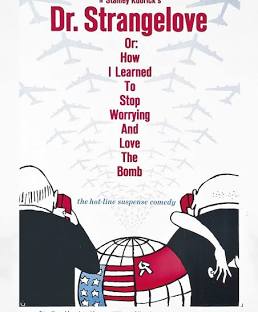
Have you seen the movie “Dr. Strangelove”? I think you would enjoy it.
“Let your conversation be always full of grace, seasoned with salt, so that you may know how to answer everyone.” -Colossians 4:6
This is a place for gracious dialogue about science and faith. Please read our FAQ/Guidelines before posting.