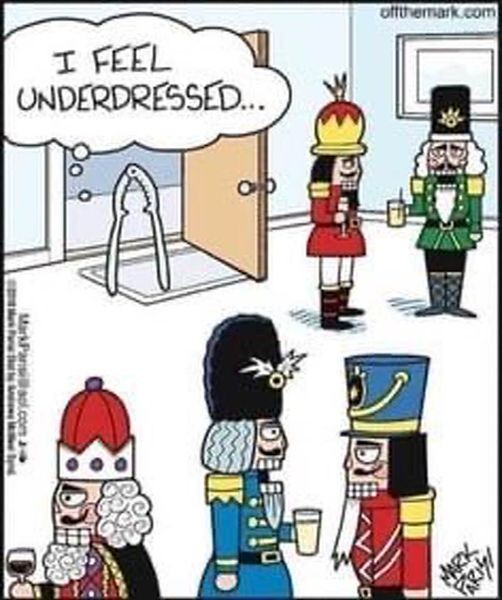
Oh! No wonder the clue was useless.
It wasn’t a clue.

Merv explains it all here:
Oh! No wonder the clue was useless.
It wasn’t a clue.
Merv explains it all here:
Yes, the only thing I could think of was whether they had an “iota” hidden in there (it’s the smallest letter, I think? But I was clueless about the coda (my daughter can probably teach me). It was fun! Thanks, @beaglelady
Thanks.
Here’s a short video that explains ALL ABOUT REPEATS | Repeat Signs, Endings, DC, DS, Fine, Coda
Basically all this stuff is a type of shorthand.
I had to face that music too.
Context is everything, I guess!
Our family really enjoyed watching Professor John McWhorter’s language series lectures that were part of “The Great Courses” series dvds. I wonder if he isn’t for linguistics what the likes of Steven J Gould were for paleontology - in helping to popularize and bring a lot of great insight or overview to the person-on-the-street. I do notice that there are CD audio versions available, but I really recommend watching him. Half the fun is his animated communication style and facial expressions.
A very economical language!
Interpreting speech can be just as difficult. What I find both interesting and humorous is that we all use contronyms in everyday communication without realizing how weird it really is.
Cool list! I notice they didn’t even include one of my favorite ones as a chemistry teacher: inflammable
which eventually got replaced with the less potentially misunderstood word: flammable.
My favorite misunderstood meaning is the difference between nauseated/nauseous. Traditionally, nauseated means you have an upset stomach, whereas nauseous means you cause someone to be nauseated ( i.e. a nauseous odor). With time, the incorrect usage has become so common that it has become accepted as correct.
Patients used to come in and say “I am nauseous.” And I would reply with a slight smile, “Yes, you certainly are.”
I’m also wondering if there are quite a few contrary homophones. The one I noticed the other day was whole and hole.
Fun! Thanks! I have always been fascinated by “cleave”. I think that both meanings of the one word revolves around the nearness of the two distinct surfaces. Helps to “pull it all together” for me.
Some of the other words work the same way for me as well.
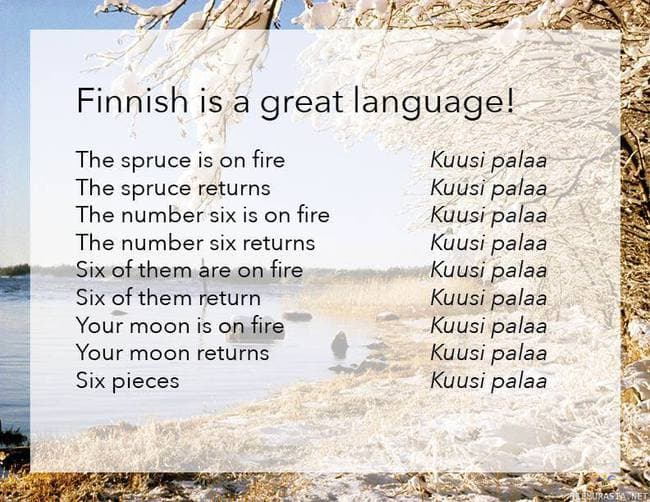
JRR Tolkien loved the Finnish language.
But “Your moon is on fire”?
Is that like “Liar, liar, pants on fire”?
I guess just an attempt to show that the words can mean different things. Semi-fun(?) reminder of the dangers of simplified translations - never fully trust your pocket translator or your favorite literal bible interpretator.
Okay - it’s my turn to need hints. I don’t even have a guess on this one! It would probably help if I could remember what species of monkey has a tail that looks like that. And while I could go research that, it’ll be more fun just to wait on whatever hints might be forthcoming here.
That’s one long bone, actually the longest in a human body!
And that little critter has such cute rings on its tail!
Okay - that did it! Thanks. My memory of human anatomy finally kicked in … which helped with the rest.
A miracle I had anything useful to add, even here.
“Let your conversation be always full of grace, seasoned with salt, so that you may know how to answer everyone.” -Colossians 4:6
This is a place for gracious dialogue about science and faith. Please read our FAQ/Guidelines before posting.