Food for the Faithful, literally

We have recently seen a new food pyramid being presented as a diet recommendation, and like a lot of things recently, has turned things completely on its head. I thought it would be interesting to see the collectives thoughts on it.

While not related directly to faith, it is interesting how much the diet and supplement industry has a big advertising influence in religious based podcasts, blogs, and in churches how a lot of individuals tend to hawk whatever supplements and diet they are involved with. It is an interesting dynamic. Even on my favorite podcast, The Holy Post, there are a lot of ads along that line, even moving to the pet world where the nutrition of dogs and cats is advertised. Of course, religious linked diets have been around for a long time. Here is an example a quick google gives from the Christian world:

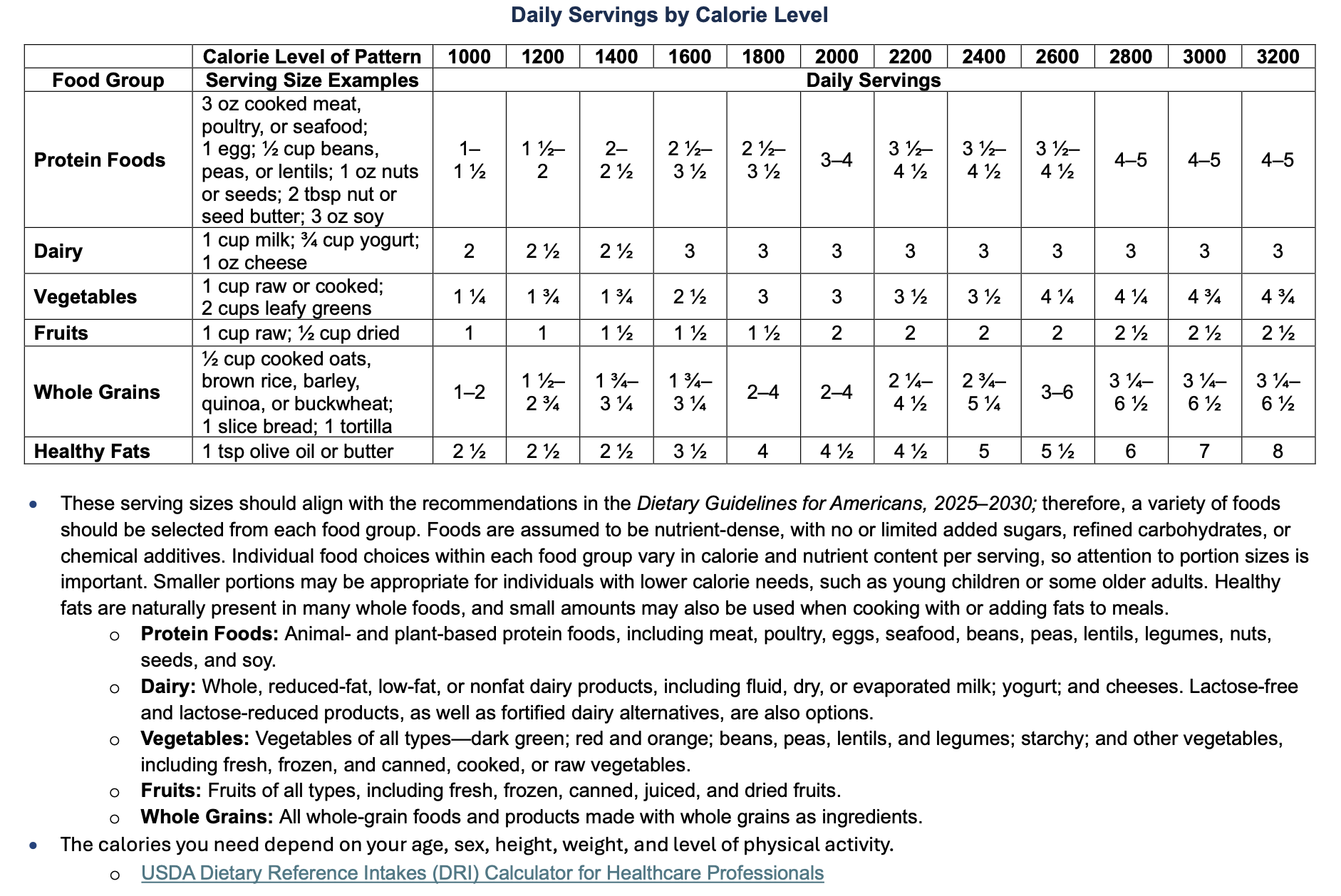
So, having presented that diet is a worthy topic, what do you think of this latest government recommendation? If you have not looked at it, here is a summary:
https://www.npr.org/2026/01/07/nx-s1-5667021/dietary-guidelines-rfk-jr-nutrition

My initial observation is that it is a mixture of good and bad, with it being a lot more political and cultural than scientific, in the end. From the standpoint of Christian ethics, I see the following problems:

  1. It discriminates against the poor. Meat, dairy, and fresh vegetables are expensive compared to grains and legumes. In addition, cooking and preparation of meats and fresh vegetables is often labor, skill, time, and kitchen equipment intensive, further making it impractical for the working poor. I don’t see many poor whipping up an omelet or grilling steak.
  2. It is racially biased as well. Much of the world outside of European heritage are lactose intolerant. To feature dairy as a prominent recommendation is a very Euro-centric view.
  3. It is culturally biased as well. I live in an area where Tex-Mex rules. With grains put at the bottom, what are we going make our tacos out of? Seriously, when you consider the immigration mess, it does seem to demonize the culturally related foods of many immigrants.

On the good side, the emphasis to get away from sugar and processed foods is no doubt a good thing, as are some of the other recommendations. Thoughts?
2 Likes

Even for Europeans, there are studies finding that dairy-heavy diets tend to be associated with health problems, though of course pinning down specific causes is a challenge with so many variables that often have some correlation with each other.

Working to make healthy diets affordable, rather than fooling around with the chart, would be a more useful approach. Churches have potential both for social service and as a place to reach a lot of less educated people with nutritional information. Food banks often see high demand for highly processed foods and little interest in more nutritious options which are unfamiliar.

2 Likes

that is my experience as well. In dealing with a few families with limited resources, they tend to lack the knowledge or desire to prepare raw vegetables and it is really a challenge as many highly processed foods are also expensive. Canned foods do not need refrigeration or freezer space, and are easily opened and heated.

1 Like

Our local church gives food to the poor once a month, as a part of a larger network of sites that help the poor. The food is what is possible to get as donations because we do not have enough of money to buy food. Earlier, we divided all available food evenly to plastic bags that were given to the people. That did not work well. Especially the older men with alcohol problems and possibly being homeless threw the stuff they did not want away after leaving the church - raw vegetables, flour and other incredients needing preparation to become food.

Now we only pack the most wanted, ready to eat food to the plastic bags before the event and then let the customers to choose if they want to also take the ingredients that need preparation or are otherwise less wanted. That has removed the problem of some customers throwing unwanted incredients to ditches.

Habits play a large role in what people eat but other issues may be more important. Money is perhaps the most influential factor for the poor - healthy food is either expensive or demands a kitchen, skills and work in preparing the food. People have differing possibilities and skills to prepare food, even if they could get the incredients for free.

One of the most problematic groups are older men that loose their wife and job - the job has given income and the wife has prepared the food. Add mental problems and alcohol or drugs to that equation and it becomes very difficult to affect the diet of these men without serving prepared warm meals to them. It is no wonder that such men tend to die in a relatively short time - loosing the wife and home are among the most influential factors that shorten the life of middle-aged or older (single) men.

3 Likes

Christian (by that I mean American evangelical) health fads that I’m familiar with signal a resistence to basic ā€œworldlyā€ common sense as well as science. ā€œAlternativeā€ therapies and medicines, which are untested, lack support of actual evidence, are just as non-sensical in the hands of the faithful as they are in Gwenyth Paltrow’s. But they are popular. Not only popular, but culturally correct in many churhces.

I think there is a great deal of socialogical study to be done here.

The food pyramid has become a joke. A political tool. After years of trying to make it better and accurate according to actual dietary science, it is now just one more fad. And now one with increased cholesterol.

This quoted claim about fats in dairy foods from the NPR article stikes me as dubious. What do people with better information about fats think of it:

The guidelines also elevate cheese and other dairy to the top of the pyramid, paving the way for the option of full-fat milk and other dairy products in school meals. There’s growing evidence, based on nutrition science, that dairy foods can be beneficial.

ā€œIt’s pretty clear that overall milk and cheese and yogurt can be part of a healthy diet,ā€ says Dariush Mozaffarian, a cardiologist, a public health scientist and the director of the Food is Medicine Institute at Tufts University. ā€œBoth low-fat and whole-fat dairy versions of milk, cheese and yogurt have been linked to lower cardiovascular risk,ā€ he says.

Regarding the Holy Post - their advertising makes them dubious. They’ll sell anything, it seems, in Jesus’ name. I cringe every time I hear their ads and wonder what they really stand for.

3 Likes

I love dairy,yoghurt,cheese, ice cream and all, but while it can be a part of a healthy diet for some, it doesn’t have any magical properties, and is really not needed after infancy.
From an AI summary ā€œ lactose intolerance prevalence varies significantly across racial and ethnic groups, being very high (75-100%) in people of East Asian, African, Native American, and Hispanic descent, but much lower (around 15-30%) in those of Northern European ancestry, a difference linked to genetic adaptations from ancestral dairy farming.ā€

I have adopted grandchildren who are black, and this point rings very true. It creates real problems, and if milk is pushed in schools, it makes things quite difficult for kids who can’t drink it, or eat ice cream etc.

As to actual cardiovascular risk, studies seem to show that there is no risk with low consumption of 200 grams a day (about 7 oz or less than a cup) but increased risk with 3 or more servings, with a few studies showing less risk with low consumption. These sort of studies are generally done with retrospective self reporting so are difficult to interpret, especially with confounding factors like socioeconomic issues. I’m sure a glass of milk is healthier than a soda and a bag of chips as a snack.

3 Likes

Sure. But dairy products seem to be promoted now as an important source of protein without consideration for cholesterol. I would survive quite happily on apples, cheese and good bread. But…

As I read it, you should be fine with that. And Paul would possibly suggest a glass of wine with that.

3 Likes

It seems to me that there’s common sense … and then there’s common sense! … as in there is less informed common sense that is more vulnerable to the whimsical conspiracism of the cultural moment, and then there is common sense that roots itself more in at least some actual relevant science. Of course everybody will claim their common sense is of the latter sort, … but that’s how we roll. It’s always the other guy who is the ā€˜uninformed one’.

Common sense (of the informed sort I think) helps us take in our own anecdotal life experiences - both of our own personal health along with that of our family and circle of community and helps us sort through that with at least a somewhat informed foundation.

Our scientifically-informed cultural memory will just have to carry us through the present darkness of our current political clime. I’ll continue to eat more and more salad greens and fruits and to exercise in my daily working habits, commutes, and hobbies, and continue to temper my enjoyment of rich and processed foods and meats at least somewhat because I already know those new habits have served me well and are supported by the backing of actual science. I can safely ignore the output promoted by current leadership. But I do feel for the growing legion of victims who do not already have any prior-informed scientific common sense who are especially vulnerable to the ideological and profit-driven lies of those in power now.

1 Like

We are staying in housing run by a foundation that helps missionaries on furlough, and one of the perks is every Friday a volunteer brings a few vanloads of stuff Trader Joe’s has pulled before it goes to the dumpster, and we can take whatever we want. There is always a lot of produce, which can save you a lot of money, but I have to spend half of my Friday batch cooking to use it. It’s all been pulled off the shelf for reasons, so often something in the package is moldy and you have to sort and wash stuff, or it’s really ripe and needs to be used immediately. You can’t just shove it in the fridge and think about it later. And to make a meal out of whatever random stuff you get that week, you need the resources to get the other ingredients needed to turn it into an entree. It’s nice that they put a deep freezer in the apartment for us to use, so I can freeze bread and meat and cook up vegetables and soups and freeze them for later, and it does end up saving me a lot of money. But not time. I’m a pretty good and versatile cook that can figure out how to use 10 lbs of purple sweet potatoes or a tray of ground lamb meat or whatever, but that’s not where a lot of people who need food assistance are at.

My dad works at a food bank and in the past he sometimes would pick up a box for us when we were in the states for a month. It was the same deal with the produce needing to be cooked that day or thrown away. And the meat was frozen, but often in huge quantities, so you have to thaw it and then cook all 14 chicken thighs at once, which presumes you have access to a large freezer and the needed cookware and appliances to cook large batches or cuts of meat. You can’t really make a roast or a turkey in a toaster oven or microwave.

I visited a church once that had a team of volunteers who would take excess food bank donations and basically batch cook meals in a commercial kitchen once a week and then package them in individual microwaveable portions. Then they would deliver them to shut in seniors and people with disabilities who couldn’t handle the logistics of cooking fresh food themselves or who couldn’t use the large portions that the donations came in. It seemed like a really valuable service. They could give meals that were much healthier than a can of ravioli, but were just as manageable to heat up and serve.

3 Likes

Which is the problem. Informed by what or whom?

I’m constantly confronted by fellow parishioners, such as G, with the most bizarre health and nutrition ideas, while my decling to take the latest church health fad cure is received with suspicion.

Me: ā€œNo, thanks. I don’t need the recipe for the hot honey cure.ā€
G: ā€œSo, you want to get the flu?ā€

Another time:

Me: ā€œI want to cook some gorgeous venison steaks our neighbor gave us, but they will have to be rare, and I have concerns about undercooked game and trichinosis.ā€

G: Complete dumbfounded facial expression

Me: ā€œI was looking at the DNR’s website and some hospitals’ like Mayo and Cleveland. It seems to be a potential problem.ā€

G: ā€œIt’s all natural. Nature takes care of nature.ā€

Me: Dumbfounded facial expression.

2 Likes

Lots of fake news in here. Some possibly due to the USDA press release being a bit misleading. But I feel like some are pushing to politicize this or make it racist or discriminatory (or whatever liberal buzzword is in the limelight) for no reason. I mean really, poor people can’t scramble two eggs and cook them in a pan? Are we talking people living under a bridge or poor Americans living in houses with iPhones? Instead of reading a summary, go to the source. The reasoning behind it seems sound and it presents a far healthier option than most people eat currently. Stay away from added sugar and processed food.

It doesn’t say everyone has to run out and buy Rib-Eye. I doubt they will be serving that to our students at schools. Beans are included in protein. Under dairy it mentions utilizing lactose free options. I see rice, legumes, oats, leafy greens….It is also my understanding that unless you own a farm or have a large garden and are picking your vegetables fresh, frozen ones provide roughly the same nutrients. Best not to boil them but boiled broccoli is still healthy compared to the junk most of us eat now. The guidelines literally list all types of vegetables, frozen, fresh, canned, etc. Same with fruit. And it also has tortillas so tacos are safe.

Vinnie