I have a friend who was in Yale Crusade. His daughter is not a Christian but now, this week, starting astrophysics grad school at UMass-Amherst. You all know how deeply secular New England is as a whole. LAbri and the American Scientific Affilation have offices in MA. Any suggestions about how the Gospel can get to a poor, stressed out, and isolated, but brilliant student in such a secular and spiritually dark place?
What worked for me was just looking through some of the resources that Biologos had to offer. The raw honesty of trying to bring together your faith and your knowledge and love of science is what helped me to finally settle my bigger questions of faith.
Edit: looking at the other responses here, I would have to agree that it would be probably wise to give her proper space when it comes to this topic, and allow her to come to you when the time is right.
2 Likes
Yup, about 30% secular according to polls. Not exactly deeply secular. Definitely not ‘spiritually dark’.
Yes. Leave her alone.
I would be extremely surprised if a brilliant American science graduate didn’t already know about the gospel. If by some miracle she has never heard of it, she’ll have the research skills to find it for herself if she’s interested.
If you insist on contacting her, offer to help with her actual problems[1] - poverty, stress and isolation - and don’t foist your religious views on her. Show her what Christians are (supposed to be) like and let her ask.
If she is brilliant but stressed and you go in there with Bible blazing she’s likely to tell you to eff off, and be quite right to do so.
assuming they are actual problems and not something you are imagining ↩︎
2 Likes
I am from New England and understand what he meant. Many in these parts feel this way. The poll you linked ha Christianity dropping from 76% (2007) to 58% (2023-24). Seems to be pretty rapid and self-identification doesn’t tell one about how invested you are in that (e.g. church attendances).
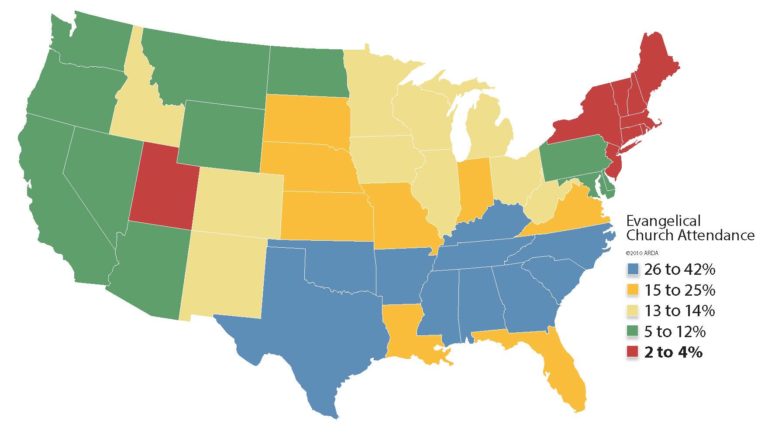
Maybe this is why I am less hostile to YECs than some on here. It’s rare to meet one and people are usually quiet about religion around these parts.
Vinnie
2 Likes
I know what he meant, I just feel he is exaggerating unreasonably.
Incidentally, the article you linked to ignores non-evangelical churches. It’s a bit misleading to ignore Catholics, and even more so to suggest that Utah is irreligious.
P.S. You’re up early!
3 Likes
I agree there was an exaggeration and the evangelical number didn’t even change much. Catholics and mainline Protestants lost the most. Atheism doubled from 2-4% then stayed the same. It’s the “nones” that are increasing. It does seem spiritually dead around here at times though from my limited and anecdotal perspective. And yes, I did get up early. My MacBook is not turning on so I am moving all files from the magical cloud to my less used desktop.
Vinnie
1 Like
I suppose it depends on what you’re used to. NY (city and upstate) seemed more religious than the UK, and Utah seemed obsessed. I’ve never before been in a bookstore where the ‘religion’ section took up half the shop.
1 Like
I’d say, forget the Gospel Coalition’s stats! It’s our entire country that’s a ‘spiritual graveyard’ - and has been for at least a generation now - probably more. We are now entirely a mission field, starting with the ‘most churched’ folks in the most churched states, where Christ has been reduced to mascot and merch rather than master.
6 Likes
I would begin by asking her about herself. What does she want out of life. Where is she heading and what does she hope for.
I would remind you of the parable of the prodigal son. There is a matter of timing. Some people are simply not going to hear what you have to say because it doesn’t speak to their life at the part of it they are in at this time. And pushing things at such a time will only push them away, so when they do need something they will more likely look elsewhere.
3 Likes
@Roy has it right. It’s nearly impossibly that she doesn’t already know the gospel, Treating her as if she doesn’t already know can only be condescension. Don’t do that.
If you want to reach her, invite her to dinner occasionally. Feed her, and send her home with leftovers. (As one of my professors often remarked about getting grad students to attend optional seminars, “Feed them, and they will come.”) Ask about her studies, maybe even about that “Multiverse” thing and get her opinion on it. She will likely be spending 80-100 or more every week studying, so don’t be surprised when she is too busy to get together (especially around the end of semester). Be nice. Be so nice that she can’t help but think well of you. Set an example so good she can never forget.
6 Likes
Nobody likes to feel like they’re a project or a quota. Or that someone is building a relationship with them for the sake of achieving some goal other than connecting with a person they value somehow.
I know, I know. Gospel is the most loving thing, etc.
People smell ulterior motives easily. And then are turned off.
4 Likes
The Gospel is not weak or feeble and neither is God. If you know the daughter. Invite her over for family dinner. Ask her about her work. Really care. Invite her to Church. Just be a good person. If you can plant a seed and do that then do so. If you can’t plant a seed still do so. @Kendel used the perfect word. She is a person, not a project.
I’m going to go into left field a little because I have close conservative friends and the salvation and threat of hell for their children is something that I know causes them pain. These concerns are often motivated by thoughts of hell but could simply be wanting someone to experience the fullness a life in Christ offers.
My thoughts are that anyone who ends up in hell is fully choosing (locked from the inside sort of thing) to remain separated from God’s grace with full knowledge. No one will be unfairly separated from God’s love or grace and that includes through ignorance or caricature. Everyone will end up where they want and are supposed to be. So while all Christians are commissioned to preach the gospel (through both words and deeds), I don’t run around thinking the clock is running out on everyone or people are running out of time. Everyone will be judged on the light they are given and damnation only occurs if the soul rejects the true God properly revealed.
From a Thomist and classical perspective, since God is Truth itself, when a person aggressively chases truth (doctorate in astrophysics could qualify) —even if they mistakenly conclude that theism is false—they honor God implicitly through their dedication to honesty and truth. When they die and face judgment (Ala Hebrews) all the caricatures of the theistic personalism they rightly rejected are gone and hopefully the response is “You are what I was looking for the entire time.” In Thomistic thought, you cannot truly reject or accept something unless the intellect understands it.
As Vatican II wrote:
“Those also can attain to salvation who through no fault of their own do not know the Gospel of Christ or His Church, yet sincerely seek God and moved by grace strive by their deeds to do His will as it is known to them through the dictates of conscience.”
Unlike in some (not all) Protestant thinking , we Catholics don’t think of salvation like a checkpoint in a video game in the sense of there being some magic “belief” that changes our legal standing permanently (once saved always saved). Salvation is our state of being and moral health, not some legal standing. Belief is the first step of the process of salvation and sin is not something that we are automatically covered from, but something that drains our life. Salvation as a process and that means if you continue to sin you can revert back.
We don’t deny verse like Romans 8:38: 38 “For I am convinced that neither death, nor life, nor angels, nor rulers, nor things present, nor things to come, nor powers, 39 nor height, nor depth, nor anything else in all creation will be able to separate us from the love of God in Christ Jesus our Lord.” We fully accept there is nothing external that can remove us from God’s grace and unbreakable faithfulness. External threats are powerless. Our own internal ones are a different story…
Vinnie
5 Likes
And as an FYI, I just watched this interview on Dr. Derek.
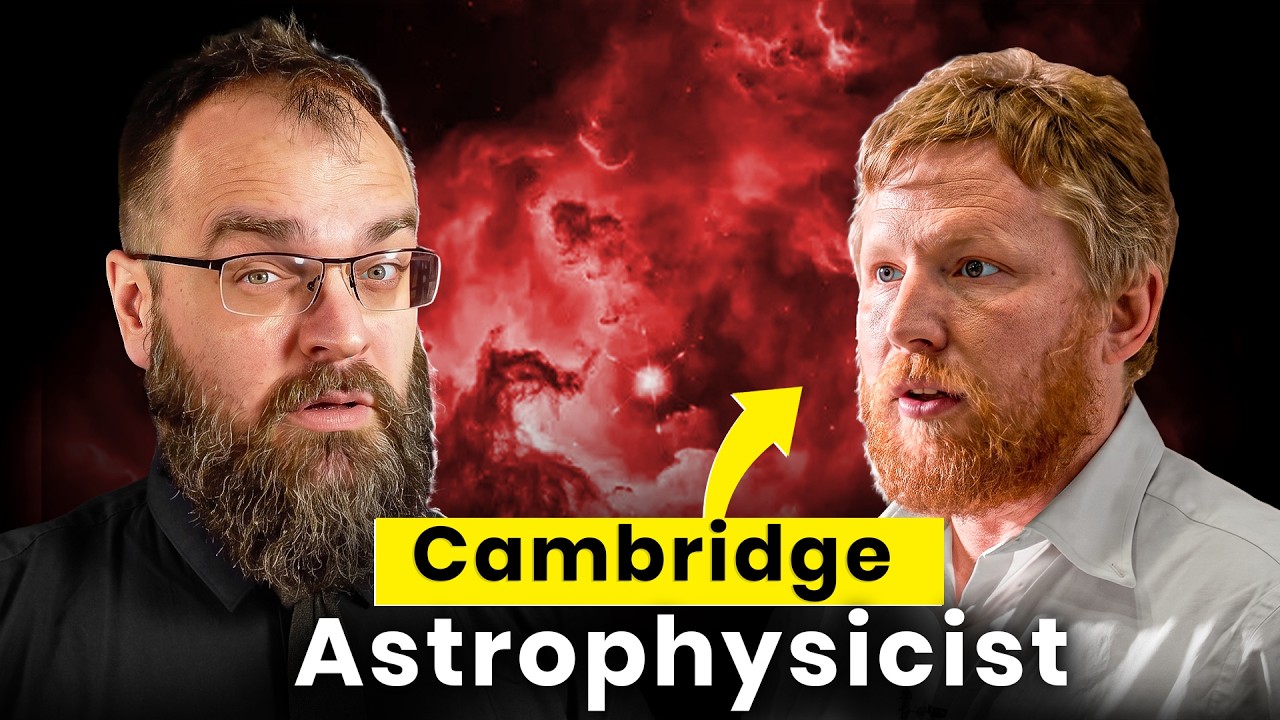
I think it has relevance because Paul Rimmer is a Cambridge astrophysicist and he explains how he became a theists/Christian/Catholic. I would drink many beers and have many long discussions with him. He is candid and sympathetic to those who disagree with him. He knows his philosophy to a high degree as well.
Vinnie
2 Likes
Thanks Vinnie….and I appreciated your earlier comments as well. You are right…the gospel is neither weak nor feeble—and neither (absolutely!) is God.
will finish watching this interview with Dr Derek and hearing his thoughts.
2 Likes
This topic was automatically closed 6 days after the last reply. New replies are no longer allowed.