I am curious as to what others think about this question as framed by this video.

At the link above is a clip (9 min 33 sec) of Alex O’Connor (atheist/agnostic) having a dialogue with theoretical physicist Sabine Hossenfelder–another youtuber. He asks her if science can explain anything. Here is a version of his thought example that he lays out:
Imagine observing a room where someone is playing a trumpet. Every time they play a specific note, a lightbulb in the room turns on, and different notes correspond to different colored lights. The louder the trumpet is blown the brightet the light shines. A scientist could observe this phenomenon, take measurements and develop a perfectly predictive mathematical model or physical law. For example, playing a C-natural always produces a blue light after a 0.2-second delay and the harder the trumpet is blown the brighter the light.
We can map the correlation of causes and effects and even make extremely precise predictions of the color of the light and its brightness. I could say if you play x not at y strength, the light will be this color and this bright. But is this purely descriptive? Does science fundamentally explain anything?
Bonus Content: Alex’s discussion with the well known string theorist Brian Greene
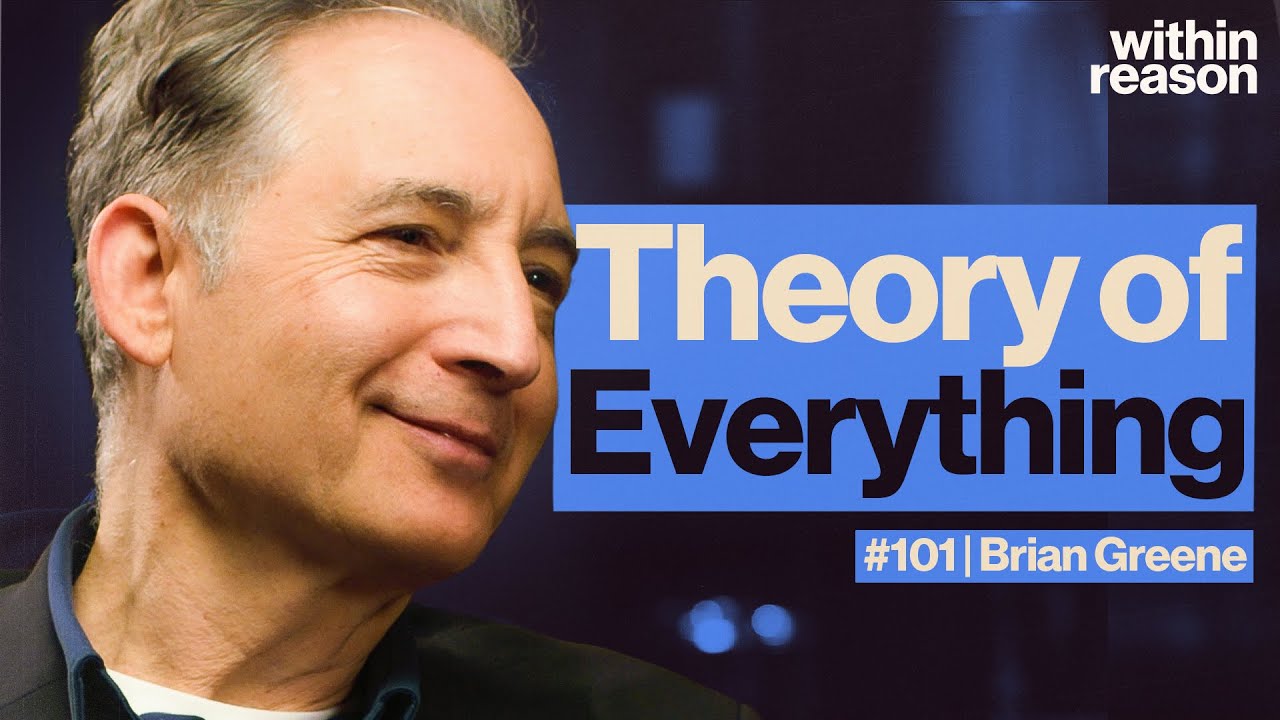
This link starts at the relevant discussion where Alex uses a sonnet analogy instead of a trumpet. I think it would be worth starting a few minutes earlier a t=1729 (change the end of url). Greene says something interesting though I think he claims to be disagreeing with some of his colleagues on this:
“I don’t think that we are discovering laws… I think we are inventing laws. We’re inventing the math, we’re inventing the symbols… and finding, wow, these equations are really good at encapsulating those patterns.”
Vinnie