Arkeology - It's B a a a ck!

For some time, searching for Noah’s ark on Mount Ararat went into remission, with the major apologetic organizations such as AiG, CMI, and CRI going quiet or taking the position that we should not expect the ark to be preserved once it served its purpose.

Well, the past couple of weeks have definitely rebooted interest. An group promoting itself as “Noah’s Ark Scans” has put together a fairly large scale team of organizational and research players to head to Turkey’s Mount Ararat to investigate a geological feature that has some resemblance to the ark of popular imagination. Their publicity effort has benefited from some well played free advertising from media coverage by Fox news, Daily Mail, and others.

As might be expected, this has created a lot of buzz in YEC circles, with some considering the preliminary results to be proof positive of the flood, case closed. Not so fast, cautions Ken Ham of AiG, who has put out a video aligning with their long held skepticism of Ark claims. That position has had a lot of push back from YEC advocates who seem to believe that as long as a claim validates their interpretation of scripture, expressing any doubts about authenticity places you on the wrong team.

YEC watcher @Joel_Duff has responded with videos

Is Noah’s Ark on Mount Ararat? A YEC Geologist Says No

CA Skip navigation Sign in Noah’s Ark “100% Confirmed”? Where’s the Evidence? This is Embarrassing

Noah’s Ark Scans or Noah’s Ark Scams? I’ve Made Up My Mind

7 Likes

Yep, seeing this a lot on Facebook, and lot of comments saying how wonderful it is, and wondering why some are so negative. Sad commentary on the state of people in general.
I guess it comes up on my feed a lot because i read the posts, which are ridiculous. My main question is how they are monetizing this. I am sure by donations and youtube ads etc. Of course, they really are not spending a lot a money, just got an old broken down drilling rig out there, and not much else.

4 Likes

I’ve been seeing it a bit on Twitter. I follow this one Christian art account and, on occasion, they’ll repost a few Jesus things. Twice now I have seen posts from this drilling project, and twice I have regretted seeing it. As are most things on social media, you only get the two ends of the spectrum: there are those people praising the project and declaring that “Darwinism is dead” and that science textbooks will need to be rewrote. Then there are those calling the project “stupid” and commenting evidence against Noah’s Ark ever occurring. Despite my agreement that Noah’s Ark not likely being a real event (because, as they point out, other civilizations were thriving during the time they were supposed to be annihilated), the hostility that they posited it was just cruel :cry:.

For one, I’m glad I had an opportunity to analyze my own faith and learn more about Genesis in the light of modern scientific knowledge prior to seeing posts like this, because had I still held my previously ironclad view on Noah’s Ark being a real event, I probably would have been very distressed by this. Regardless, I still feel upset seeing these posts simply due to the anger and hatred they show that people can have for one another.

5 Likes

I think it says a lot about people’s priorities when their first response to something like this is “Now those monsters who believe in evolution will be humiliated and disgraced!” It’s not about a search for truth or seeing what can be learned, it just presents a faith that understands little more than culture wars and, as we’ve all said, it’s very sad. And of course you get the Bible bashers who come out for things like this and insult everyone they can, regardless of whether those people believe in a 4000-year-old global flood or not.

It’s also sad seeing people just take some guy’s word as total evidence, when even Ken Ham thinks it’s not archaeologically viable. For a lot of people, the actual credibility of something doesn’t matter in the least. How do we approach people like that and advocate for a more rational faith without them writing us off as closet atheists?

2 Likes

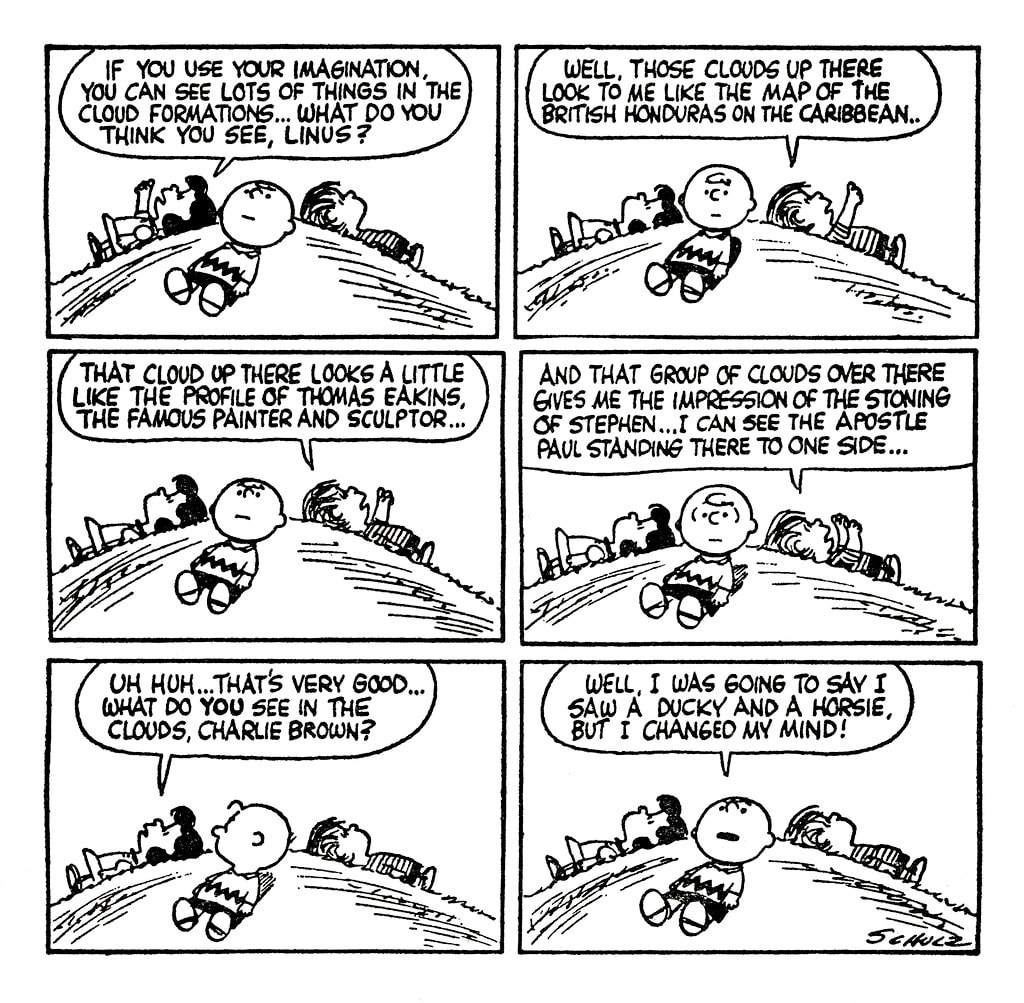
As a kid, I recall reading expedition descriptions of the Ark near the summit of Ararat supposedly bound in ice. The site being promoted currently hardly qualifies as an intrepid expedition. The Durupinar Noah’s Ark visitor center has welcomed comers for years. Here it is on Google Maps, with plenty of photos by tourists showing what looks to be a pleasant pastoral setting with very typical rock formations. As one of the comments stated, “You need a bit of imagination, but that’s the point”.

6 Likes

Unfortunately, when I first saw this on ye ol Twitter, the recommended posts at the bottom were not more Christian posts but conservative or drama against another Christian account. It’s so sad to me that the Christian community has become tied so close to the conservative community despite many very clear divergence existing between what Jesus wants us to do and what ends up occurring in the realm of politics.

Edit: I somehow came across this and hopefully it shows the state of current politics in America; I would consider myself somewhat liberal and yet still believe that I can be a follower of Jesus and love my neighbors :frowning:

3 Likes

The GOP has managed to bump me from being a pure libertarian to being a left libertarian: they have shown such incompetence and hate!

And that people fall for more of this re-hashed Ark stuff matches what one study showed: right-wingers suck at critical thinking.

1 Like

Is the Durupinar site even the Biblical location for the Ark’s landing? Ancient geographic references can be hazy.
Genesis 8:4

and on the seventeenth day of the seventh month the ark came to rest on the mountains of Ararat.

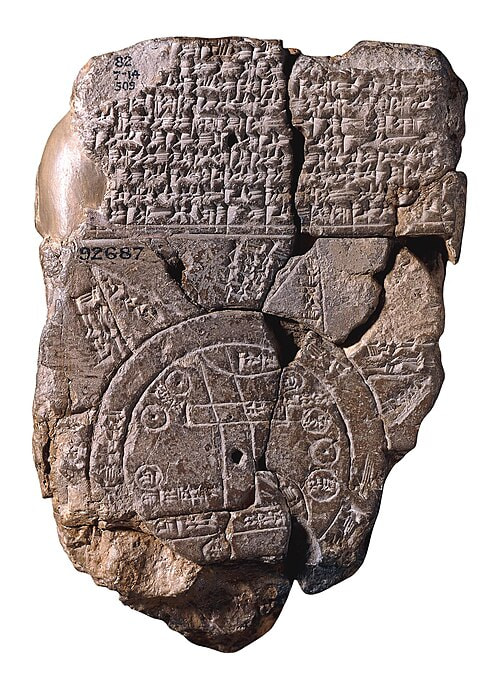
There appears to be broad agreement that the plural mountains indicates a range or highlands rather than a specific peak. The Biblical identification is with the iron age kingdom Urartu, which is one of the cities shown on the Babylonian map of the world tablet - the circle at about 1 o’clock.

The predominate Turkish volcanic cone is within Turkish borders, close to modern Armenia, and most old European scholarship refers to the area as Armenia. So from the standpoint of the Biblical reference, the site would appear plausible.

The earliest extra-Biblical reference to the ark location might be from the Hebrew Book of Jubilees, which takes it upon itself to retell Biblical stories complete with some infilled details, and was authored somewhere around 150 BC.

And in the seventh week in the first year thereof, in this jubilee, Noah planted vines on the mountain on which the ark had rested, named Lûbâr, one of the Ararat Mountains.
…And Ham knew that his father had cursed his younger son, and he was displeased that he had cursed his son. and he parted from his father, he and his sons with him, Cush and Mizraim and Put and Canaan. And he built for himself a city and called its name after the name of his wife Ne’elatamauk. And Japheth saw it, and became envious of his brother, and he too built for himself a city, and he called its name after the name of his wife Adataneses. And Shem dwelt with his father Noah, and he built a city close to his father on the mountain, and he too called its name after the name of his wife Sedeqetelebab. And behold these three cities are near Mount Lubar; Sedeqetelebab fronting the mountain on its east; and Na’eltama’uk on the south; 'Adatan’eses towards the west.

Well, that was unhelpful. Mount Lûbâr is given as the specific peak, but no one ever heard of it. No problem, it lies encompassed between three unknown cities named for the wives of Noah’s sons, which would not have maintained their identity through Babel and the rise and fall of empires. There seems little or no effort here to connect the story to actual geography contemporary to the writing of Jubilees.

3 Likes

For some reason I can’t get the kids’ song out of my head.

Go-d told Noah to build him an arky arky.
Build it out of gopher barky barky,
Children of the Lord.

Thanks, @rsewell.

4 Likes

Noah’s Ark Scams makes lots of money charging people to come see the site.

As David Montgomery pointed out in his book The Rocks Don’t Lie, there’s no good reason to doubt that Noah’s flood was a real event, as big floods happen and are memorable. But for Noah’s flood to be a real event, it cannot have resembled the planet-destroying model of modern young-earth imagination.

4 Likes

I like JPM comments. Also, it was not Mount Ararat; it was the Mountains of Ararat. Big difference.

I don’t believe the flood described in Genesis has any geological or archaeological evidence to support a flood of that magnitude and duration at the time described, or that it was worldwide. That does not mean there wasn’t a flood of that magnitude and duration at a different time that seemed worldwide because of the people’s limited geographical understanding at the time and could have been passed down through oral tradition.

3 Likes

Although I find it very unlikely they will actually find any remnants of Noah’s Ark, I also don’t see a point in making a big deal about it. It only gives them more visibility. If you want to find evidence of Noah’s flood that is more than just a re-run of Indiana Jones, you should look for geological evidence, like flood deposits. Flood deposits have been found from flooding events in the Mesopotamian basin but none of them match exactly to the flood described in Genesis 6-9. It could happen though.

2 Likes

One of the flood literalist voices raised against Mount Ararat is that of Bill Crouse, who pursued a quest for the ark landing site for several decades. After a couple of expeditions and actually summitting Ararat back in the 80’s, he concluded that the ark could not be there, and his subsequent investigation of reported sightings turned up contradictory claims and fabrications. His belief in the global flood however, remained intact and his focus shifted to Cudi Dagi ( a name shared with some other area peaks to add to the confusion ) which is to the south and unassociated with the volcanic Ararat.

I subscribe neither to his premise nor conclusions so far as any global flood is concerned, but Crouse has done a thorough survey of sources over the Roman to Islamic period which touch on the purported location. He has dived into writings from Josephus, Aramaic translations of the Hebrew Bible, references to a pagan historian, church fathers and Islam. For those who wish to join the league of ark raiders, you may be interested in:

Journal of Creation - The Geography of Genesis 8:4

and

Geographical and historical concerns in Genesis 8:4—part 2

3 Likes

Or the hills of Urartu.

2 Likes

My Kingdom is not of this World.

1 Like

If you enjoy watching period dramas, the name Sir Walter Raleigh might be familiar. Flatterer of the virgin queen while secretly eloping with her lady in court, contributor to the anthology of English poetry, adept in diplomatic intrigue and battlefield slaughter, navigator and privateer, all to end up with his head in a sack, he is overdue for his own Netflix mini series. What I did not know was that his time spent in the Tower allowed space for his writing a history with perhaps the earliest extensive treatment of Noah’s ark that was more than metaphoric or expository.

Published in 1614, Raleigh’s multi-volume History of the World devoted a digression of better than a dozen pages to discussion of various aspects of the ark, and especially its landing location and how that featured in the subsequent unfolding of civilization.

But that which I seeke most to sa∣tisfie my selfe and others in, is in what part of the world the Arke rested after the floud

He disavows that this is a project motivated by novelty or vanity…

And I am not led so to thinke out of my humour or new∣nesse of opinion, or singularitie; but doe herein ground my selfe on the originall and first truth, which is the word of God, and after that vpon reason, and the most pro∣bable circumstances thereon depending.

and then states his contrary conclusion…

I finde neither Scripture nor reason which teacheth any such thing: (to wit) that it rested on that part of Ararat, which is in the greater Armenis.

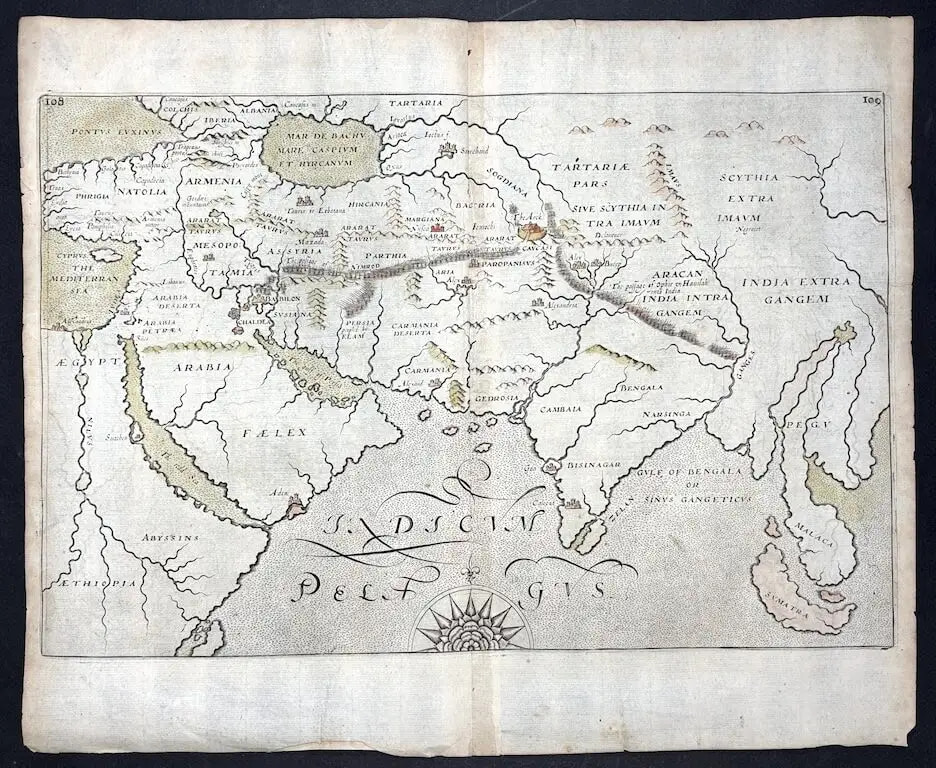
What follows is a long argument with Raleigh indulging so many place names as to be a walking google maps, and appealing to advancement of agriculture and civilization to support that the ark landed to the east as far as north of India.

The ciuilitie, magnificence and multitude of people (wherein the East parts of the world first abounded) hath more waight then any thing which hath beene, or can be said for Armenia

He points out that the mountains of Ararat could apply to a range, and mountain ranges can extend to 3000 miles as in the case of the Andes. Spot the ark on the eastern limit of an very very generously extended Taurus range.

3 Likes

Someone gets it

Half a century after Raleigh’s work, Noah’s ark received its first dedicated full book treatment from eclectic Jesuit priest Athanasius Kircher, who authored Arca Noë in 1675. This is 183 years after Columbus first set foot on the new world, much of the planet was explored, and there was the dawning realization that biogeography presented a logistics challenge to the global flood.

I’m sure it is an interesting read, and digital copies are on the internet if your Latin, Greek, Hebrew, Arabic, and Aramaic are not too rusty, as these all appear freely through the book. For the rest of us however, the plentiful woodcuts provide the gist of contents, and I hope to trust Wikipedia for a accessible summary. One of the illustrations has the ark resting on Ararat, but no indication of where Ararat is, and with Olympus and Taurus mountains looming above.

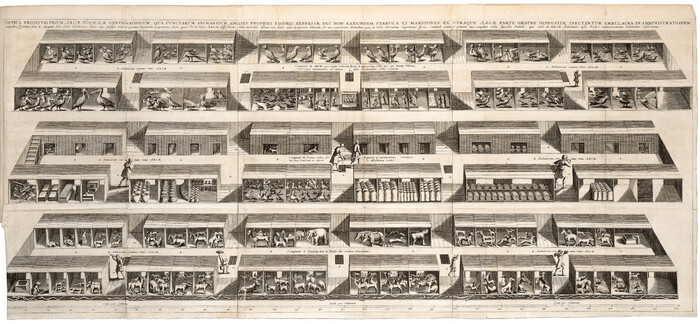
What I find of greater interest in the book is Kircher’s attempt to detail the capacity, arrangement of quarters, and care and feeding of the animals which are now expanded to include previously unknown species realized from exploration. Spontaneous generation from dirt and waste could account for filthy vermin and reptiles, so there was no need to offer sanctuary on the ark. Hybrids, such as armadillos which are offspring of amorous hedgehogs and turtles, marmots sired by badgers and squirrels, and giraffs of uncertain parentage, also were denied boarding passes. Larger mammals get a chapter, with mostly decent but some amusing portrayals. Birds are covered in their own chapter, with illustrations that I would mostly consider pretty solid.

The dimensions of the ark may have appeared reasonable in the original context of the animals with which the ancient Hebrews were familiar, but age of exploration was starting to noticeably squeeze. Kircher was early in what is still an ongoing effort to reduce the number and burden of representative species, which has since grown exponentially with animals extent and extinct. At some point, I expect the ark to be equipped with laboratories and cryogenic freezers preserving the entire history of life as germ cells. In any event, apologetic organizations make little to no mention of this book, despite its on point historical significance in terms of theology confronting expanding knowledge of the world.

6 Likes

The first modern ark sighting which gained wider notice was a 1940 article which circulated recounting “The Amazing Discovery of Noah’s Ark, Found by Russian Aviators in Perfect Preservation.” The czarist military followed up with a climbing expedition to document the finding, and measured and photographed the vessel with its hundreds of timber rooms great and small. This might have settled the debate over Noah’s flood once and for all, but wouldn’t you know it…

A few days after the expedition sent its report to the Czar, the government was overthrown and godless Bolshevism took over, so the the records were never made public and probably were destroyed in the goal of the Bolshevik’s to discredit all religion and belief in the truth of the Bible.

Even at the time, there was skepticism including from some Christians

The above information is sufficient, I am sure, to convince any reader of the falsity of such a report concerning the Ark…It would seem very inadvisable to accept this sensational story and give it publicity until it has been well authenticated by scientific archaeological research.

Bill Crouse, who I mentioned in an above post, claimed to have communicated with the author

This story is known to be false because Crouse corresponded with the author, Mr Floyd M. Gurley, who confessed in a phone conversation and in a letter dated 21 June 1989, which is in Crouse’s possession, that the story had no historical reality.

The real kicker, though, is that Mount Ararat has been much climbed and explored, and the reported massive Ark, largely intact save the roof, is not there. There is no mysterious hidden valley or unknown crevice. If someone tells you there is an elephant stomping in your living room, and you look and there is no elephant, there is no point in searching behind the sofa cushions.

One thing that stands out to me as I read the story is the amount of extraneous detail, accounts of mechanical issues, chain of command, lizards on Ararat, conversations, and climbing, that was not directly essential to the discovery of the Ark, but lent an aura of authenticity and first person relating. Yet the story was not an embellishment of a real sliver into an Ark, but a whole cloth top to bottom fabrication.

2 Likes

Reminds me that the square footage of the ark as described is similar to the typical Wal-Mart.

2 Likes