Any interest in discussing Ian McGilchrist's work?

Have you seen this interview yet, @jstump?

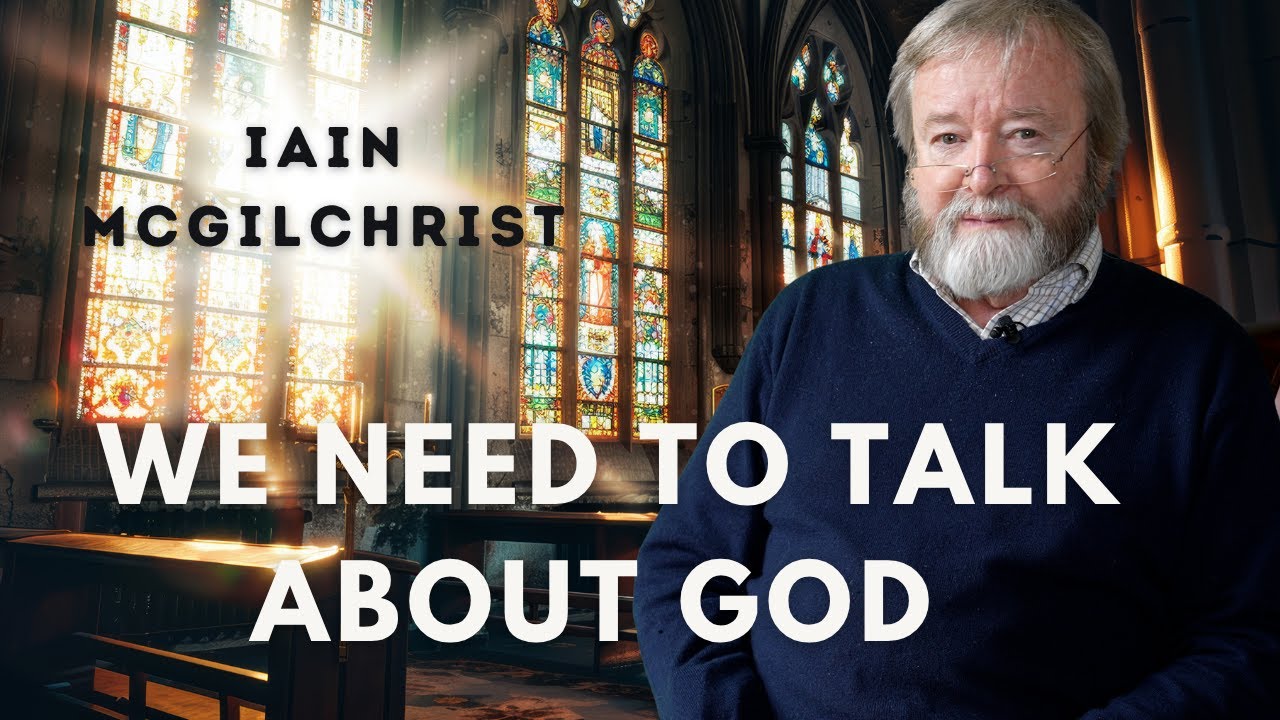
Recently in the discussion of the blog post titled “Is it still reasonable to believe in God?” I asked BioLogos V.P. James Stump if he was familiar with McGilchrist’s book “The Master and His Emissary”. I was pleased to learn that he was and even more pleased to learn there was quite a bit of interest among theologians, mentioning the work of Rowan Williams in particular. I just came across and watched the video below which just premiered in past fall of this year which I find a good deal more approachable than the book. Don’t get me wrong. The book is extremely well written especially given the subtlety and reach of the ideas it contains. But I think this interview would make for a more readily accessible jumping off place for a discussion than the book.

A couple of points of possible interest occur beginning about at the 38:20 minute mark in discussing the difference between “implicit meaning” and the explicit meaning which it is possible to communicate by way of language. Another beginning at about 44:30, talks about physics and the parallel between the influence of the observer effect in physics and in meaning and the interest there has been among physicists in his book. But my main interest is in what relevance (if any) you may find it to have in thinking about your religious experience. It was largely his work which got me interested again in the phenomenon of religious belief and spiritual practice, and led to my participation here. I’m not sure yet what to make of the video’s title “Matter is a Relative Matter” but don’t get your physicist hopes up too high.
3 Likes

Couldn’t make video work. Deleted.

Mark, I’ve enjoyed hearing about what you’re learned from IM. I’ve learned a lot from that. But these days so much is pulling me in other directions, I don’t have the energy or attention to add to a discussion.
I’m not even keeping up on discussions I started!!!
I’m sorry.
Really.

I haven’t even had time for Pithy Quotes these days, and that’s always been one of my favorite threads, particularly because you have posted so many valuable things in it.

Your recent by Wulf from the prologue of Magnificent Rebels has made a deep and lasting impression on me. It has not made my life easier.
: )

I wish I had more time for more deep work right now.

2 Likes

And it is a busy and stressful time of the year. No problem.

2 Likes

Well at least your disinterest where it falls is largely the fallout of having so much/many interests. But I’ve decided to post more of what I’m finding interesting concerning McGIlchrist and his ideas. But I’ll leave it here in the thread I opened for that purpose.

Here are some notes taken by a blogger, Jenny Mackness, from her hearing of Iain speak at a conference of his God chapter of The Matter With Things before it was published. Any bolding will be mine.

So why bring God into it? These are the points that caught my attention.​

Attending to God means drawing attention to the mystery and meaning of life. To be human is to get beyond words and reasons and reach towards something ineffable.​

The point of invoking God is to ensure that we do not lose sight of the deepest of Life’s enigmas.​

We cannot rightly speak of God’s existence. God is not a thing. No adequate language for God exists. Speaking explicitly is to miss the point. All kinds of unhelpful baggage are attached to the word God.​

He who tells does not know. He who knows does not tell.​

We need to be open to things that can only be expressed implicitly.​

The word ‘God’ is a placeholder in language – an ‘unword’, which allows something to come into being. God is not there as an explanation. We should stop trying to pin it down. God is not an object of knowledge.​

We should leave the word God to unfold itself in the course of experience. We should not start with a definition or prescription. But we should never let go of the question.​

A disposition to the Divine is not a matter of propositions, not a matter of creeds, but more about ‘uncovering’. About openness and vulnerability, about active passivity, about fearless attention, about humility, awe and compassion. This is how to cultivate a sense of wonder.​

An understanding of the Divine involves sustaining attention and stilling the inner voice.​

There is not just one way to see God, but many ways.​

God is always there and underwrites everything.​

And why give this chapter the title ‘A Sense of the Sacred’ rather than simply ‘The Sacred’? Because we sense a resonance between something in me with something outside of me, something that is not graspable.​

These are some of the ideas that Iain discusses in his chapter and has discussed with Alex Gomez-Marin. What I have written here is a fraction of what Iain has written about and discussed, but it is the fraction that most resonates with me at this present time.​

And here is a shorter video of I.M. on the same subject leaving a trail of crumbs:

3 Likes

Mark, thank you. It’s great to hear again what you’re gathering from McGilchrist.

There hasn’t been much time or energy for reading or cogitating.

So, I welcome hearing what other folks are gathering while I 'm not really able to.

Great video. Very interesting.

There’s Ietsisim (something-ism) which is the belief that there’s something more than what we’ve figured out so far or even will figure out. This ism arose out of the frustration with spirituality being entangled with religions. We can nurture our desire/hope for transcendence without having to kowtow to religious dogma and all the ills that accompany it. The Force in Star Wars lore is borrowed from Qi (?). Anaxagoras put Nous on the table. There’s the Logos, which the author mentions.

I was under the illusion that biologists were more atheistic than physicists. Of the many popular science educators the evidence has pointed in a different direction. The most powerful argument - allegedly - for God is the fine-tuning argument and the Big Bang Theory seems to dovetail into God as the Creator. Albert Einstein was an atheist, a noteworthy fact to remember.

And then there’s this: The Deathbed Doctor: Weeks Before Death, Patients Start Having Visions! | Dr Christopher Kerr

1 Like

Hey if she made it to congestive heart failure she must have done some things right in her life. Had an Australian shepherd who went that way. He also had scary seizures from his epilepsy which we thought would be his ticket out but instead he died next to me on the couch at 14 years and 2 months, not bad.

Final walks were via wheel barrow but I discovered he’d passed when my leg he was resting his head on started getting wet. Wonderful old dog.

I’d count myself lucky to have his death in my turn.

4 Likes

Could be true. I’ve never been there yet as far as I know.

The author definitely does not think that. He sees physicists as more thoughtful and more open minded where evidence is thin. I think it is an exciting time for the rest of science to finally catch up to physics.

They’ve been forced to see the limits of some of their working assumptions, especially the underlying assumption that physiology and all human functions can be understood along a machine model. Somethings can to some extent but forget about getting under or behind consciousness to something more basic.

I wouldn’t go that far. There’s not a thing that’s clocked a speed \geq 186000 mps.

Sorry, but I’m not sure what point you are trying to make here.

1 Like

I mean we haven’t reach the point where scientific assumptions can be questioned. To think otherwise is to commit the argument ad ignorantiam fallacy. Science can’t explain X and so X must be nonscientific.

The video shows a person who’s open-minded but also level-headed. There are issues with God and these have been addressed in a refreshing, inspiring manner.

Thanks, I’m glad you thought so too. He does approach it in a neutral manner which I enjoy as an agnostic. But in his final chapter of the The Matter With Things called The Sense of the Sacred he makes a powerful case for leaving room for whatever that may be which “God” refers to. I’m biased in thinking you don’t need to already know a source for the answers to the big questions in order to find value in them.

Some questions are tough, e.g. the trolley problem (re: Philippa Foot). We’re on the same page with regard to the video (open-minded + level-headed). I watched the short version. The idea of the sacred touches a chord - I thank the speaker for reminding me I had that side in me, buried under a mountain of TikTok + the vagaries of fortune - but it can get toxic (re religious mania).

Trolley problems kind of highlight how absurd it is to try to systematize morality as a decision tree so that moral thought resembles calculation. How dehumanizing! But the problem is with analytic philosophy which attempts to emulate science too closely. Phenomenological philosophy is much harder to read but also more rewarding.

4 Likes

Morality is a profound mystery. We’ve been at it for a long time. Wonderful ideas of what it is have been developed but issues like the trolley crop up. God’s all-good and it’s the least problematic divine attribute. Omniscience and omnipotence generate riddles. Mr. IM’s approach indicates he’s an experienced and knowledgeable pilot about to execute a good landing. :smile:

2 Likes

He got me there. Before reading his books I was a naive physicalist and defacto atheist (or so I thought then) who stopped thinking beyond that simple logic. The Master and His Emissary was basically a gateway drug for the more arduous The Matter With Things, 1500 pp which concludes with the final chapter The Sense of the Sacred. Now I feel like I have a handle on what “God”, “soul” and “transcendence” are about and fit in the world. Of course those are all three inherently ineffable but if you take your time as he does you can build up some pretty compelling implicit understandings.

2 Likes

Nota bene.

Mr. IM comes off as having done his homework. It ain’t easy you know, to get a handle on things. I congratulate him on what’s, to me, an achievement. It seems he’s constructed a video library of his musings. :+1:

His isn’t a new discovery though. There have been people who’ve approached the God issue in a similar manner, but they’ve been stifled by the roaring debate between theists and atheists. Life.

2 Likes