Speaking of cosmological arguments, Ed Feser just dropped a critique of Craig’s most recent iteration of the KCA:
Vinnie
Speaking of cosmological arguments, Ed Feser just dropped a critique of Craig’s most recent iteration of the KCA:
Vinnie
How do we know it’s eternal?
How do we know it needs sustaining cause?
We don’t need to know this. I think you misunderstood the point of that quote. They did not say the universe is eternal. They are saying whether it is or not, God’s existence is demonstrated by vertical cosmological arguments. When Aristotle first gave his argument for a prime mover, he actually believed in an eternal universe. Most Christians are used to arguments that trace causes back in the past (linear cosmological arguments). I find Craig’s version a bit difficult to justify but others like Koons and Pruss put forth solid versions. But I think the vertical or hierarchical cosmological arguments are stronger.
Technically I would say because it exists, it is a composite, a potential can only be actualized by something actual itself and we have a chain of borrowed power that needs a terminus. Now these are all Thomistic terms and concepts that might be pretty unfamiliar to a lot of people so let’s stick with the last one: borrowed power.
Consider a glass of water on a table. The water is being held up by the glass. Remove it and the water falls and spreads out. The glass is being held up by the table. Remove it and the glass and water fall. The table is being held up by the floor. Remove the floor and the table falls and the glass and water with it. All of these are using borrowed power. The glass’s ability to hold up the water depends on the table, which depends on the floor and so on. This is not a linear series. In a linear series, once the first domino falls, the rest will fall regardless of what happens to the first domino now. In a hierarchical series, every intermediate member depends simultaneously on the foundational source of that causal power.
If you are unfamiliar with hierarchical or vertical cosmological arguments, this is a good video by a popular atheist on YouTube named Alex O’Connor, who presents what he feels is the best argument for and the best argument against God.
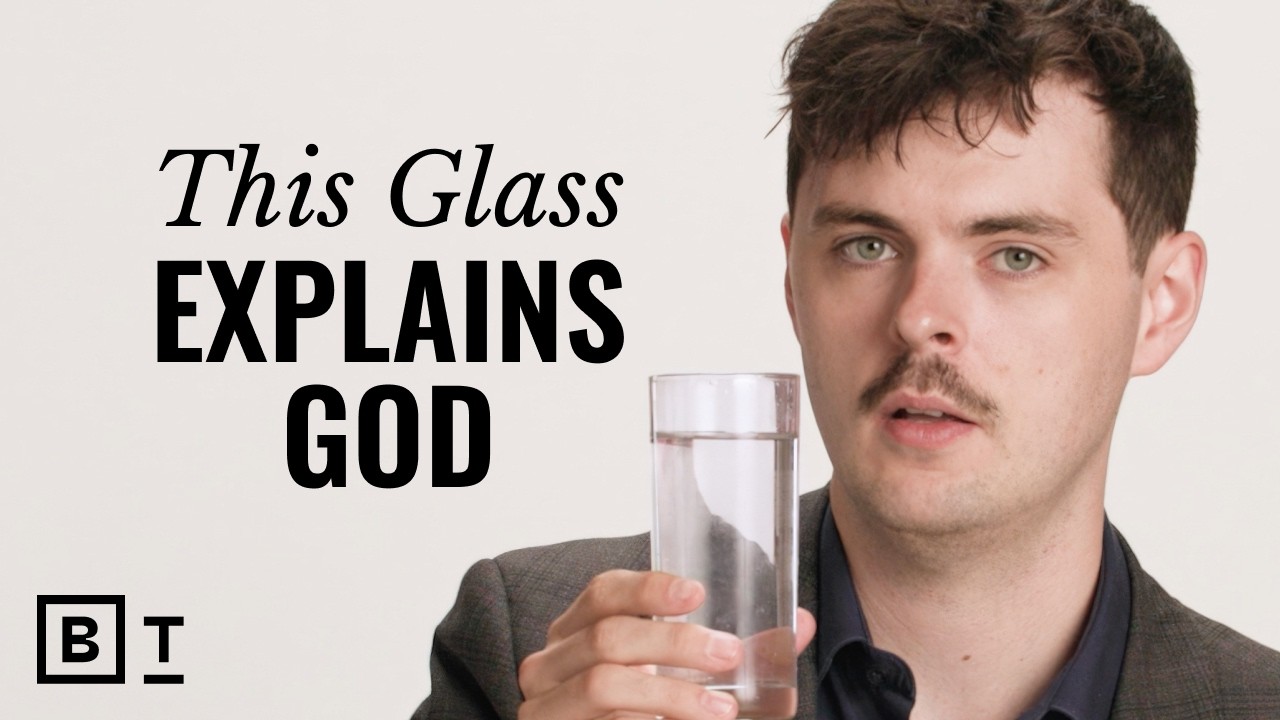
The first ten minutes outline the vertical cosmological argument.
I don’t think that’s true.
If you are thinking about it slowing down because of interactions with particles or gravitational fields, then it’s not really a ball in space.
If it was true, then we wouldn’t be finding interstellar comets, and the ‘balls’ in the solar system would have ceased orbiting long ago.
Then why are we finding interstellar objects?
That would be silly, so it shouldn’t be my argument, and is not my argument.
AFAICT, the continued existence of the ball thrown in space is actualized by the absence of any other entities,[1] in which case there is no need for any other to exist.
Back atya.
To you perhaps. But it wasn’t to the person I was responding to.
Unlike a glass on a table or a ball moving through an atmosphere, both of which have other forces acting on them. A glass on a table in free-fall would, like a ball in space, not experience a change in motion if the table was removed. So your ‘vertical’ case only works if there is a separate entity (the Earth, God) which is affecting all other entities under consideration, and so cannot be used as proof that that separate entity exists. ↩︎
For another thing, it isn’t clear that a beginningless universe really does entail an actual infinite. The idea behind Craig’s argument is that if the universe had no beginning, then an infinite series of moments (or days or years or whatever) has already passed. This, it is claimed, amounts to an actually infinitely large collection. But Craig is a presentist, as am I. That is to say, we take the view that where time is concerned, only the present moment exists, which entails that past and future moments do not exist. But if past moments do not exist, then we do not have an actual infinite. In particular, what exists is just the present moment, rather than the present moment together with an infinite collection of past moments.
It’s not that we have an actual infinite in existence now, but that we have would have had an actual infinite of past moments that no longer exist. Feser seems to have completely missed the point.
No, that scale is too small. To put it simply, the stretching of space robs the ball of its momentum but only over extremely large scales and its velocity will essentially approach zero forever. This has nothing to do with collisions with particles. It has to do with relativity being tied to time-symmetry as defined by Noether’s theorem.
You are conflating the continued existence of the ball with the continued non-accelerated motion (a non-changing state) of a ball. The lack of friction means it can keep moving at a constant velocity but this says nothing of the ball continuing to exist at any instant as a composite of both form and matter as well as essence (what it is) and existence (that it is). Absence or non-being is impotent and cannot actualize anything.
Vinnie
“Let your conversation be always full of grace, seasoned with salt, so that you may know how to answer everyone.” -Colossians 4:6
This is a place for gracious dialogue about science and faith. Please read our FAQ/Guidelines before posting.