I also do “atheistic” carpentry and concrete work. I guess I do “theistic” conservation work and yard work, though, since both keep me in mind of the mandate to care for the earth.
Rejecting a simple logical distinction is a symptom of a mind unaccustomed to clear thinking.
Or stellar evolution! including nucleosynthesis. This has undergone some radical changes in the last few years because it turned out that things we thought we understood were wrong.
And that’s what makes science fun – finding out where accepted models are wrong!
Not surprisingly, you’ve got that relationship backwards.
More accurately, biologists have yet to encounter anything it can’t explain – every time someone had thought they found something it turned out that it didn’t overturn evolutionary theory, it just modified it. A famous example is Dawkin’s “selfish gene”, which turns out to be not nearly as much the case as he propounded. Another is flowering plants; for decades biologists threw up their hands – or threw out wild conjecture – because flowering plants seemed to have just appeared with no background. That’s where things stood in my university days; in one botany class several of us, cranial efforts boosted by beer and hot tub (in the snow), developed our “alien grad students from Galactic U. playing pranks” theory of the origin of flowering plants, and when we presented it to our professor she laughed and said it was just as valid as most of the proposals at the time – outlandish, but it fit everything we knew. Since then the discovery of fossils – it’s worth noting that a number of biologists had predicted correctly where the evidence would be found – has revealed precursors to flowering plants, the forms of which had been predicted as well.
And this in the face of the fact that million of dollars of research money is spent annually in efforts to try to find things that evolution can’t explain – a very logical phenomenon since more research that just fits the models is not the sort of thing that makes for fame; fame goes to those who overturn things and force re-evaluation of the models.
That one little command, “Bring forth!” was key to a bunch of those atheist and agnostic students concluding that it was the God of the Old Testament Who qualified as the Designer. It was literally an “Oh my God!” moment in the science building study center one day – and one that brought laughter because the guy who exclaimed “Oh my God!” had been a hardened atheist; he joined the laughter because it was odd to hear the word “God” come from him.
Of course then ensued a debate over whether this qualified as just abiogenesis or was meant for all life (my contribution was to suggest that the command continues to apply to all the descendants of the first life).
Though here I want to make it clear that what we were doing was the opposite of what YECists do: they (wrongly) insist that the Bible teaches science and then try to force science to fit it; we didn’t at all think that the Bible teaches science but we were examining different claims to communication from the Designer and seeking what best fit science.
And that’s what the original “intelligent design” concept was about: starting with science and concluding that there is Design and thus a Designer, not the travesty the false literalist crowd has made of it after hijacking the term.
Empirical science is the data. Theoretical science is the generalization.
By way of example, measuring density vs temperature and pressure will yield measurements. Theoretical science would be performing a regression to yield smooth curves, and the statistical mechanical analysis to account for deviation from ideal.
We cannot directly visit stellar interiors, but extrapolations of familiar equations of state play a large role in astrophysical theory, which matches up very will with a rather vast and detailed data set of astrophysical observations.
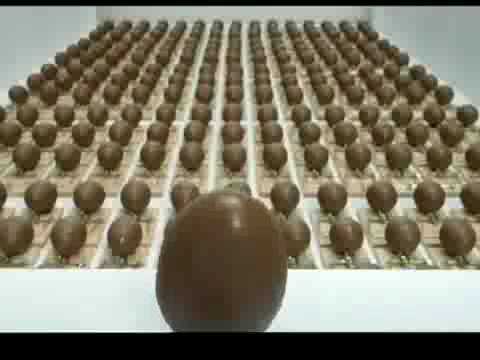
Interestingly, the traps loaded with a single ball is more illustrative of the physics of atmospheric molecules (ignoring any chemical or radiological reactions) than it is of fissionable materials, since each can only affect another single in sequence.
The original demo that I saw (probably over 60 years ago on 16mm celluloid ; - ) had each trap loaded with two ping-pong balls, more similar to fission reactions each ejecting multiple neutrons, each neutron which in turn may trigger another fission reaction. The whole thing happens in a hurry! Unless it’s water moderated, of course (my experience) or with something else. Now visualize a ping-pong ball and mousetrap demo being water moderated.
Which is why biology is so much better off: we can see the structures, we are learning to read the basic chemistry, we can check things against the fossil record . . . but we will never be able to probe any significant distance into a star¹ to see what’s going on.
Biology has an open book to work with; astrophysics has black boxes that can’t be opened.
¹ I read an abstract for a proposal that would get a probe as far as 10,000km into the sun before it flashed to plasma – unfortunately there was no answer to how it would send data back to us! But even if that got solved, that distance is something like one part in seven hundred – a hair over a tenth of a percent – to the core.
I thought it would be easier to find the mouse trap demo with two ping-pong balls per trap. This is as close as I’ve come so far – it uses two super balls! (They bounce!) But it’s only a photo, not a video:
There was actually a design for a “sundiver” in a novel appropriately entitled Sundiver (by David Brin). It relied on heat-pump lasers for cooling, and a carefully collimated one shooting directly up that was modulated to send data. What I don’t know is if we have lasers powerful enough to do the cooling job.
I remember a setup using glass marbles to illustrate how fission works – and the guy who presented it commented it would be so much better with superballs! But for the price of a superball he could get a bag of fifty marbles . . . He also noted that it would work better with stainless steel ball bearings since they didn’t tend to shatter at high-energy impacts.
I like the way the article is prefaced with this … “Transforming a tooth into a venom-injecting syringe is no simple feat, but snakes have had millions of years to tinker this tooth type.”
This preps the reader with the ol’ “millions of years can do anything” sophistry that Darwinist story-tellers love to employ.
As expected, the story-teller in this article fails to explain how a barely- or partially-formed venom system that doesn’t work confers a survival advantage to a snake … a snake which has evidently been surviving quite well without having to inject venom through its fangs into a victim.
And surprise, surprise, there’s no explanation of how the connection formed between the snake"s poison gland and its fangs. This connection is quite important, not least because, as the article points out, many snakes are not immune to their own venom.
Hmm, let’s see … partially-formed system that’s leaking poison into mouth of snake = dead snake = not exactly conducive to survival = fully intact system needed from the beginning (aka, irreducible complexity) = evidence of divine intervention.
I liked this bit too …
“… in some modern venomous snakes where there is a single venom fang on the upper jaw, the front teeth of the LOWER jaw still develop rudimentary “venom grooves”; shallow furrows form on the leading edges of the teeth.”
The “venom grooves” in said lower-jaw teeth could have nothing whatsoever to do with venom, but everything to do with adding strength to the front teeth (as anyone who has worked with sheet-metal, for example, would understand).
All in all, the article is not much of an advertisement for ToE. I give it 1/10.
The system that God instituted paints a pretty good picture.
First of all, you are effectively blaspheming. Read what I said last.
By now you shouldn’t be so clueless to the fact that I believe in and am well acquainted with my Father’s providence. No, the study of his puny little system doesn’t teach it – it cannot because it is methodological science, but I would have hoped that someone your age (even though your diction constantly belies it)… a Christian your age should be able to add 2 + 2.
Even I could form a rational hypothesis of how the poison fangs developed based on what I have read about the various poisonous vertebrates. I am not an expert on the topic and probably have not read any explanation (I cannot remember everything I have read in the past because I have read too many papers and abstracts during my career as a biologist, tens or hundreds of thousands, and listened quite many presentations). So my hypothesis does not need deep understanding about the issue.
There are vertebrates that have toxins that are somewhat toxic to the prey but not to the animal itself. These toxins are produced in glands and then flow towards the teeth, often but not always in some form of groove in the mouth or jaw.
The canine tooth may have a groove on the surface that helps the flow of the poison towards the prey animal bitten.
It would not be a major change if the grooves in the side of the mouth or canine teeth would turn gradually deeper and later to closed tubes. Every bit of change would give a small advantage to the predator because a larger part of the toxic substance produced in the glands would reach the bitten prey and the concentration of the poison that reaches the prey would be stronger.
When the grooves have turned to closed tubes, individuals producing stronger poisons would get an advantage in hunting without being poisoned themselves.
This is just a hypothesis but shows how easy it is to develop rational explanations of how particular adaptations could emerge through stepwise minor changes that give an advantage to the animal itself.