All truth is God’s truth, whether we discover it in revelation (in the Bible or what God’s spirit reveals to people/the church) or through scientific investigation. The tools of science and the tools of spiritual wisdom-seeking belong to different tool sets and are equipped to handle different kinds of knowledge. That’s fine. We should use all the ways of acquiring knowledge of truth and pursue all the different kinds of knowledge of truth that we can. If a definitive and trustworthy discovery from science calls into question something that I thought I knew was true from God’s revelation, I don’t assume that “truth” is being called into question, just my understanding of it. There is always room to realize we may have understood inadequately or wrongly something we thought the Bible taught or God revealed, and we now have the opportunity to understand better. There isn’t anything science can reveal that challenges what is true, just what we believed was true. I am more afraid of the consequences of believing untrue things than I am of learning I was wrong and changing my mind, so I welcome the opportunity to align my beliefs with truth, no matter what domain that truth comes from or what tool kit we used to get at it.
I keep mentioning “Ironic Design Theory” but the Discovery Institute still doesn’t call. 
I kinda have another question that comes up a lot: where does God come from? I know it’s weird to try and cover these questions (especially when we consider whether the Universe is eternal and other stuff that shouldn’t be around forever) but I was wondering if there was any advanced insight available into this question.
This presumes God is subject to some external space-time framework, which is emphatically rejected. The only when or where are created by God. Furthermore God is described as uncaused and an a necessary existent. As a result, questions like this are rendered meaningless.
Some try to concoct a proof of God’s existence from this. But I do not think this is valid. It is circular. Just because you come up with a definition of something doesn’t mean there is anything to which the definition applies.
Another anti-atheist rant by some-one who can’t be bothered to find out what the views of atheists actually are, and consequently writes a load of utter nonsense that does nothing but demonstrate his own ignorance.
You haven’t actually refuted anything, so feel free to proceed. My point was simply that naturalistic explanations fail to account for what happened after the crucifixion, yet they are still assumed to be true even when they fall short. This is because atheists begin with the axiomatic, pre-evidential certainty that God does not exist, and therefore that miracles cannot occur.
There is nothing nonsensical in what I wrote. The real nonsense is the claim that atheism simply stems from a lack of evidence for God, as if atheism was simply due to a mere analysis of the facts. In reality, atheism is a pre-factual belief that then shapes how an individual views the world and interprets everything within it. This is also why, as I have pointed out many times, we often find people who are otherwise extremely concrete and hyper-empiricist willing to entertain theories such as the multiverse, despite the fact that they remain entirely unproven.
They accept them because such theories appear to offer a materialistic explanation for the existence of this universe and its constants, and the striking incoherence revealed by this (namely that they typically reject anything not supported by strict empirical evidence under the most rigorous standards) apparently does not trouble them at all.
Just as you didn’t seem troubled by the fact that you called me ignorant and dismissed what I wrote as utter nonsense, yet haven’t actually refuted anything, aside from resorting to an ad hominem. ROTFL.
Your nonsense is refured by the existence of the many atheists who were raised as Christians, so ckearly did not begin with an “axiomatic pre-evidential certainty that God does not exist”.
That’s a category mistake on your part.
I made a claim about epistemic structure, that is, about the kind of reasoning being used, the standards of evidence being applied, and the background assumptions governing what is even allowed to count as a possible explanation.
You replied with a claim about childhood background, namely, that some atheists were raised Christian. But biography and epistemology are not the same category.
Being raised Christian tells us something about a person’s past socialization; it tells us nothing, by itself, about the principles by which that person reasons now. A person may have grown up in church and yet later adopt a framework in which the supernatural is treated as inadmissible in advance (which is what most atheists do; most because there is a tiny minority among them that doesn’t rule out the supernatural in its entirety, this minority simply doesn’t believe in any God but it’s more possibilistic about the supernatural). If so, then my point stands entirely untouched.
In other words, I was talking about the logical architecture of the argument, while you answered with a fact about the personal history of the arguer. That is why it is a category mistake: you substituted a psychological or biographical observation for a philosophical one.
“Some atheists were raised Christian” no more refutes my point than “some materialists were baptized” refutes materialism. It is simply irrelevant to the issue under discussion.
Try addressing the actual claim next time.
Correct. It is based on causation per se (hierarchical, sustaining or vertical) as oppose to linear or horizontal (per accidens).
I am partial to cosmological-fine tuning and will raise it in response to anyone who says the world doesn’t look like something God would make. (too big, too old etc) or that science is opposed to faith. But these sorts arguments are inductive, based on our current understanding science, they don’t naturally lead to the classical attributes and are subject to change as more scientific information becomes available. Their foundation is not fixed.
Yet God-did-it does not necessarily follow to them. A multiverse is no more or less ad hoc to an unbeliever than God is. A super, infinite immaterial being that loves us and made the whole “universe” vs more “universes”?
In my experience, abductive arguments often follow from what we want to be true or already believe. If I’m a Christian and/or believe miracles are possible the evidence for the resurrection is very strong. If I am non Christian and/or opposed to miracles then either it’s not strong enough or maybe sorcerers stole the body of a holy man for its power leading to mass hallucinations. The level of historical evidence for something miraculous happening 2,000 years ago is not strong enough to convince most skeptics miracles are possible.
I think people could benefit from understanding proper metaphysics if they want to have discussions about God’s existence. In the same way if they want to understand the intersection of science with their faith, they should understand what science actually is.
I’m not going to talk about the fine-tuning of obscure parameters with an average person:
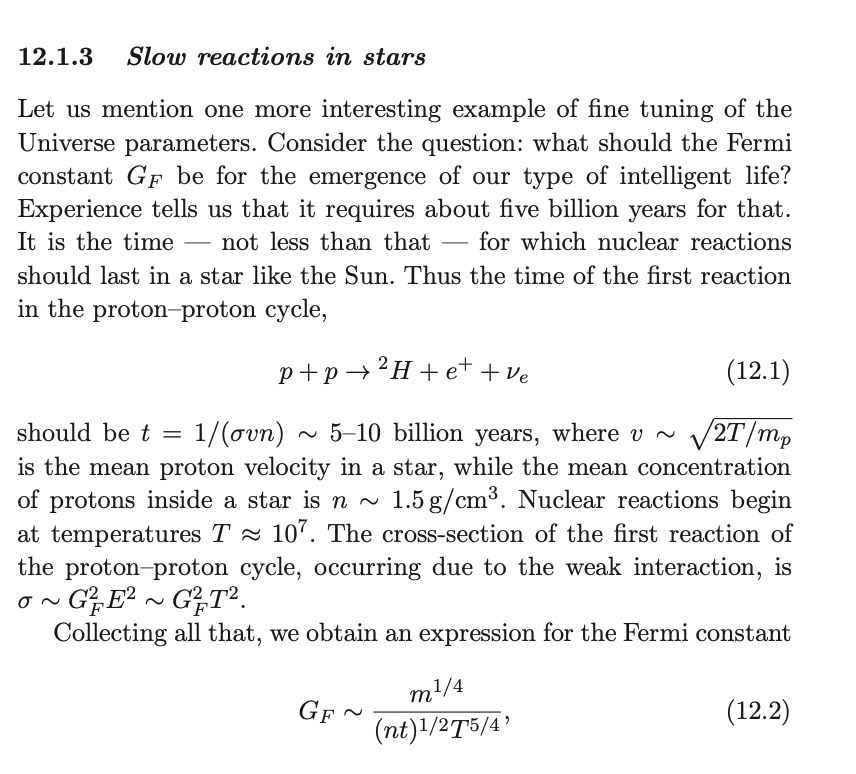
Black Holes, Cosmology and Extra Dimensions (Bronnikov and Rubin)
It’s either a science lesson, the interpretations of which are open to dispute, or why does anything bother to exist at all or why is there something rather than nothing? These are just better questions and lead to inescapable conclusions in my view.
Culturally, intelligent design arguments are also lumped together with bad arguments against evolution. They stem from a terrible mechanistic image of God and design. Too many gaps have been closed in the mechanistic image of God the last few hundred years.
I also don’t see any special watches in nature. Everything in nature is a watch. We get to that through deductive cosmological arguments based on unchanging metaphysical truths. The existence of simple objects in the here and now prove God’s existence.
I am partial to looking at the apparent high degree of fine-tuning in the physical constants, but I would prefer to stick with the more solid and robust arguments that actually lead to the classical attributes of God. I think people can understand hierarchal or sustaining change (coffee held up by table, held up by the floor) compared to linear or horizontal change (domino A hits B which hits C etc). The biggest hurdle is act and potency.
Vinnie
I’ve been preparing a long argument over this over the last few weeks and I will show why this is particularly incoherent in the atheist case.
Not necessarily, but it does lend faith in God far more support than would be the case if the existence of infinitely many universes with different constants were proven. This is undeniable. It is also why many people want the multiverse to be true, not because they have proof, but because it aligns, or better yet because they think it aligns, with their materialistic worldview, which holds that the universe is inherently meaningless and the product of chance.
Even the hallucination hypothesis is deeply problematic, because hallucinations do not function in that way. A theist who is not Christian could more plausibly argue that the disciples were led to believe in His resurrection through sorcery or some similar phenomenon. From an atheist perspective, however, the hallucination hypothesis is especially problematic, since, as far as we know, hallucinations simply do not occur in that manner, especially because they involve multiple persons.
In most cases, these skeptics do not even accept modern miracles, pointing to the alleged lack of evidence and the extraordinarily high standards they impose on such claims. Yet they enthusiastically defend the multiverse despite the same lack of evidence, simply because, in their view, it would eliminate the need for God.
I agree, but this is simply not going to happen, since most people do not study metaphysics and have been conditioned to think that only scientific inquiry yields genuine knowledge.
This is why empirical data that may point beyond a purely material order are so important, with that I mean data such as the extraordinarily improbable fine-tuning of the universe and the possibility that consciousness cannot be fully reduced to material processes. And we should add to this the historical arguments for the resurrection (which, as you can read in this thread, even the very author of the discussion consider the strongest argument for God). Without such considerations, belief in God would appear even more implausible to the average person.
Your actual claim was that atheists start with an axiomatic dogma that God does not exist.
That’s not true.
It’s not true concerning atheists’ worldviews, it’s not true of atheists’ arguments, and you clearly haven’t bothered to ask any atheists what their views and arguments are.
I can’t stop you from claiming that atheists’ reasoning starts with the axiom that God doesn’t exist, but I can say that you have been corrected on this point miltiple times by an actual atheist, and that continuing to make that claim is deliberate misrepresentation and heading for dishonesty
You still haven’t addressed my actual point. You keep substituting the claim that “atheists explicitly begin with the axiom that God does not exist” for the claim I actually made, namely that most atheist arguments (most and not all because I conceded -and I had already conceded it in the past, before this discussion, in this discussion I was talking about mainstream atheism- that there is a tiny minority anong atheists that it’s not entirely closed to the supernatural, this minority simply reject the existence of God, it doesn’t reject the possibility of the existence of the supernatural, but again; this is a very tiny minority) are governed by assumptions rooted in philosophical naturalism that effectively screen out supernatural explanations in advance.
Those are not the same claim.
So no, you haven’t “corrected” me. You’ve merely kept attacking a simplified version because it’s easier than dealing with the actual one.
Calling that a correction doesn’t make it one. It just means you’re arguing with your own paraphrase.
In most cases, yes. Most atheists adopt some form of philosophical naturalism, which holds that reality is entirely natural and therefore categorically excludes supernatural entities or causes. If you want to argue that there is a tiny minority of atheists who do not adopt philosophical naturalism, I have no problem with that. I had already admitted that even before this discussion. But if the claim is that the overwhelming majority of atheists are not philosophical naturalists, or that philosophical naturalism does not absolutely exclude the existence of a supernatural realm, then I strongly disagree.
Under philosophical naturalism, explanations that appeal to the supernatural are not merely considered unlikely; they are excluded in principle. The issue is not just ontological but also epistemic: once philosophical naturalism is assumed, the range of admissible explanations is already constrained in advance, and phenomena that might otherwise be interpreted as pointing to the supernatural are instead forcefully reinterpreted within a naturalistic framework, even when doing this requires and extremely ad hoc and intellectually humiliating mental gymnastic.
I claim, as I said, that most atheists are philosophical naturalists, and under philosophical naturalism the inexistence of both God and the supernatural is axiomatic.
It dos not. The cosmological argument–and not the KCA version which is all pop-apologists on the internet seem to know-- says they all depend on a prime mover/unmoved mover/first cause in the hierarchical, vertical, or sustaining sense (causation per se). This the most fundamental deduction of God’s existence there is and all our classical beliefs about God naturally arise and stem from this act/potency distinction. If you want to defend God’s existence, for me, the is the money ball and the best place to focus on. Fine-tuning is supplementary and defensive. That it is subject to scientific change alone makes this the case.
It most certainly is deniable. See above. Also creation declares the glory of God and shows the work of His hands. An infinite number of universes is hardly inconsistent with God’s glory. One might argue it still underestimates it. Heck, I’ve read some arguments by theists that claimed the opposite, that God didn’t exist if the multiverse was not real. Then some claim our universe is too big or old which is easily answerable.
This shows they have bad metaphysics. A multiverse doesn’t indicate reality is meaningless or that humans are not special. We may not even be uniquely special in our own universe. Instead of doubling down on their bad metaphysics based on a mechanistic image of God and scientism, I find it better to try to discuss the source of the problem. Why is there something rather than nothing is a great question. So is why does everything continue to exist.
Engaging in scientific proofs for God is only serving to reinforce their adherence to scientism. The materialist worldview is the problem, not the multiverse. It may turn out that a multiverse is true and necessary from models like inflation. I agree people falsely latch onto it because they think it solves the fine-tuning problem (from their perspective) but that does not mean the underlying scientific data will or will not come to be seen as correct.
A theist willingly conceding God’s existence depends on a multiverse not existing is absurd to me. You have lost the debate before it even begins if you concede this.
The skeptic will say you have a report from one guy claiming 500 people saw Jesus possibly a decade or two removed from the potential event(s) itself. This is not the same as 500 people saying this. Claiming Paul was wrong/lying/exaggerating is probably not a reasonable skeptics first choice in the matter but I’d guess its more reasonable (since people do do those things all the time) than someone rising from the dead (since people don’t do such things ever). You have just used a similar argument. “Hallucinations don’t happen like that.” Well, all those irreversible chemical/biological/physical changes in death just don’t reverse like that. How is the atheist/skeptic not permitted to believe in an odd occurrence of mass hallucination but you are permitted to believe something science would have immense difficulty with occurred based on the same type of thinking?
For me, historical apologetics can get us to just before the finish line. They don’t get us across. I think what @Christy said here is quite acute:
It is a methodological difficulty. How do you use probability based arguments (history) to convince someone the most improbable of events (a supernatural miracle) actually happened in some specific instance? You do so by starting with the Cosmological argument and show that every object in existence is a miraculous creation from nothing each instant. Arguing from the perspective of materialism or giving skeptics this home field advantage is conceding the debate before it starts.
That is true. These skeptics are inconsistent. But it doesn’t follow that a multiverse is or is not real, or that a miracle did or did not occur. You can point out the inconsistency which hopefully softens them up to the alternative view but the work still remains to be done. For me, clearly someone entrenched at that level of skepticism may need to be shown that their underlying conception of the world is false. I doubt second or third-hand reports from individuals 2000 years ago are going to be very convincing to staunch skeptics (we can’t cross examine Paul or any of the alleged 500).
Heck, many Christians deny modern mass miracles. Do you think modern Protestants accept any appearances of the Virgin Mary? I would say they dismiss them armed with sola scripture, their own preconceived modern Anti-Mary bias and the same materialistic logic and skepticism employed by modern atheists and skeptics to deny the Resurrection. This is a problem that even plagues Christians.As I said, ABEs tend to follow for a lot people from what we already believe and they are harmonized into those categories. It is difficult to see how the evidence for Fatima is not monumentally better than for the Resurrection. Thought I would claim Fatima–an appearance of the Virgin Mary-- lends support to central claims of Christianity itself. Atheist skeptic Alex O’Connor has called Protestants out on this point:
So before you can convince atheists the 500 of Paul is good evidence, maybe you need to convince a billion Christians the much better miraculous evidence for Mary appearing is real. The truth is, Protestants have no business appealing to historical apologetics for the resurrection. They cannot do so consistently.
Well, that is the major problem that needs fixing. Playing the game on their own terms only reinforced their underlying problem. Cut the head off the snake.
That may point…a gap in scientific knowledge may point to a miracle as well. That track record has not turned out well. I agree that the fine-tuning problem should open people up to the possibility of God that are staunchly against it based on science. It really should push them to agnosticism or weak atheism which I consider the same thing. It’s a good seed to plant.
The historical arguments for the Resurrection don’t do for me what they do for you. They don’t cross (no pun intended) the finish line using pure historical methodology. If you dig into the weeds of critical scholarship, it’s difficult to even establish the existence of an empty tomb for many interpreters. And even if you do establish this as more probable than not, once you start stacking probability arguments that depend on one another, all of them being correct and your overall thesis do down. You don’t get to say it is more probable than not Jesus was buried in a large empty tomb (80/20) and so Jesus was in a tomb. To add to this: now it is probable the disciples knew where it was (90/10) and went there to see his body or perform certain ceremonial rights (80/20)…but in the historical argument is based on a number of these and when you stack a bunch of probabilities where if only one of them is wrong the outcome is false, the argument is much weaker.
The point is, when you start adding probability arguments all based on questionable assumptions, the total conclusion of the whole argumentative chain becomes weaker.
All the historical evidence strongly lines up and coheres with our essential belief about Jesus’s death and resurrection. Whether or not you can prove “God acted here” (a theological statement not a historical one) or that a supernatural miracle occurred (methodological difficulty) s another matter.
I don’t think of myself as needing to exhaustively prove the Gospel using historical methodology which is inherently based on methodological naturalism for many scholars.
I can make Christianity 10000% palatable. It’s up to the sheep to read the words of Jesus. If they are His, they will hear His voice and know Him. I am also not convinced intellectual problems are the deepest reason why people reject God but they are a problem and the ends of the intellect is to seek truth so that is what we do.
26 From one ancestor[e] he made all peoples to inhabit the whole earth, and he allotted the times of their existence and the boundaries of the places where they would live, 27 so that they would search for God[f] and perhaps fumble about for him and find him—though indeed he is not far from each one of us. 28 For ‘In him we live and move and have our being’;
Jeremiah 29:13: You will seek me and find me when you seek me with all your heart.
In Jesus and Divine Christology, Brant Pitre wrote: “. . . the best explanation for why the earliest Jewish followers of Jesus believed he was divine shortly after his death is because Jesus himself spoke and acted as if he were divine during his lifetime. Indeed, when we interpret the words and deeds attributed to Jesus in a first-century Jewish context, a strong case can be made that the historical Jesus claimed to be divine, but he did so in a very Jewish way—using riddles, question, and allusions to Jewish Scripture to both reveal and conceal the apocalyptic secret of his divinity. As we will see, it is precisely the riddle-like and scripturally allusive nature of Jesus’s divine claims that gave birth to an early Christology that as simultaneously both very “high” (i.e., divine) and very “low) (i.e., human).” Jesus and Divine Christology.
Why did Jesus speak in parables? Why did he reveal his divinity using riddles and allusions? It’s about active seeking, not passive finding through facts.
In my experience, many Christians so bent on proving Jesus through historical arguments are really trying to prove it to themselves. Its therapy. I think they are often mixing things up and trapped in a materialistic framework (as you said: “even the very author of the discussion consider the strongest argument for God”).
The Cross and Resurrection is the strongest statement in Creation of God saying I love you, I forgive you, I have you, come home. It is the strongest example of gratuitous love overflowing. But Paul says it is thoroughly foolishness to those who are perishing. Do you and the author of this thread disagree with him on this point?
Vinnie
The argument is absolutely correct. The problem is that the vast majority of people are neither familiar with the cosmological argument nor interested in it.
Most of the general population today has poor metaphysical assumptions; this is not a new phenomenon. I was arguing about what the average person would be receptive to, and how they would receive it.
Philosophically speaking, an infinite number of universes (even trillions with entirely different constants) could be entirely compatible with God. Yet such a view would seriously undermine His plausibility in the eyes of the average person. Don’t make the mistake of thinking that everyone, or even many people, or even a substantial minority, possess your level of preparation. That is simply not the case. Far from it.
It doesn’t, just as evolution doesn’t. Yet, just as evolution has been used to deny God’s existence and to attack Christianity, the multiverse would be used in the same way. That is virtually guaranteed.
This is true, but only when one is speaking with people who recognize the importance of metaphysics and do not regard science as the sole and ultimate authority on knowledge. That outlook is extremely widespread in the West, especially in Western Europe, where it is much more common than in the United States.
Absolutely. Which is why they like the multiverse, because they believe it reinforces their materialist worldview.
Absolutely. And in fact, I never claimed that. What I am claiming (and I am 100% confident that this is correct, unfortunately) is that it would significantly undermine the plausibility of God’s existence in the eyes of the general population.
In fact, I have never appealed to the argument from the five hundred. More often, I have relied on the argument from the disciples: that their experiences cannot be reduced to hallucinations within a materialist framework, although a non-Christian theist might contend that they were delusions brought about by evil spirits or something of that kind. Indeed, Jesus was even accused of sorcery by some of the earliest opponents of Christianity. I also maintain that the disciples would not have died for what they knew to be a lie, since they were (unlike Muslim suicide bombers, or even Christian martyrs today) in a position to know whether what they were proclaiming was true.
The problem is that this supposed instance of mass hallucination is incompatible with what we know about hallucinations; they simply do not function in that way. It is therefore an extremely weak and ad hoc explanation, whereas the resurrection remains the most plausible explanation (not only for someone who is already a theist, but even for someone willing to admit the possibility that God might exist) because it offers the best explanation of all the data. Naturally, if one is a philosophical naturalist, one will deny the resurrection regardless of how strained or implausible the alternative hypotheses may be.
And that is precisely the point: they know, within themselves, that those alternative hypotheses are absurd. That is why, for centuries, they have argued that the Gospels were legendary forgeries composed long after the alleged events, and that the resurrection of Jesus was merely a later construct. They still make these claims today when speaking to Christians unfamiliar with the Third Quest. I have seen it happen repeatedly.
This is undoubtedly true. Historical apologetics can demonstrate that the Christian faith is eminently reasonable, and more reasonable than its denial, but a leap of faith is still still necessary.
If someone is firmly entrenched in philosophical naturalism, there is no way to persuade that person. Even the Gospel says that some people would not believe even what they see if it contradicts their preconceived notions; see Luke 16:31.
You can do that with people who are willing to acknowledge the importance of metaphysics. Most people, especially in Western Europe, where I live, see metaphysics as meaningless nonsense for people who have too much time on their hands.
I have never said that. Even though i admit that i hope that it’s not real.
As I said, given the depth of skepticism in which many Europeans are entrenched, not even direct personal witness would change anything. In the past, I have cited posts from the Dawkins blog (circa 2013, if memory serves) in which atheists claimed that, even if they were to travel back in time and see Jesus performing miracles or even resurrecting, they still would not believe in God; rather, they would conclude that He was an alien employing highly advanced technology. I think you are seriously underestimating the extent to which the modern Westerner (especially the modern Western European) has become disenchanted, to use Max Weber’s term, and the damage wrought by the Enlightenment.
We are truly living in the age of the death of God.
Agree completely.
Of course they can’t.
To remedy that, a profound cultural and spiritual renewal would be required, one that, in my view, could only be brought about by God Himself. Otherwise, the West is lost. Indeed, as I have argued many times, I believe that the West is already showing the early signs of the great apostasy, which in due time (in my opinion during the next few centuries) will spread to the whole world and prepare the appearance of the man of lawlessness, the Beast of the book of Revelation.
Exactly. That is precisely my point. Fine-tuning, the hard problem of consciousness, and the historical evidence for the resurrection are all factors that should move any reasonable person, at the very least, toward an open agnosticism. But this does not happen, because many people never seriously consider these arguments, and when they do, they are already so deeply entrenched in philosophical naturalism that they have become sterile ground for any seed to take root.
I never said they do. I only said that they make belief in the resurrection fairly reasonable—for anyone who is not already committed to philosophical naturalism.
I recall Gary Habermas arguing that 75% of critical historians regard the empty tomb as historical. There is also another argument: the testimony of the women. Given that women’s testimony was considered highly unreliable at the time, it would have made little sense to attribute the discovery of the tomb to them unless the account were true.
Nearly everyone born in Western countries is either entrenched in materialism or doing battle against it; there is no middle ground. Every westerner is assaulted by materialism and by the worldview that everything is meaningless and that we are just nude evolved monkeys bound to utter oblivion. This is the means by which the principalities and powers that rule the world are conquering the souls of Westerners. The rest of the world will follow suit in due time.
Luke 18:18: “However, when the Son of Man comes, will he find faith on the earth?”
Revelation 13:3: “Fascinated, the whole world followed after the beast.“
2 Thea 2:5-12: “Don’t you remember that when I was with you I used to tell you these things? And now you know what is holding him back, so that he may be revealed at the proper time. For the secret power of lawlessness is already at work; but the one who now holds it back will continue to do so till he is taken out of the way. And then the lawless one will be revealed, whom the Lord Jesus will overthrow with the breath of his mouth and destroy by the splendor of his coming. The coming of the lawless one will be in accordance with how Satan works. He will use all sorts of displays of power through signs and wonders that serve the lie, and all the ways that wickedness deceives those who are perishing. They perish because they refused to love the truth and so be saved. For this reason God sends them a powerful delusion so that they will believe the lie and so that all will be condemned who have not believed the truth but have delighted in wickedness.”
I do not. But that is because they are the fools. As Psalm 14:1 says, “The fool has said in his heart, “There is no God.”’
In any case, I want to thank everyone, because BioLogos is, by an immense margin, the finest forum I have ever encountered
The I need to work on what makes something plausible to them. I’m not going to teach or argue something is untrue because people don’t understand it.
And we don’t argue against evolution being anti God by claiming evolution didn’t happen.
And for me this entails challenging that outlook. Not adopting it to engage it from the inside.
What experiences? The argument of skeptics is we don’t have any writings of apostles and can only reconstruct their experience based on probability in other documents that mention them. Most critical scholars don’t think Thomas really put his finder in the hole to see if it was really Jesus. They view this as a creative fiction and whether you disagree or not, that is where the debate begins.
That Paul had a religious experience (first hand, autobiographical contemporary primary data) where he believed Jesus appeared to him doesn’t prove Jesus Rose from the dead.
What they know is the most absurd hypothesis is that the laws of physics broke down and a dead man rose from the grave after three days. Nothing gets more absurd than that to a rational skeptic given how me know the world operates consistently via science. Nothing you can say will change that.
You can’t have a rational discussion with someone who is not rational. Might as well be debating with an ant. At that point, I think it is important to impress upon them that our most important experiences, beliefs (love, morality and so on) have nothing to do with science. I would point out all the limitations and flaws in science itself.
If they claim life is meaningless, ask them if they really truly believe their children are just meaningless assemblages of atoms. If they say yes, punch one of their kids in the face to see if they change their tune. Maybe do the last part figuratively.
Vinnie
Well, the presence of the women is the major reason given in favor of an empty tomb being historical. And 75% is establishing my point. It is a probability based argument and a reasonable number of experts do not think the tomb story is historical.
But of that 75% who think Jesus was buried in a a tomb do not even accept all the gospel details. And that is the point. We are stacking probability based arguments.
https://journals.sagepub.com/doi/abs/10.1177/0142064X211023714
Although the term ‘empty tomb’ is endemic in contemporary literature, it is never used in the earliest Christian materials. The term makes little sense in the light of first-century Jerusalem tombs, which always housed multiple people. One absent body would not leave the tomb empty. The gospel narratives presuppose a large, elite tomb, with multiple loculi, and a heavy rolling stone to allow repeated access for multiple burials. The gospels therefore give precise directions about where Jesus’ body lay in this large tomb. Apologetic anxiety leads to the characterization of the tomb as ‘new’ (Matthew and John), ‘in which no one had been laid’ (Luke and John), but it is possible that the appearance of Mark’s young man ‘on the right’ is significant. The anachronistic question ‘Was the tomb empty?’ should be replaced by the accurate question, ‘How empty was the tomb?’
I for one think the earthquakes and guards described by Matthew look like apologetic inventions. Dale Allison provides the best critical review of the resurrection from the perspective of modern NT criticism.
Vinnie
Exactly. Fine-tuning, the evidence for Jesus’ resurrection, and the problem of consciousness are each enough to warrant at least an open-minded attitude in anyone who is not already deeply entrenched in philosophical naturalism. My point is that once a person is firmly committed to philosophical naturalism, it becomes extremely difficult to change their mind unless something truly extraordinary occurs — perhaps a miracle involving someone close to them, or one they experience themselves.
Of course. Still, there is no denying that evolution has been a major stumbling block for the Gospel, especially because it has frequently been used for that purpose. I also believe it is undeniable that, had science conclusively confirmed the truth of a literal reading of Genesis, faith would have been far easier to defend. Evolution does not contradict Christianity or theism, but it has often been used as though it did, and for the average person it appears intuitively to stand in tension with belief in God.
Furthermore, the multiverse is not an established scientific fact. It is merely an ad hoc explanation advanced to account for fine-tuning and for the real possibility that the universe had an actual beginning, before which there was nothing. In other words, the perceived compatibility of fine-tuning and the Big Bang with the Christian claim is one of the factors that helps explain the appeal of the multiverse to many people who want science to contradict (or at least to appear contradictory to the average person) faith in God.
How do you persuade someone who is already convinced that metaphysics is nonsense? At best, he will listen politely while you explain the cosmological argument, the Five Ways of Aquinas, and the like, all the while thinking, “What a weirdo”, only to walk away even more entrenched in his views. There is fertile ground, and there is sterile ground.
This is precisely what Matthew 13:1–23 teaches in the parable of the sower: some seed falls on the path, some on rocky ground, some among thorns, and some on good soil. The same seed is sown, yet it does not bear the same fruit everywhere, because everything depends on the condition of the soil. Christ himself explains that some hearts are closed, hardened, or choked by other attachments, while others are receptive and able to bear fruit.
One of the greatest deceptions of the secular world is the claim that children should not be formed in the faith, so that they may be ‘free’ to choose it later in life. But in reality, this so-called neutrality is an illusion. If children are not formed in faith, they will inevitably be formed by something else, usually by skepticism, materialism, and the assumptions of the surrounding culture. And once those roots have grown deep, it becomes extraordinarily difficult to reverse course (because by then, the soil has often become sterile), apart from a genuine act of God changing the heart.
Which is precisely my point, isn’t it? If someone is deeply entrenched in philosophical naturalism, he has already ruled out any supernatural explanation in principle. As a result, the very claim that a miracle has occurred will seem intrinsically absurd to him. That is exactly the point I was making. That is the nature of philosophical naturalism.
These are the arguments of skeptics who know nothing about the Third Quest. The problem is that many Christians do not know it either, and so they fall straight into their traps.
But they do admit that the apostles (not just Saint Paul) had experiences that convinced them that Jesus had been raised from the dead. Very few historians today maintain that Paul “invented’” Christianity. Many more argue instead that the creed in 1 Corinthians 15, in addition to being extremely ancient, was indeed received by Paul from the disciples.
Do you have any idea how many people are irrational? What is remarkable is that they often see themselves as highly rational and cultivated. I have said many times to my atheist friends: there is no more perfect slave than the one who is convinced he is free. And that is the situation of much of the contemporary Western world: people are prisoners while imagining themselves free; they are often functionally illiterate, yet they drift through a sea of Dunning–Kruger on countless issues; they are deeply conformist, yet think of themselves as free thinkers.
They simply contend that the fact that we attribute deeper meaning to these things does not make that meaning true. Instead, they argue that this is merely a psychological response to meaninglessness, and that evolution has shaped human beings in this way to promote social cohesion. Edit: what I mean is that they claim to create their own meaning while also holding that love, for example, is intrinsically nothing more than a chemical reaction. They choose to give it more meaning even if they know that it’s invented. That is a rational conclusion to draw if one genuinely believes there is no soul
Then preach the gospel and leave the fool to his folly. This is like debating with a drunk. They need to sober up before having a discussion. If you want to use fine tuning to help with that I’m fine with it.