Good morning Jay, I wanted to reinforce what you said about this world possibly being a simulation. This while an “uncommon rabbit hole”, is not entirely irrational. It would also seriously draw into question the appearance of other minds.
I hope you address the version of the ontological argument I am making.
And if you are interested, I have a similarly simplified approach to the cosmological argument based on the non-numerical value of infinity, or what Aquinas apparently wrote (a not so long story) about a series proceeding to infinity, and the impossibility of it becoming actually infinite.
I know you addressed your request to Jay - and he can very ably speak for himself should he choose; I don’t speak for him at all. I just want to register my own response, though, as to why many might flippantly regard solipsism as being “off the table”.
While it can’t be strictly disproven (like a whole host of other fantastical claims as well), it would suffer a severe case of “sowhatism” - if I can possibly coin a new phrase. Christianity or other major religions may suffer of a lot of things, but they at least don’t suffer from this: their truths (or falsehoods) matter. Or as a Christian I would even hone that down to a singular: the Truth of the central person of focus matters. It changes how one orients one’s life, should that Truth be embraced. Whereas the question of whether or not we could all be a simulation … how is the answer to that going to change or affect how I live my life (other than in perhaps negative or even nihilistic ways if I became convinced of it)? Or even on a less ‘philosophical’ level - what new important questions or research would such a proposition direct us toward? What sorts of answers or suggestions toward further questions could it spin off toward? Not that research productivity is a measure of philosophy - I rebel against that notion myself. I’m only bringing up this latter point to argue that even at a ‘secular-enthusiast’ level that claims to want “just science please”, the value of such a hypothesis is probably dubious. I know it’s floated out there - maybe even somewhat seriously by some, and with a few estoteric sorts possible experiments in mind. But apart from that (such as it may even be), I don’t see the upside of having that hypothesis at the table, or any compelling argument as to why it should be taken to be even plausible. And it has nothing to offer our scientifically-informed knowledge since it lacks falsifiability.
The upside is having a clear idea of what the alternative to theism looks like. So that when it’s presented by Heidegger, a new age guru, or a serpent in the garden, it can be recognized for what it is.
Right. Anselm’s and Aquinas’s proofs have been known for centuries, and those haven’t exactly done the job.
“It’s not impossible.” Not exactly a ringing endorsement. Here’s what Pascal had to say about it:
The metaphysical proofs of God are so remote from the reasoning of men, and so complicated, that they make little impression; and if they should be of service to some, it would be only during the moment that they see such demonstration; but an hour afterwards they fear they have been mistaken.
To quote Pascal one last time:
Therefore I shall not undertake here to prove by natural reasons either the existence of God, or the Trinity, or the immortality of the soul, or anything of that nature… because such knowledge without Jesus Christ is useless and barren… If the world existed to instruct man of God, His divinity would shine through every part of it in an indisputable manner; but as it exists only by Jesus Christ, and for Jesus Christ, and to teach men both their corruption and their redemption, all appearance indicates neither a total exclusion nor a manifest presence of divinity, but the presence of a God who hides Himself. Everything bears this character.
I’ll have to come back to solipsism in another post. This one’s already too long.
“a priori no mark of impossibility” = “It’s not impossible that…”
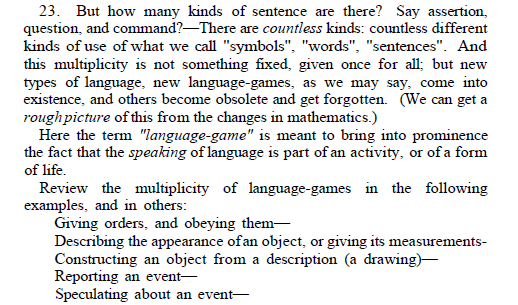
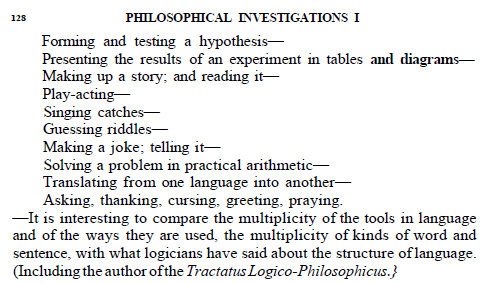
Kant is a famous critic of the ontological argument, so invoking his name doesn’t help your case. Many, many perfectly logical arguments can be made from premises to conclusions, but that doesn’t make them “true,” especially when the premises have no evidence to connect them to the world as it actually is. Even Wittgenstein repented of his earlier notions about logic and language.
I’m not sure why you keep invoking infinite objects. Before you get too deeply invested in that subject, I hope you understand there’s more than one infinity. Here’s a great explanation for the layperson:
It’s getting late at my house. I guess I’ll have to come back to solipsism tomorrow, but I mostly agree with @Mervin_Bitikofer.
A lovely passage. To the makers of idol “speculation” does God hide himself and confound and put to shame. But to Israel and the nations are the promises of the New Covenant. “You shall not be confounded or put to shame to all eternity.”
To be exact, what I’ve said is there is an infinite being, but not an infinite number of things.
So that you know, I have some basic familiarity with the subject. More than anything I was drawn into it over the last few years as a result of conversations like this. Something I wrote previously:
“I understand how the natural and real numbers cannot be put in corresponding relationships. I also get a sense of wonder, as if we are touching on a basic premise of reality when X can be considered as a discrete value representing 4 dimensions, and yet it is ‘smaller’ than the reals between 0 and 0.000001.”
“(X<---->non-X) > (X, X+1, X+2…)”
Apart from a contradiction it’s not a priori impossible.
Now that you mention it, it’s a contradiction that forms the basis of not being able to put the natural and reals in a one to one correspondence.
You lost the context of that discussion which feels like ancient history now.
I think you have me confused with your former self. It was my phenomenology professor that turned me on to the connection between pseudo-Dionysius and Heidegger. Sam Harris also falls into this group that says “each one of us is capable of it.”
And then there’s this new age belief I haven’t been able to put my finger on. Something about making miracles happen by seeing your actions and thoughts as coming from the same place the universe occurs.
My commas can be a mess. But the relation between Heidegger and the serpent in the garden is very interesting. I guess you had me made for a fool or you want to and that’s why you haven’t replied to my comment about the aleph numbers. Not even a like.
I was just looking for for a favorite quote from Holy Envy* and started rereading. I had a different take on what you wrote here and thought it might be worth some discussion unless it is too taboo. I’m struck that a different way to read -
“that who ever believes in Jesus will not die but have everlasting life“
could be to believe that the everlasting life one accrues through faith in Christ could be about His not our life. Maybe he doesn’t make eternal my fluky, warty nature but rather those who take in and embody his nature thereby extend his reach and influence. Between the two perhaps the better choice?
In my own opinion, what we are apart from what is greater is not so remarkable or important as to warrant eternal preservation. Doesn’t mean aunt Martha, dear old mom and my best dog won’t be there on the other side. One amongst many knowing’s we can never verify from our perspective so reasonable people can disagree.
In some sense all the rain that has ever fallen is or has been or will be returned to the sea. But I don’t think the individual characteristics of each drop as it it was in its separateness is or needs to be preserved.
*The passage I was looking for was the one that asserted the primacy of good treatment of neighbors compared to defending one’s religion since the former is specifically called for in the Bible.
Whoa! Mark! This got my attention while I was on break at work and I haven’t had a chance to come back to it until now. I’m not used to seeing my name and smiling face under the words “HERESY TRIGGERS WARNING”.
After reading your warning, though, I was surprised at how orthoxly Christian your bullet point actually sounded. I think you’re talking about what Christians call “sanctification.” Or rather you’re pointing out that everlasting life sounds pretty bad, without sanctification.
Around this Forum I’m familiar with a few variations (I’m sure there are many more than those I’ve read with any care) on the idea of some sort of perfecting process taking place maybe starting in this life and continuing or completing in the next. @mitchellmckain@Mervin_Bitikofer@Klax and @Randy have all expressed different versions of people and relationships being made right, which they may or may not call sanctification. But the common idea is that things don’t stay fluky, warty or worse for all eternity.
One of the things I find valuable in the postmodern thinking that I’m familiar with is the emphasis on the value of the self, the individual. That it is something to be respected (mine as well as anyone else’s) as central to the person. The “person preserving” stuff we read in Penner’s book. In spite of the revulsion that many Christians feel for this emphasis, it’s also central to our thinking related to an afterlife. That the self, somehow, is preserved and able to commune with others in a way that is really, truly good and right and without the pain and conflict we endure and dish out now. I’m a fan of that idea.
Thanks for the explanation. I see it differently of course. I don’t really see any pathway toward any sort of personal immortality. But if I try hard to imagine something what I described is the best I can do. I don’t think men need sanctification beyond the grave in order to live meaningful and fulfilled lives. I don’t see anything as being lost which is rightfully ours. For everyone who has had that expectation implanted I see no harm in it and am happy if it makes you happy. But I do not miss or desire to have it myself.
Eternity is a big pill to swallow and a conceptual whirlwind. But even a brief window to see this world from God’s point of view, how the world was formed, what happens in the future, and what other people were actually thinking, will be priceless.
And more than that, I want to see (and touch the feet of) Jesus.