As they are to literature but I don’t consider either to be a science.
Indeed not, but accessible to it. As GPT finds. Hang on! Psychology isn’t a science? Is ethology? Anthropology? Sociology?
Does GPR reference an AI Program? I am entirely atheistic regarding the alleged intelligence of such things.
Psychology can be approached as a science but not in any interesting way. I guess it depends on what questions you wish to pursue.
Generative Pre-trained Transformer. The artificial intelligence is remarkable.
How else can it be approached, instead? I find it fascinating.
Well, science basically investigates reality in the third person, seeing what we can find out about physical reality in a verifiable, repeatable way. But in addition to our capacity for the Martian point of view and detached analysis we also have onboard a first person perspective by which we know some things immediately which cannot be discovered any other way. There is no good reason that I can think of to try to live a life from just one of those perspectives. Each has its use. One gives us power in our world, the other gives us insight, understanding and meaning.
The psychologist I’ve read the most is the American Jungian analyst James Hillman. In one of his books, probably Re-Visioning Psychology he wrote that every psychology is first and foremost a confession. Perhaps that is analogous to what Christians call revelation? Here with Google’s help is the exact quote:
“Each psychology is a confession, and the worth of a psychology for another person lies not in the places where he can identify with it because it satisfies his psychic needs, but where it provokes him to work out his own psychology in response”.
1 Like
Very good. I was going to post that before going to my psychologist! Now I’m back. I believe, I feel, that we’re both right. 110% In practice, as today, it was pure Hillman. The science backdrop, well mine, is evolutionary psychology, neurology, & existentialism-phenomenology.
1 Like
“No computer has ever been designed that is ever aware of what it’s doing; but most of the time, we aren’t either.” ~ Marvin Minsky
4 Likes
An ex-Jehovahs Witness’ comment on An Important Message to Former Jehovah’s Witnesses and JW shunning: “The fact is… parents, family, siblings, will ALWAYS say they love you, of course they do. They do love you. They grieve at your loss like you are dead. They can’t override one of the deepest emotions we’ve been created with. They don’t STOP loving you. The fact is, as they will tell you, they LOVE Jehovah MORE. That’s the emotional highjacking of BOTH parties involved. You get to watch your own funeral without dying. That’s the truly destructive part.”
4 Likes
That’s a scary thing, and something we can learn about–do I treat my family or friends differently if they leave my own religious or political or (insert name) clique here? Can I realize that they can operate from a point of good will, and I can learn from them as well?
That is a good post; thank you!
3 Likes
Can I learn to accept their priorities as ethical or moral?
2 Likes
“Fundamentalism is more a psychology than a theology.” -R.Land
It [fundamentalism] takes whatever belief system you have and weds it to: certainty, solidarity, and ferocity. People who disagree with you are not just wrong – they are seen as evil!
paraphrased thought from Skye.Jethani
1 Like
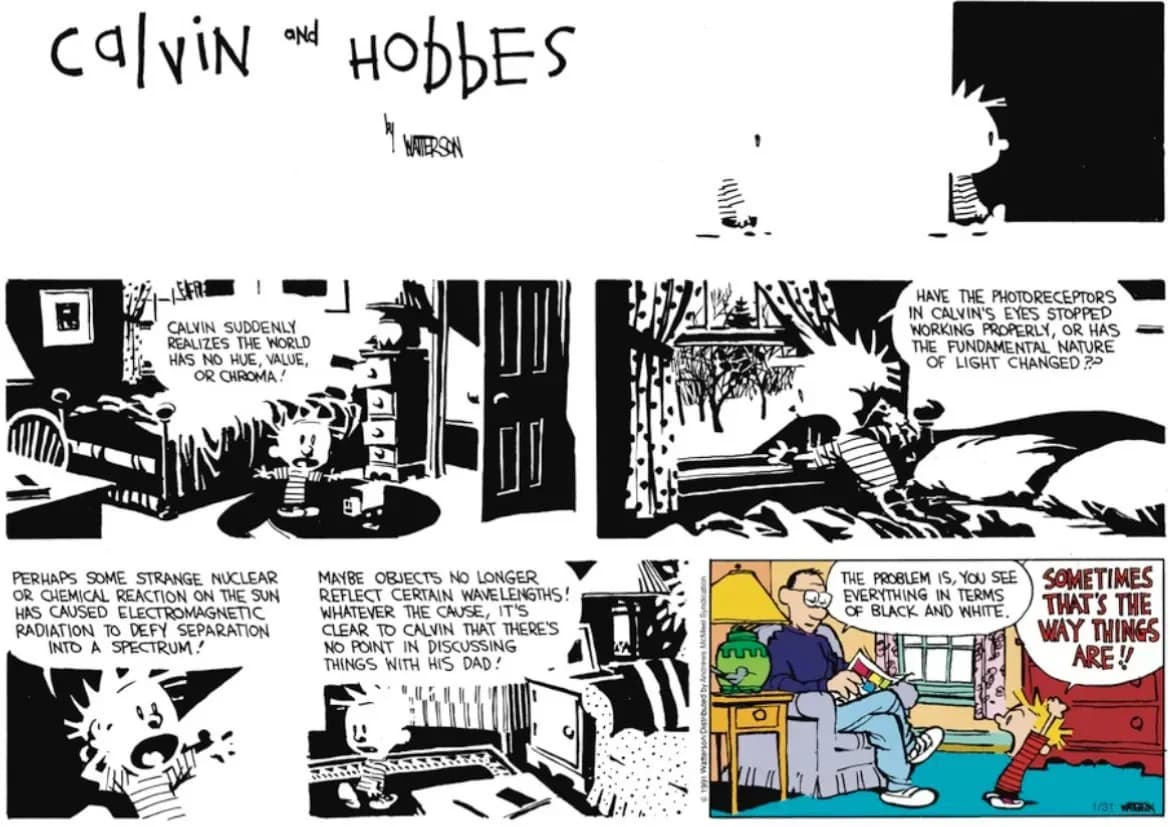
The first statement I find perceptive.
The second, however does not necessarily follow. It certainly can, but it isn’t a guarantee. I suspect we’ve both spent our lives surrounded by fundamentalist Christians, and know from our own experience that most of those people don’t fit Jethani’s description.
We must take care to guard ourselves from vilifying whole groups. This is a dangerous practice that changes how we view people. If we vilify people (people not like me) we can more easily deny to ourselves their humanity and give ourselves license to hate. Fear and hate are tools authoritarian leaders know how to exploit.
People are complicated and so are our beliefs.
This doesn’t mean that evil should be excused. It should be condemned when it is practiced and confronted when expressed.
But we can’t anticipate evil action simply because we see someone as “other” than what we think they should be.
3 Likes
That’s fair. If it helps, I do recognize my own tendencies toward fundamentalism in terms of the three characteristics listed - even including the ferocity, at least at an emotional level. I will of course say out loud that I would never justify violence toward anyone. But Jesus makes it pretty clear that even labeling one’s brother as a “fool” is to effectively murder them in my heart. So while I do often speak of those fundamentalists “over there”, my own words and thoughts in that regard betray me as being one myself in my more sober moments. I certainly am in love with both certainty and solidarity (to the fullest extent that I can get both of those things). It is a “cross-the-board” psychology overlaid onto any belief system, after all.
2 Likes
Not “pithy” … but here’s a sobering, and interesting thought from a book I just started by John Ortberg: “Steps: A Guide to Transforming your Life When Willpower Isn’t Enough.” Here is an excerpt from his story about the founding of AA.
Because Rowland H.’s family was so wealthy, they initially wanted him to see the world’s most famous psychiatrist, Sigmund Freud. But Freud was too busy, so they settled for Jung. Freud, unlike Jung, was a devout atheist who considered religious faith a neurotic illusion. If Freud had seen Rowland H., he would never have suggested that Rowland find a vital relationship with God through the Oxford Group, so Rowland would never have suggested it to Ebby, so Ebby would never have suggested it to Bill W. One answer to the question “Why did AA get started?” is “Because Freud was too busy.”
…and one earlier paragraph from the same book (which makes use of the trope that AA is often found meeting in church basements).
Upstairs people usually seem to have their lives together, while downstairs people are just trying not to fall apart. But paradoxically, desperate and needy weakness is embraced and becomes the place of great power. That’s why folks in AA sometimes say that when you come to church, you can go upstairs and hear about miracles, or come downstairs and see them.
5 Likes
Hope you don’t mind that I’ll be sharing this. Great find!
1 Like
Share away! My “treasure trove” where I find all these great books is by hearing the authors interviewed at holypost.com. Ortberg was interviewed in this recent podcast episode which should be available for free. You can get bonus interview content if you’re a member.
2 Likes

More from “Steps …” by John Ortberg
In desperation she found a therapist to whom she poured out her problems and asked for a cure. Instead, he invited her into a therapy group with one rule—radically honest self-disclosure. He told her, “You don’t need a cure. You need a witness.” A witness is not a therapist, mentor, life coach, or personal consultant. A witness does not advise, instruct, or explain. A witness simply hears your story. A witness gives you the gift of being known. And somehow being known is necessary for being healed.
She describes the group this way: “There were disclosures. There was feedback. There was looking, seeing, and being seen. There were no answers. I wanted answers.”
Sometimes church groups are the mirror image of this: There are no disclosures. No looking, and seeing, and being seen. But there are answers. Lots of answers. We can’t “answer” somebody into healing. We need a witness. Here is the paradox. Embarrassment and shame make us want to hide in the dark. But they only get healed when they’re brought into the light.
And a little later….
The Protestant Reformers taught that people did not have to go to confession with a priest; they could be forgiven directly by God. But their intent was “the priesthood of all believers,” that we should all hear each other’s confessions and pronounce forgiveness. Instead, common practice has been “the priesthood of no believers,” where we live without a witness.
3 Likes