Magical folk beliefs and Christianity

Among many Christians in the US I see what I might call “a Christianized neopaganism” that I think is related to the anti- science (or as they might say”science skeptical”) stance many people hold.
I see interest in alternative medicines, “traditional” medicines, “natural” healing, homeopathy, “natural” child birth (as if it is ever unnatural!), and the kicker - “nature takes care of nature”. Perhaps some of these things individually is harmless or just a preference. But I think most of it is bigger.

The magical view of nature and that God only blesses us through nature strikes me as utterly bizarre.

Reformed women with more experience cooking wild game stood aghast as I expressed my concern about cooking venison rare, so as not to ruin the meat. Trichinosis is a real thing here and it affects wild game. “But it’s all natural. Nature cared for nature.”
We also have bovine tb here among the deer. Etc.

This conversation struck me as a newer version of the kind of thing mentioned in the OP.

4 Likes

Yes. It is an alternative worldview that unfortunately may have even fatal consequences.

‘Nature takes care of nature’ but it may happen through killing. People die every year because they pick ‘wrong’ natural products, like poisonous mushrooms. People die or may have life-long consequences because of diseases that could be prevented or healed by the methods of modern medicine.

Those with the alternative worldview have a handicap but the extra mortality caused by their limited views is so low that it may be compensated through the spreading of the ideology or the ‘natural’ practices that lead to a higher number of children born. Despite the fatal consequences, the beliefs are here to stay, at least for the near future.

3 Likes

Magic Folk Beliefs tend to come in roughly three categories.

  • There were pagan Seers. Not all Seers in the Bible were working for God. This may be like Dr Terence McKenna.

  • Natural Law. There were superstitions that may have come from Noah or somewhere. These are aligned with God and how God Judge’s Spiritual Law.

  • Peasant Gobblygook and someone looking for attention and making things up.

Lets go through these.

The court sorcerers of Egypt could recreate many of Moses’s miracles. How? There are rules to the spiritual. God is Honorable. God does not lie. Someone, at some time, may have seen God move. Seeing God move, someone wrote something down in a corrupt way. The court sorcerers of Egypt could recreate some of Moses’ miracles because they had something from an earlier time God moved. In Egypt writing was taught by the priests. It was associated with their cults. As Christianity spread, reading and writing in hieroglyphics was lost or fell out of use. Christians wouldn’t care to be thinking in paganism. (2 Corinthians 10:5)

God, through Moses, led Israel out of Egypt. Moses went away for 40 days and 40 nights. When Moses came back, he found a false god Israel had made. Israel had seen the miracles. Israel had seen prophecy fulfilled. Israel made a false god, a golden calf, and started associating things God had done with a false idol. That is related to how the court sorcerers of Egypt recreated some of Moses’ miracles.

Balaam Son of Beor has been known as an non-Abrahamic prophet in Talmudic Judaism. In Christianity, he has been known as a sorcerer. Balaam Son of Beor blessed Israel and was doing good. He was offered a lot of money to curse Israel. He wasn’t interested in money. He was interested in…women. Balaam lead Israel into sin.

Balaam was doing good and serving God. Balaam went into sin. This is where we have Deuteronomy 13.

A pagan Seer, and there are away to go about that, they may have taken after Balaam. Dr Terence McKenna, he was experimenting, and finding things in common with past shamanistic people’s.

What the Druids of Ireland and Britain were doing was something very particular. Superstitions about Fairies…there may be something to that. Fairies are demonic.

There is a big learning curve here. You should take your time and pray about it. Don’t attack me.

What is the Kingdom of God exactly?

Picture in your mind, the Island of Atlantis. I am not saying the Island was real, or denying it, this is a thought exercise. Picture the Island of Atlantis. The Island may have been like The Garden of Eden. All men were under God. All knowledge was under God. Sin entered the island. The Island sank.

Nothing new happens under the sun. (Ecclesiastes 1:9-11)

God is a creator. Symbols and dates, signs in the sky, God may have had a meaning or use for. A Pentagram is on Sir Gawain’s Shield. A Pentagram represents the five wounds of Christ. Christians came into contact with some pagans, and they also used the Pentagram. Understanding was ceded. Something happened, and perceptions changed.

An upside down cross is Peter’s Cross. Peter did not feel worthy to die like his master. Peter elected to be crucified upside down. Hollywood would have people believing that an upside down cross is a sign of the devil.

God is a creator. God may have a use for December 25. A Christian who said something like “December 25 was a pagan holiday,” he was ceding something to Satan. God is a creator. It all belongs to God.

This is a way of thinking towards being aligned. (Philippians 2:2) Towards understanding spiritual warfare.

Are you worried about being attacked here? Even though we do let a wide variety of people interact here, we also aspire to (and encourage) people to engage critically with the ideas expressed and not attack people themselves (though I recognize it’s near impossible for nearly any of us to not feel personally attacked when people attack ideas that are important to us.)

But on that front, we should eagerly relish the thought that our own ideas be brought into the crucible of life and reality for testing - and relish all the more that if seen to be false, we would abandon them in favor of enduring truths. And being tested is one valuable tool for latching on to more enduring truths!

Maybe nobody said it better than James Clerk Maxwell, a brilliant scientist and devout Christian from back when scientism itself was near a zenith of ascendancy - and yet he could say this (all these last words are his…):

…let nothing be wilfully left unexamined. Nothing is to be holy ground consecrated to Stationary Faith, whether positive or negative. All fallow land is to be ploughed up and a regular system of rotation followed. … Never hide anything, be it weed or no, nor seem to wish it hidden. … Again I assert the Right of Trespass on any plot of Holy Ground which any man has set apart. … Now I am convinced that no one but a Christian can actually purge his land of these holy spots. … I do not say that no Christians have enclosed places of this sort. Many have a great deal, and every one has some. But there are extensive and important tracts in the territory of the Scoffer, the Pantheist, the Quietist, Formalist, Dogmatist, Sensualist, and the rest, which are openly and solemnly Tabooed. …

But a Candle is coming to drive out all Ghosts and Bugbears. Let us follow the light.

2 Likes

Examples of people using “Folk Belief” today, as I have been teaching about.

Concept - Man is made in the image of God or “Our Image.” Our image would be God and the Angels. The Spiritual is a reflection. Given man would like good things of God, he follows the words of Jesus Christ. Given man would like bad things and misery…he doesn’t. ISIS in Syria in 2015, turning Churches into torture chambers, they were reflecting something.

Towards understanding this, someone needs The Prophets. The Prophets were men God spoke through. They often were doing things that seemed odd to contemporaries.

  • Ezekiel laid on his side for 390 days to simulate the siege of Jerusalem. (Ezekiel 4)
  • Isaiah walked three years naked. (Isaiah 20)
  • Jeremiah walked with an Ox Yoke. (Jeremiah 27)
  • Breaks staffs over knees. (Zechariah 11)

Why were they doing these things? God asked them to. Also, man is made in the image of God. The spiritual is a reflection. Someone working in obedience to God was “Setting” something in the Spiritual or Principalities.

A man sends an email to his Boss. He “Set” something on the internet. Later, there is cause and effect, and his Boss reacts to the email.

Ezekiel in Ezekiel 4 was asked to do some very specific things with very specific allegorical reflection by God. This “Set” something in the spiritual. Later, what was "Set’ in the spiritual manifested in prophecy fulfilled.

God asked Abraham to sacrifice Isaac. In obedience, Abraham prepared the alter. He raised the knife up. He was ready to do it in his heart. He was stopped. Abraham had to be willing to in his heart. This “Set” something in the spiritual. Later, Jesus Christ was God’s only begotten son, his sacrificial lamb for your sins.

What was presented here is a particular concept. Sometimes, in the news, I find people doing something related to, like they were trying to Willfully “Magic” something. During Brexit, this may have been in 2018 or so, I found some protestors in the news. They had painted themselves in body paints. One was in painted in the EU flag, and one was painted in the UK flag. They were kissing. They were trying to reflect something spiritually.

It may been a year and a half ago. I found a Palestinian man, and he had a cake, like a birthday cake. The cake was decorated in the Israeli flag. He and his children would take handfuls of the cake, and eat it, like Palestine was eating Israel. He was working to reflect something.
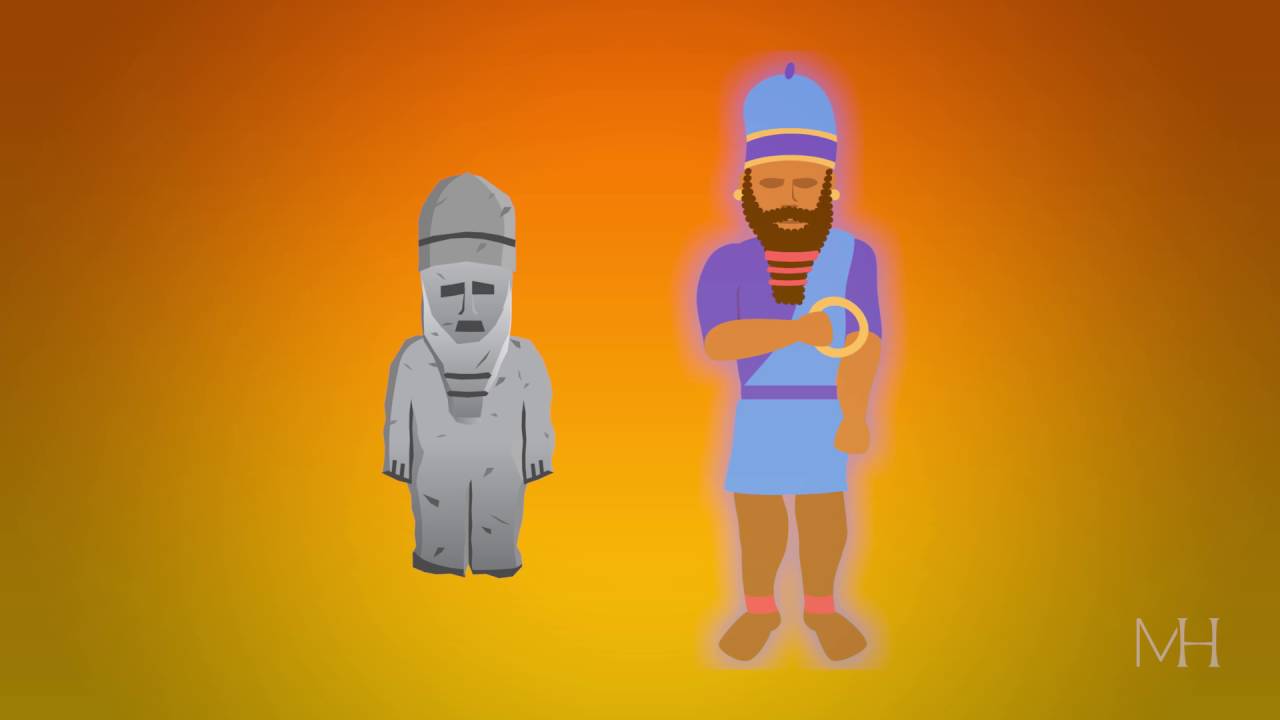
1 Like

Yes, this is exactly the distinction I was trying to get at in my comment and you explained it so well. I view healthy Christian prayer as simply communication, in relationship, with God. But when we think we can pray in a certain manner–a ritualistic way–and thereby ‘force God’ or ‘unlock his power’ like a slot machine of supernatural force to do our own will…I think that’s when it becomes ‘magic-thinking’.

5 Likes

Now that’s quite an invention that has nothing in the text to support it!
The viewpoint of the text is that those sorcerers employed the powers of the Egyptian gods.

3 Likes

And maybe that is the most important point about Scripture. The understanding may not match ours but at the time it seemed valid. IOW the “truth” is not necessarily the crux of the matter. Not then, and not now either

Richard

1 Like

The Egyptian gods are literally fallen spiritual beings that ruled over Egypt as gods. The pagan gods and probably all the spirits of pagan folklore are real fallen Elohim with real power.

I think you will have difficulty proving that from any direction.

Richard

3 Likes

Biblical Scholar Michael Heiser.

2 Likes

That is one interpretation but I would not say that it is exactly what the biblical scriptures tell.

Michael Heiser has done great work in his books and videos but we should not take his interpretations too simplistically.

Did the Ancient Near East (ANE) people believe that the gods of nations were real? Yes, absolutely.

Can the OT scriptures be interpreted so that at least some of the gods of nations were real? Yes, absolutely.

Does this mean that all the gods of the nations were real? No, it does not.

We know that the ancient Egyptians and other ANE people believed in hundreds of gods. The number, names, roles and assumed capabilities of these entities were dynamic, changing through the millennia. There were at least tens of gods that could be classified as some sort of main gods. The OT stories have been told to an ANE audience who believed that these were real powers, and the message is told so that the audience could receive the key message.

I think that Heiser takes a bit too black-or-white approach when he interprets the texts. If something is mentioned in the text, it does not necessarily mean that the something existed outside the beliefs of the audience. There were real spiritual powers, yes, but some things may have existed only in the widely known and believed oral stories. What the mythologized stories told were part of the subjective or community-wide worldview but not necessarily what we would call ‘objective truth’.

I assume that the beliefs in various gods and spiritual creatures are a rich mixture of mythologized stories, wild imagination, misunderstandings, and contacts with real spiritual creatures.

Biblical scriptures give the impression that some spiritual creatures had positions that were linked to locations or nations, and that there were hierarchies among the spiritual creatures. More accurate descriptions of these are extra-biblical tradition that may include some true pieces but is probably mostly invented systems. Human mind wants to know more than is revealed and is eager to develop categories and mental systems that attempt to answer to our curiosity. Some of these mental systems might be compared to conspiracy stories.

2 Likes

Who is he and why should I care?

Richard

Some-one else making the same claims you do is not evidence that you are correct.

1 Like

When we look at the Exodus narrative through the lens of ancient history rather than modern fantasy, the traditional idea of court magicians pulling literal, supernatural spells out of thin air starts to lose its grounding. In reality, ancient sorcerers and wise men were the scientists, illusionists, and pharmacists of their day.

When the text mentions that they matched Moses’ signs early on using their “secret arts,” it makes a lot of sense to look at real-world, natural methods. They were working strictly within the boundaries of physical biology—whether they were using a classic illusionist trick (like hypnotizing live desert snakes to stay rigid as rods until they dropped them) or utilizing specialized botanical knowledge, such as local mushrooms or plant extracts, to manipulate perception and create an illusion.

Scripture actually maintains a remarkably consistent, grounded view of these advisors across both Testaments. They are never framed as people with separate supernatural magic, but as highly skilled human technicians trapped in localized systems of thinking:

  • The Data-Processing Failure (Genesis 41:8): Long before Moses, Pharaoh’s magicians completely choked when presented with a macro-scale environmental pattern in Pharaoh’s dreams. They were experts at reading local cultural data, but it took Joseph—whose mind was aligned with the ultimate Author of natural law—to decode the actual timeline and save the population.
  • The Environmental Ceiling (Isaiah 19:11-12): The prophets later openly mock the “wise counselors of Pharaoh,” pointing out that when God’s overarching laws shift the broader environment, a rigid empire’s localized cleverness hits a hard ceiling, leaving them with nothing but senseless advice.
  • The Intellectual Gimmick (2 Timothy 3:8): Paul explicitly names two of these traditional Egyptian advisors—Jannes and Jambres—using them as a baseline for people who rely entirely on human cleverness and specialized local systems to oppose unchangeable truth.

What does this mean for how we read the miracle? We don’t have to choose between a literal magical fairy tale or a massive supernatural mind-trick. No matter what natural trick, illusion, or botanical substance the magicians used to make their staffs look like snakes, the structural outcome is what matters: Aaron’s rod swallowed theirs.

In Hebrew, a staff represents the physical instrument of authority and law, while the serpent represents the law of the jungle—the apex predator mindset that Egypt used to rule. By having Aaron’s rod consume the rest, the Author is showing a profound reality: a localized, predatory system of dominance will always ultimately be consumed and overmatched by the higher architecture of God’s universal law.

  • Someone not making any claims, or making different claims than you do, is not evidence that you are correct either.
1 Like

So does anyone have any argument about my position, the Biblical Ancient Israelite position, other than personal incredulity?

That is a very popular way to try to make sense of the text, but when we look at it through the lens of history and human psychology, treating these “gods” as literal cosmic monsters ruling over geographic borders actually imports a lot of pagan folklore right back into Christianity.

If we look at how human language and ideas evolve, a pagan pantheon isn’t a collection of literal flying entities with capes and superpowers. In the ancient world, before people had a written script, they couldn’t talk easily about complex, abstract concepts. Once language and scripts allowed humans to think abstractly, they realized that certain massive concepts were much stronger than any individual human. War was stronger than any single warrior. Love was stronger than any single lover. Agriculture was stronger than any single farmer.

To describe these very real, non-physical forces that governed their societies, they anthropomorphized them into a pantheon of abstractions. The “Egyptian gods” were real, but they were spiritual entities in the truest sense: they were cultural ideas, national ideologies, and institutional systems of power.

When a society elevates an abstraction like raw territorial power, economic greed, or imperial dominance to the level of a supreme authority, that idea gains a “spirit” of its own. It drives collective human behavior on a massive scale. If an angel or elohim is a messenger or an agent of authority, a “fallen” entity is simply an ideology or an institution that has completely regressed into the law of the jungle—ruling through fear, panic, and tyrannical dominance instead of cooperation and love.

The text says that YHWH executes judgment on the gods of Egypt (Exodus 12:12). God didn’t need to fight invisible phantoms in the sky to do that. He shattered Egypt’s foundational ideologies, exposed the bankruptcy of their centralized systems, and proved that their predatory apex-predator mindset was completely powerless against the higher architecture of His universal law.

When we demystify these “gods” and see them as the collective, systemic ideologies that drive human empires, the Bible’s warning against idolatry becomes incredibly practical for our world today, rather than a story about ancient fairy-tale monsters.

It is not uncommon—and probably never has been uncommon–for people to try to continue their current practices or lifelong beliefs and add them to some new “ism” that comes along…any new “ism.” That is sometimes called syncretism. But what exactly is your question? In ancient Israel–long before the birth of Jesus of Nazareth–there were many examples of times when ancient Hebrews adopted local gods and brought them and their practices into their daily belief systems. This sort of blending usually got them into trouble with God. If you think about it, many of the ancient prophets of Israel preached against this sort of thing, urging people to rid themselves of foreign “gods” or practices.. Sometimes there were consequences for the entire Hebrew community – not very happy ones at that.

Similar “combinations” happened amidst early followers of Jesus. Some wanted to blend the worship of Jesus with the worship of other deities…or mix it with practices of their Hebrew religion that became, in the Christian era, somewhat controversial. Early Christian thinkers, not to mention the apostles, opposed that sort of thing. It still happens today.

2 Likes