Interpreting mentions of slavery in the Bible

We may have difficulties in understanding the ancient world that did not have prison sentences or public wellfare systems. Prisons were places where the captured were waiting for judgement; the judgement was either killing, release or a payment that could be transformed to forced labour (slavery) if the person could not pay.

Even after Christianity started to change the attitudes and laws, the wellfare system of orphans was often based on selling the child in auctions to the person who demanded the least amount of money for taking care of the child. Although the basic purpose was good and many children got a decent home, the children were often used as cheap workers with harsh treatment - physical violence was an accepted and expected disciplinary method in the society. He who did not beat his children did not love them - that seemed to be the underlying message. Here (Finland), the last auction of orphans happened crudely a century ago and physical punishment in schools ended about 60 years ago. Physical punishment of children were forbidden by law in the year 1984, as the second nation in the world. Until that day some form of physical punishment was ordinary in families and many families did not like the ‘too liberal’ law.

Compared to the standards of the ancient societies, slavery was not exceptionally bad although the treatment of the slaves could be really bad.
5 Likes

It wasn’t what?

You haven’t included what ‘the former’ referred to, or what the idea was, so that denial is completely context-free. It’s meaningless.

Here’s the restored context:

So, which part of ‘the former’ doesn’t apply to Biblical slavery?

Was it not legal?
Was it not government/society sanctioned?
Was it not chattel slavery?
Was there a means of escape from slavery?[1]

Don’t forget that Biblical slavery includes purchase of foreign slaves as described in Leviticus, not just the treatment of Hebrew slaves described in Exodus:

[44] Your male and female slaves are to come from the nations around you; from them you may buy slaves.
[45] You may also buy some of the temporary residents living among you and members of their clans born in your country, and they will become your property.
[46] You can bequeath them to your children as inherited property and can make them slaves for life, but you must not rule over your fellow Israelites ruthlessly


  1. Being freed as compensation for serious injury doesn’t qualify, because the slave has no control over that. Nor does the master freeing them voluntarily, for the same reason. ↩︎

Definitely. They wouldn’t have died otherwise.

Also agreed, although ‘indenture’ is usually used for non-chattel slavery, and most people distinguish between legal vs illegal slavery.

Isn’t ‘penal’ servitude more correctly prison labour following conviction for crime? An POW work is forced labour rather than slavery, but the lines between them all can be blurry.

That’s a problem, because chattel slavery (of purchased foreign slaves) is in the Bible. Ignoring that and dealing only with Biblical treatment of Hebrew slaves is avoiding the issue.

Not really. Leviticus described slavery as being for life, with slaves being inheritable property.

No, you aren’t. You’re buying a person. That person was treated differently that Hebrew slaves were.

All that stuff about capture in war and ransacking foreign lands is just diversion. It reads as an (unconscious?) attempt to avoid dealing with the fact that the Bible permits the purchase of people as property:

Your male and female slaves are to come from the nations around you; from them you may buy slaves. You may also buy some of the temporary residents living among you and members of their clans born in your country, and they will become your property. You can bequeath them to your children as inherited property and can make them slaves for life , but you must not rule over your fellow Israelites ruthlessly.

Oh? Why should slaves purchased from foreign nations (or from foreigners living locally) not have the same rights as Hebrew slaves?

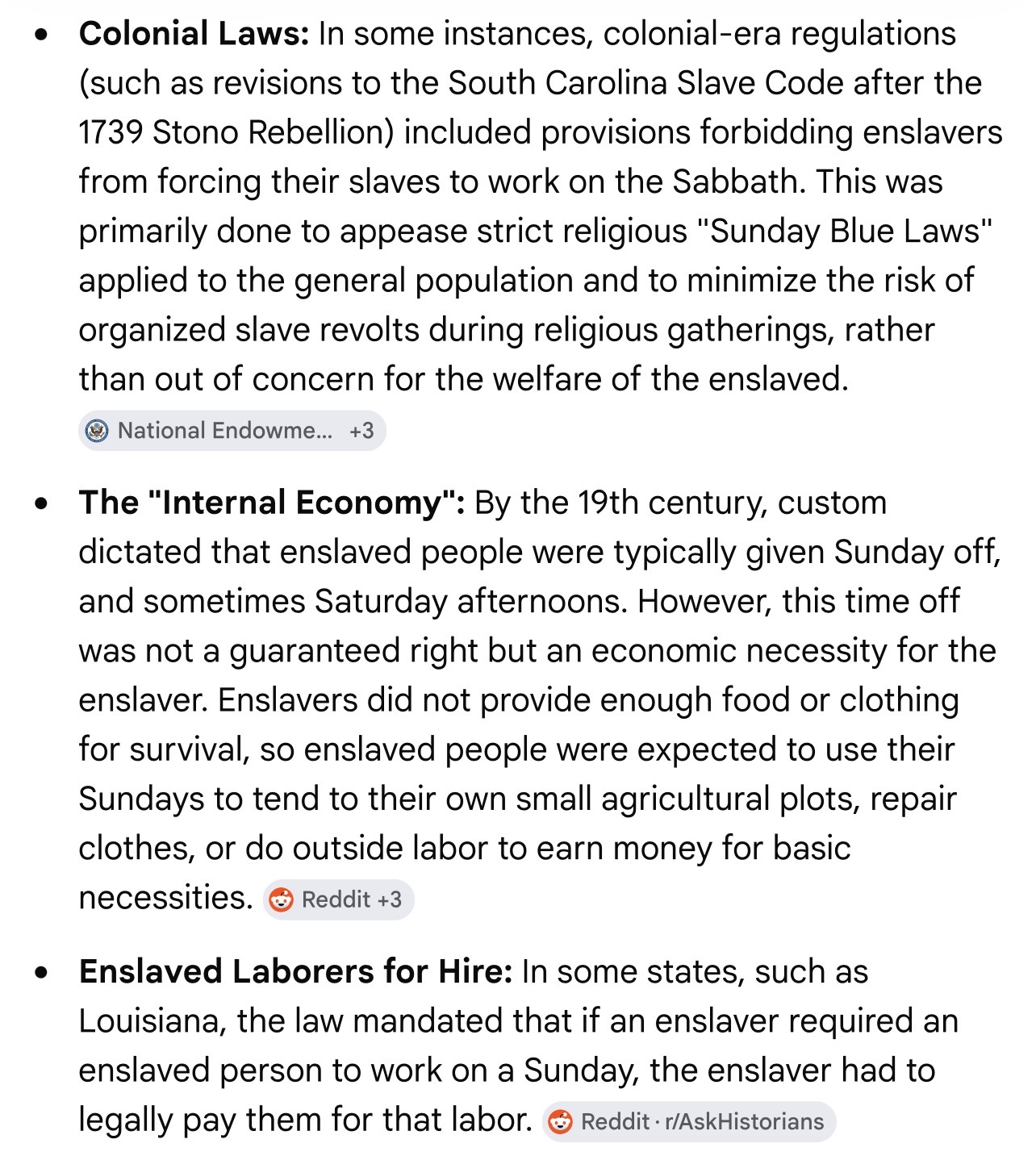
In the American South, slaves also had a few rights. It was illegal to torture or kill them. It was illegal to force them to work on Sundays.

The objections you raise to Biblical slavery being chattel slavery also applied in America.

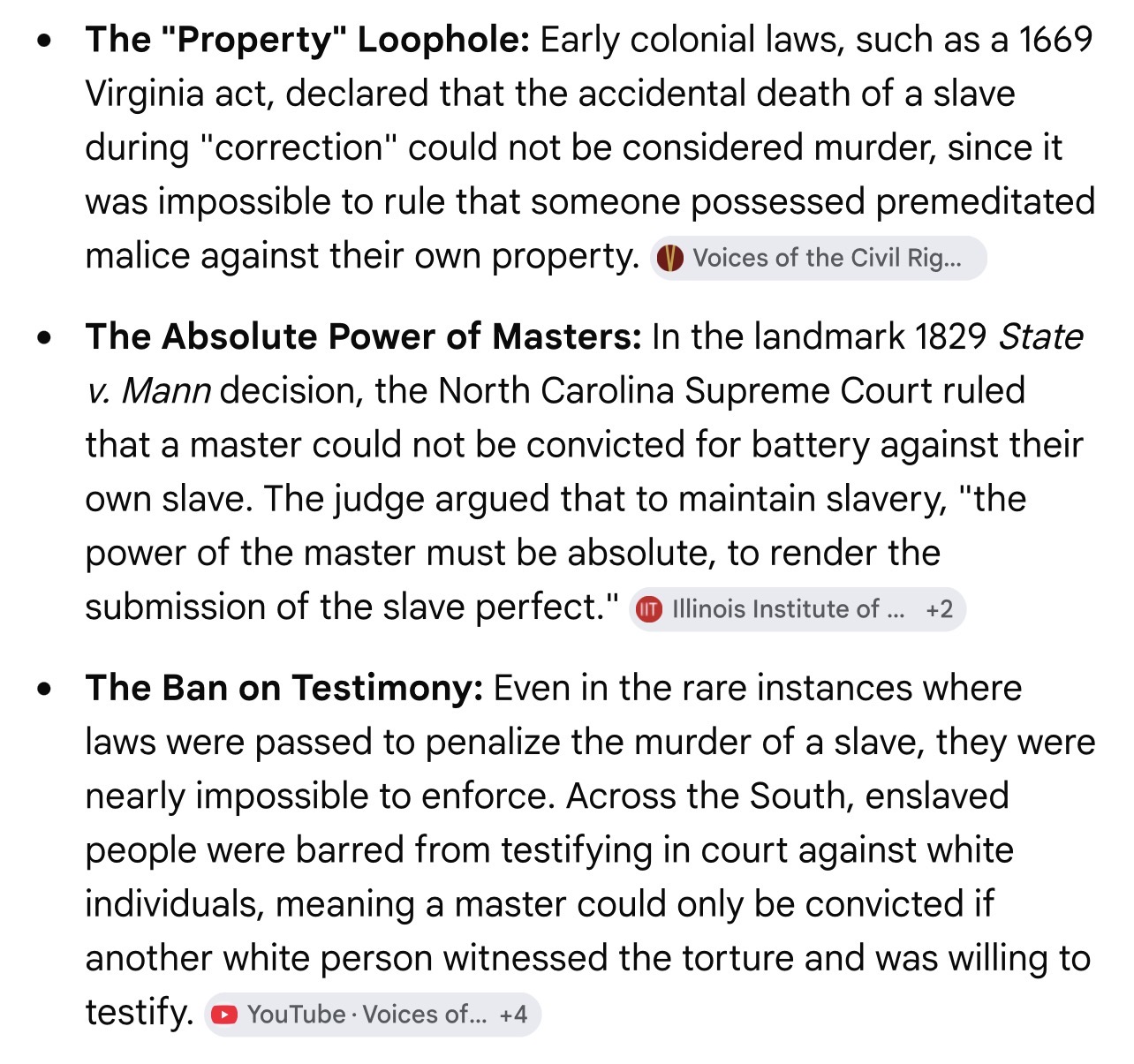
American laws also (nominally) punished slave-owners who killed their slaves. Slave-owners could not do whatever they wanted to their slaves. There were limits, albeit broad ones. Those limits included prohibitions against mutilation and killing - which are the only limitations described in the bible.

So if American slavery was chattel slavery, Biblical slavery was also chattel slavery.

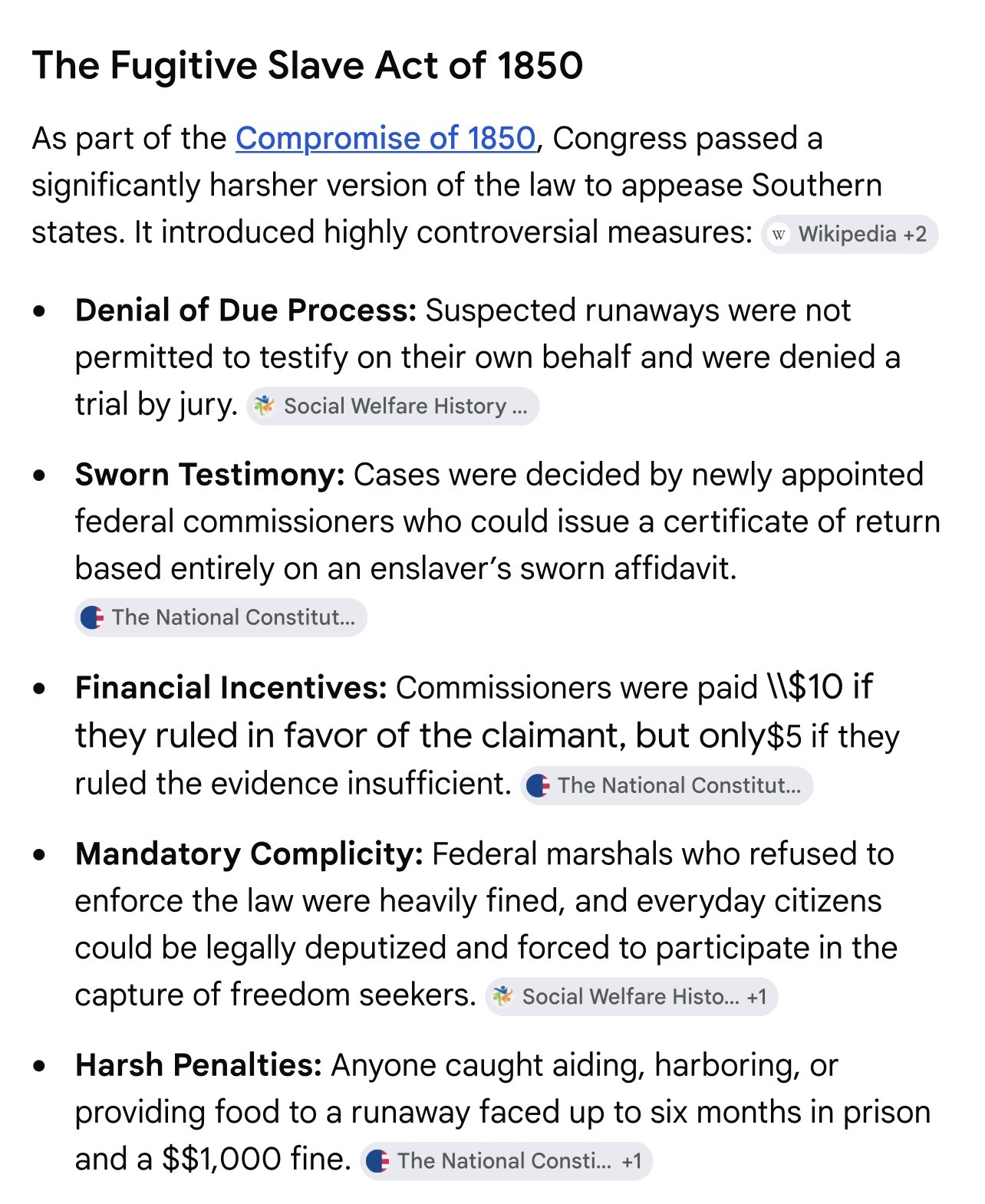
Did they have to free their slaves if they knocked a tooth out? Did they have to return runaway slaves? The laws on slavery were more just in ancient Israel than they were thousands of years later in what some think of as a more civilized world.

I’ve shown numerous times that slaves had more rights and more human dignity in the Bible than their surrounding cultures. I’ve also said the ancient system is not ideal but 1:1 comparing it to modern times is not justifiable. I don’t know all the ins and outs of every law but when you make historical claims (incorrect it seemed in the case of the UK and Australia) I am doing a quick google search for context. I reprint the results here. Skip, skim or read at your own discretion. It is what I am working with.

Slaves were full property and had no personal rights. Any scraps of rights that showed up were pervaded with massive loopholes. If you look at these in context, they go the exact opposite way the Bible was going on slavery. One is attempting to fix a system from within. The other is giving the system loopholes, more power to maintain that slaves had no rights and no human dignity. The Bible elected to move the practice in the right direction and plant the seeds that it would take to overthrow it.

Saying slaves couldn’t be forced to work on Sundays is another historical blunder on your part–or an egregious simplification (“It was illegal to torture or kill them. It was illegal to force them to work on Sundays.”) In a few locations some policies were enacted but this was not the norm and again, loop holes, loopholes, loopholes.

So slavers sometimes in some regions gave them Sunday off so they could grow their own food since they didn’t feed them well enough. So thoughtful of them. Louisiana was not the norm for most of the time. And on many plantations slaves were forced to work in Sundays.

I’ve already said this (one is largely a welfare system and one is largely slaves obtained via war). Welfare vs penal servitude. Not a lot of options in antiquity when you are at war with a nation. 1) let them go to regroup and counterattack next spring 2) execute them, 3) spare their life for one of penal servitude. I’ve also said the system was not ideal but a harsh reality of the ancient world. Foreigners are always crapped on. The Bible tries to move this in the right direction as well (when a foreigner resides among you … Lev 19:33-34) and it increases the protections of foreign slaves even if they do not have the same protections as Hebrew slaves. It also strictly forbids Israel from kidnapping people as slaves. They can only purchase existing slaves from foreign markets. Again, not the most ideal, but an improvement. The Biblical law does not consist of all timeless, universal mandates. It is a pedagogical journey for hard-hearted people in a hard world.

I’d recommend not whitewashing chattel slavery in the American South (claiming they had some rights or couldn’t be forced to work on Sundays, or claiming things not historically correct) to justify an attack on Biblical slavery. In the Bible slaves had to rest on Sunday just as free people do. The Biblical system of slavery was an extant part of reality. It was not created by God as a utopian ideal. The Bible elects to move it in the right direction in an agrarian society whose economy was dependent upon it. It’s naive to think a few commands would just end a process that occurred the world over into modern times. Doesn’t work that way. In fact, we reversed course on this over time and are probably just a nuclear war away from the process returning. Slavery still happens to many millions today in various forms (human trafficking, labor coercion). Chattel slavers completely abused the Bible and misread it in using it to justify what they were doing.

Cliffs: we don’t want slavery in the modern world. But the Torah is concerned with moderating and restraining the practice, whereas American slavery was concerned with maintaining and expanding that system of power. This a major reversal of Christian ideology which helped dwindle chattel slavery in Medieval Europe (it evolved into serfdom).

We don’t have to like Biblical slavery (and we shouldn’t) but claiming the regulations of it in the OT can’t have come from an all-good deity is just flat out incorrect. If God designed a utopian society from the ground up like this we would have a problem. If he said to Adam in the garden, “Here I have some slaves for you” there would be an issue.

Vinnie

4 Likes

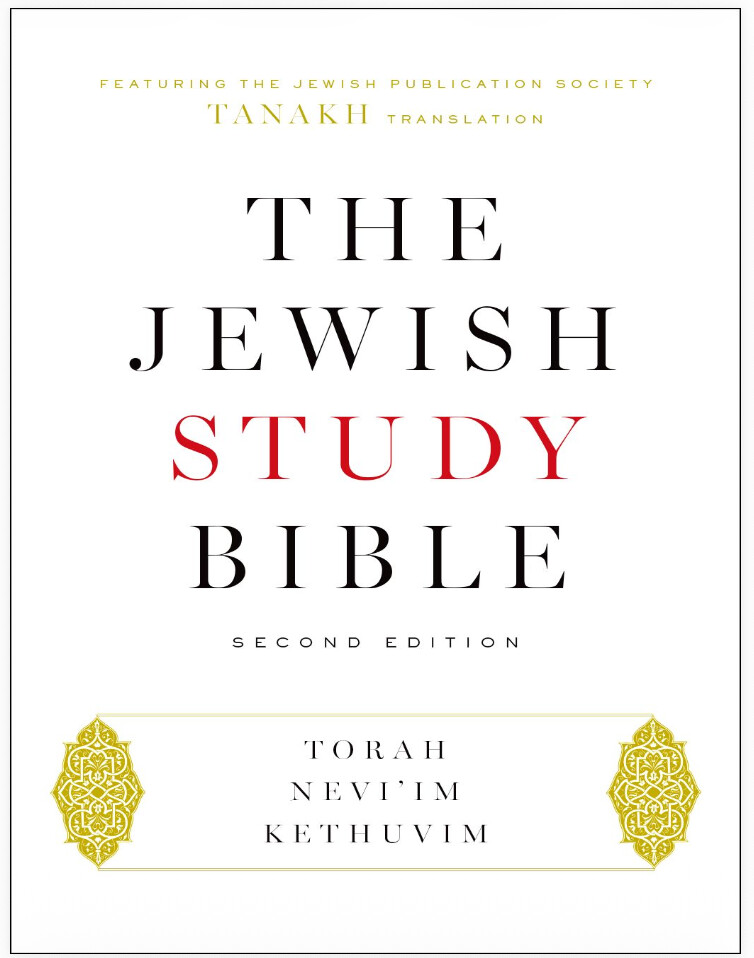
If anyone is interested, this is what the Jewish Study Bible says on the slavery portions of the Old Testament:


Jewish study bible:

Exodus 21

Exodus. 21.2–11: These laws begin with limitations on servitude, a subject that connects with Israel’s recent liberation from slavery. 2–6: Manumission of indentured servants. Biblical law deals with two types of bondsmen: Israelite (“Hebrew”; see 1.15 n.) slaves, who are really indentured servants, and full, permanent slaves, who were foreigners. Hebrew slaves (v. 2) must be freed after six years unless they choose to remain with their masters (vv. 5–6; Deut. 15.12–18); lifelong slavery is in principle limited to foreigners (Lev. 25.39–55). Both types were domestic slaves living in their owners’ homes (see 12.44 n.), not members of slave gangs working on plantations. Biblical law and ethical teachings require humane treatment of slaves, based on the shared humanity of master and servant (Job 31.13–15) and the Israelites’ own experience as slaves (Deut. 5.15; 15.15; 16.12; 24.18, 22).

16: The primary purpose of kidnapping was to enslave the victim. See also Deut. 24.7, where some details differ. [it only restricts the kidnapping of Israelites]

20–21: This law and vv. 26–27 protect slaves from extreme corporal punishment. They do not distinguish between Hebrew slaves and others.

32: The anomalous prescription of monetary compensation for killing a human being is puzzling since v. 20 prescribes capital punishment for killing a slave and the stoning of the ox treats the slave’s death like that of freemen (v. 28). Perhaps in this case the slave is a foreigner, and the master, acting in lieu of the slave’s absent family, has agreed to accept a ransom as in v. 30. This case differs from v. 30 by setting a fixed amount for the ransom, perhaps because a slave has a market value (thirty silver shekels is the price of a slave in several documents from Nuzi).

And Here is Leviticus 25:

39–46: In contrast to the picture emerging from the non- Priestly law collections (see Exod. 21.2–11 n.; Deut. 15.12–18 n.), the Priestly legal tradition recognizes no Israelite slavery as such. What appears to be servitude is not; an Israelite forced to become indentured to another Israelite has the status of a hired laborer. Moreover, this servitude is temporary, and the option of remaining in slavery forever, available in the non-Priestly collections (Exod. 21.5–6; Deut. 15.16–18), is not provided.

42–43: Israelites, like landholdings in Canaan, are divine property; thus they are released in the jubilee. Israelites are servants of God alone: He took them out of Egypt not in order to make them free but to make them slaves—of His own. This idea has practical as well as theological implications: Indentured Israelites may not be exploited or treated with the harshness with which a master may legitimately treat actual slaves. 44–46: These vv. make clear that the Priestly law has no principled objection to slavery per se. Non-Israelites may be enslaved, and they and their progeny become the permanent property of their master. 44: The nations round about you: According to the picture of history envisaged by H, the land of Canaan itself will have been evacuated of its former inhabitants (see 18.24–30), so non-Israelite slaves can only be purchased from foreign nations.


The Priestly code (Leviticus) treats slaves worse than the non-priestly (Exodus) version. Anyone surprised?

3 Likes

I don’t know. Probably not, but it might qualify as torture or mutilations.

But you’re being pedantic. The bible doesn’t proscribe torturing or mutilating limbs, but the Louisiana slave code did:

The masters may also, when they believe that their slaves so deserve, chain them and have them beaten with rods or straps. They shall be forbidden however from torturing them or mutilating any limb, at the risk of having the slaves confiscated and having extraordinary charges brought against them.

Comparing them requires more than pointing out that the Code Noir doesn’t explicitly mention teeth.

Since you do not appear to have read any of the American slave codes, you are in no position to make such a judgement.

You haven’t. You can’t because we don’t know enough about the surrounding cultures t make that judgement.

False. You only looked at Australia after British occupation, not before.

Perhaps you should look deeper.

Again from the Louisiana code noir:

We enjoin all our subjects, of whatever religion and social status they may be, to observe Sundays and the holidays that are observed by our subjects of the Roman, Catholic, and Apostolic Faith. We forbid them to work, nor make their slaves work, on said days, from midnight until the following midnight.

So not an error or blunder. It may not have been the law in all US states, but it was definitely the law in some.

This, on the other hand:

..is AI slop generated from posts on Reddit. Do better.

Also, comparing the law in one instance with how it worked in practice in the other is disingenuous. Either compare law vs law or practice vs practice.

Purchased slaves were not obtained via war. Dodge 1.
Purchased slaves were not penal servitude. Dodge 2.
Purchased slaves were not at war with Israel. Dodge 3.

You haven’t even attempted an answer. You’ve just dodged and dodged and dodged.

Why should slaves purchased from foreign nations (or from foreigners living locally) not have the same rights as Hebrew slaves?

Which is another way of saying, “I will be (like) God”.

And not a very linear one. The early church recognized that slavery was nigh unto blasphemy, but power politics changed that and we had to fight our way back.

1 Like

No, it was not, which has been thoroughly shown here.

1 Like

I think people like Alex are really just trying to get at the point that if you say you take the bible literally and as a whole, then you have to stand by that belief. You don’t get to say that it says what it means, except in the places where I don’t like what it says. So, these conversations about slavery arose as a way to point out something in the bible that is antiquated to modern times and what would the implications be for the rest of the bible’s morality if some of it is off, but we are told to follow it in whole.

We all know that most of these fundamentalists don’t actually believe their own ideas about how strict you’re supposed to follow the rules laid out. There are entire industries devoted to explaining away these contradictions, but rarely are they used by these people to accept gay people (for instance). Everything the bible says about ancient conduct is probably not still applicable today, except for the stuff about being gay, of course!

So, this conversation about slavery… while it has since become way meatier in recent online history, it’s only because fundamentalists have taken the bait laid about by Alex and his peers and now have to try to rewrite this history too.

2 Likes

I sometimes think Jesus’ words about divorce and Moses allowing a certificate of divorce may be relevant. If we had never had Jesus’ words on that question we would have assumed it was God’s perfect will for that to happen. But Jesus said no, God only allowed it because of man’s ‘hard hearts’ who wanted any excuse to get rid of their wives. In reality God’s will was that married couples stayed together for life. I wonder if God only allowed many things back then because of the ‘hard heartedness’ of mankind in general? Interestingly also by the time of Jesus, Paul was teaching that slaves and masters were viewed as equal as far as God is concerned (‘all are one in Christ Jesus’). I would suggest that is pretty revolutionary.

4 Likes

Slavery of foreigners in Hebrew time was indeed. Can bought and sold. Can be forced to work for the owner. Can be passed down along with their children via inheritance. That there are potentially legal limitations on slave usage (can rest once a week, cannot be beaten to death, must be released if crippled), in no way justifies enslavement or make it ‘non-chattel’. One could be a slave owner in the American South and treat their slaves even better than required in the Torah, and it would still be wrong (IMHO). Would it be preferable to be a lifelong slave of the post-Egypt Hebrew than one in the deep American South? Possibly! Does that make it acceptable? Given the option of not being sold, not being forced to labor for one that owns me, and not having one’s children enslaved, I would humbly suggest no.

On the plus side, we seem to agree that Old Testament accounts did not merely forbid slavery but also regulated it. Whether that is properly understood as the will and plan of God vs. contemporary justification for practices we consider abhorrent today can be debated, I suppose.

1 Like

Right – and some people here are trying to ignore what it really says by insisting it be read absolutely literally as a legal code instead of reading it in context both historically and textually.

Yet taking it out of its historical and textual context is not “follow[ing] it whole”. It has to be taken in light of the fact that the Bible is what drove most of the movements to abolish slavery . . . and the fact that the modern world still has forms of slavery indicates that the text is not “antiquated to modern times” but still hasn’t caught up with the actual morality of the Bible.

FWIW, a major concept in teaching in ancient times (right up through the Second Temple period) was teaching by contradiction. The idea is to make apparently contradicting statements and make the student think it through.
Taking the slavery passages as a legal code contradicts Genesis 1. Only by examining this appearance can the actual lesson be found.

And that bait consists of mistreating the text. The irony is that fundamentalists will respond while mistreating the text the same way.

Absolutely. But keep in mind that Jesus was merely applying a principle from the prophets, who more than once condemned the people for following Torah as law.

As I read the prophets in Hebrew, the text reeks of that idea, that God posed things as accommodations on the one hand while challenges on the other.
It’s easy to take something as a legal code; for one thing it allows the avoidance of thinking and learning the real lesson.

Yep.

1 Like

As the Rabbi I mentioned earlier in the thread suggested, attributing approval of slavery practiced by the Hebrews of the time to God is not how he views things. Rather, he indicated that the slavery was assumed OK as a cultural norm, not divinely condoned, and understandable in that context. He might say that such slavery isn’t good and never was, but he can understand why people of the time could have believed otherwise and how that cultural norm might have found its way into the Torah.

We can understand that God does as He wills and that we likely cannot grasp the full picture. If slavery is wrong, why wouldn’t He end it back then? We can tell ourselves stories of how it fits into His plan and try to sift through the tea leaves of scripture, but I suspect in the end, we simply do not know the reasons. It could be that the text incorrectly attributed the practices to God. It could be that permitting slavery was the part of God’s plan all along, as is the ending of the practice. (Technically, both could be true). But in the end, I don’t think we can know, given the information available. And uncertainty is not to be feared, IMHO.

1 Like

A lot of times the kinds of people who write for TGC think that God gave the ancient Hebrews some kind of divinely ordained culture and worldview. I simply don’t agree that is true. A lot of the beliefs and social roles regulated by Levitical law existed in the culture long before the revelation. There were slaves and harems and what we would consider strange beliefs about clean and unclean and sacred and profane. The Mosaic law regulated the society and pushed it in a direction, hopefully toward a more just and peaceful way of being human.

Jesus’ and the apostles teachings similarly started with what people already thought was true about social roles and worshipping God and challenged them at points to push them in a direction, but it wasn’t setting up a new reality for them or “giving them a Christian worldview.” They had a worldview, it was transformed to be more Christ-like.

The Bible is not intended to be a guidebook for how to do culture or how to set up societies or which social roles are allowed. That the Hebrews had slaves or the Romans had slaves is irrelevant to whether modern people today should condone slavery. That the Hebrews sold their daughters into marriage and considered women property is irrelevant to whether modern people should have arranged marriages. We have a worldview the gospel seeks to transform and in that worldview slavery is abhorrent and women as chattel is abhorrent. Why would the gospel transform us in a morally backward direction? You have to have a stunted imagination to even consider it. Many of the Gospel Coalition fans are openly embracing patriarchy and talking about taking away women’s right to vote and hold positions of leadership in churches and society, so the idea that they are revisiting slavery is not shocking. Be aware that a lot of their exegetical gymnastics to maintain power over women becomes a lot more distasteful with you apply the same logic to the slavery passages of the Bible, so I suspect that none of this is really about slavery. At heart, it’s about defending their misogyny.

This article by my friend Nick is an interesting take on how misogyny and white supremacy got baked into Christianity if you are interested. It’s better than anything you’ll find on TGC. It builds on the work of Willie James Jennings, who is one of the leading Black theologians on race.

https://www.cbeinternational.org/resource/the-complementarian-imagination-race-gender-exclusion/

5 Likes

I don’t really go on The Gospel Coalition much but I’m definitely going to try avoiding that site now! I would have never suspected that such opinions went on behind the scenes (or I guess out in the open) on such an innocent looking site. Thank you for informing me about this!

3 Likes

I don’t intend to defame the entire organization, I know some people who write for them or have in the past and it’s not like they are evil or something. But they are biased. It’s part of their organizational ethos that pastors and church elders must be male and women should not publicly preach or teach the Bible. Their governing board is entirely men, and the vast majority of their articles are written by men, the kind of men who pastor and attend churches where women aren’t “permitted” to interpret the Bible or teach men anything.

2 Likes

Yeah, I didn’t think you purposely trying to defraud anyone but I still think this information was very useful to have. It’s very unfortunate that in the age of internet, anyone can make money off of anything, or at least many people are always vying for your attention. Considering that I would always seem to have at least a dozen more Christian sites to replace the one site I decide not to use, I think it is important to try and be a bit “picky” with what sites you give attention to. If, in the search for better resources, I just decided to settle for, say, The Discovery Institute, I wouldn’t have become the person I am today. Thus, I deeply appreciate any and all knowledge regarding sites like this because with such a saturated market of Christian sites (or any sites for that matter), being able to rule out any site allows me to laser focus where I should be looking and spending my time.

1 Like

I attend a church where women have played an influential role for much longer than a century, even before women got the right to vote. That said, the female pastor/elder question is globally still a hot topic. Definitely not something restricted to one movement, church or denomination.

There are churches justifying the exclusion of women from such positions with church tradition. RCC is the most well known example of that.
In most churches restricting these positions for males, the justification is based on a particular interpretation of biblical scriptures. There are many churches and movements that want to be faithful to ‘what is written’. If the interpretation is that we should apply the guidelines in the letters of Paul literarily throughout the ages, also today, it becomes easier to interpret the guidelines as speaking against female pastors/elders. Please remember that I come from a church and tradition where the interpretation is different. I just want to analyze the situation and alternatives as neutrally as possible.

Because I live in a country where the Lutheran church has been and is the dominant church, I have followed what happens in the Lutheran churches globally and nationally. The question of female priests, together with the acceptance of same-sex marriages, is currently dividing the Lutheran churches globally and nationally. The ‘Bible-faithful’ southern churches are cutting connections with the ‘liberal’ Lutheran churches that accept female priests and often also same-sex marriages.
In Finland, the national Lutheran church is in danger to split to ‘liberal’ and ‘conservative’ parts because of the female priest question. After females were accepted as priests in the Finnish Lutheran church in the year 1986, those opposing the decision were tolerated for decades. That tolerance has ended recently and the priests and groups that maintain the interpretation of male-only priesthood are denied the right to have services with only male priests. It seems that those who do not accept female priests feel that they are forced to step out and establish a more ‘conservative’ church as a home for those who are not tolerated within the increasingly liberal main church.

Whatever interpretation we support, It is fair to acknowledge that there are differing interpretations about the female pastor/elder question. We should not judge those who disagree, at least not without a neutral analysis of why the others have a differing interpretation. Those who do not support female pastors are not all misogynists; they may have logical theological reasons to interpret the scriptures as they do - even if my logical theological interpretation is different.

2 Likes