Would it be fair to call it the literary equivalent of the visual halo that so often adorns Jesus in artistic depictions? Does any artist (or subsequent art appreciator) think that some visible ‘halo’ was actually seen above Jesus’ head by those who were physically with him? Some things are just going to be expected parts of the genre in the service of some higher point being made. Whether it be apocalyptic things like horsemen or beasts, or cosmic ‘shakedowns’ to mark the moment of a significant event.
1 Like
Yes, I think that’s a good analogy!
1 Like
Got it. Let’s assume your assertion is correct. The author of Matthew never intended to pull the wool over his readers’ eyes. If he told a story that was fictional (ie, the Dead Saints Story), he did so knowing that his first century audience would know it was fictional and understand it as an allegory/metaphor/symbolism.
But how can people today discern which of “Matthew’s” stories are historical and which are metaphor? Take for example Matthew’s story of Roman Guards at the Tomb.
Exactly.
I still say Matthew wrote first, but in Aramaic, and when he made the shift to Greek he used Mark where it seemed appropriate.
That’s not a bad comparison at all!
Get an understanding of how bios worked.
1 Like
I think that puts too much on Papias’s comment and interprets it too stringently.
.
I think scholars are of the opinion that Matthew is not said to look anything like a translation from Aramaic (I cannot evaluate this one way or the other) and it also corrects the Greek of Mark in places.
Did original Aramaic Matthew look like Mark or something different? Why would Matthew not simply rewrite his Aramaic gospel in Greek? Why copy the order and wording of Mark so extensively ?
I’m more partial to Matthew writing an early Aramaic version of Q and since Q evolved and was incorporated into Matthew it retained the name in that community.
Vinnie
I’m content to let the literary and textual experts quibble over narrative details among the gospel accounts. Such details don’t affect the central message common to all accounts (that Jesus was crucified and rose again). I don’t hold to biblical inerrancy myself, so such debates– like over whether there were really guards at the tomb don’t much concern or worry me.
Very true. The central message that Jesus was crucified and that some of his followers believed he appeared to them in some fashion after this death, leading them to believe that he had risen from the dead, doesn’t change. But, what if all the detailed post-mortem appearance stories in the last three Gospels are just as metaphorical as the Story of the Dead Saints? Would that matter?
Paul answered that.
If the resurrection is false than we are the most to be pitied.
Christianity relies on the truth of the resurrection, for two reasons
- Without a death and resurrection there is nor forgiveness from God
- Without a resurrection death still has mastery and eternity is uncertain
Some things in Scripture need to be true and real otherwise our faith has no root or basis. Scripture is the nearest Christians get to empirical truth, facts, or proof.
Richard
1 Like
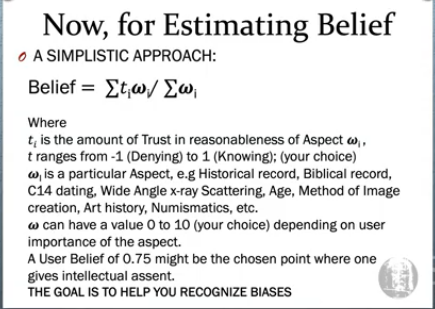
If the detailed post-mortem appearance stories told in Matthew, Luke/Acts, and John are metaphorical or apologetic fiction, that does not necessarily prove that the resurrection of Jesus did not occur. It would simply mean that we would be left with the claims of Paul and the Early Creed regarding alleged post-mortem appearances. Would the Early Creed and Paul’s statement “Have I not seen the Christ” be sufficient for you to believe in the historicity of Jesus’ bodily resurrection?
There is no need to do so. It serves no purpose.
The Gospe;s may not be journalistic or historic facts in the modern sense, but they are what they are.
The reasons for the reality of Christ, His death and resurrection are theological as much as anything. Like wise the divinity of Christ. As such they must be considered real.
Why would I wish to challenge them?
Richard
For me, when I look straight at the bright sun, I have to look away–I often get a swimming movement if that happens with any bright light.
1 Like
This topic was automatically closed 6 days after the last reply. New replies are no longer allowed.