No problem. 
Tim sounds very knowledgeable. 
How do you suggest the history of life on earth can be “measured”?
That’s the framework scripture gives for Creation, so we’d better be using it if we want this to be about Christian thought.
I’m not dictating anything, I’m relating what the scriptures have to say. Scripture says that God is faithful and can be depended on, but a deity who switched back and forth between sets of rules wouldn’t be, and thus is not the deity found in scripture.
It’s definitely time to go to bed – my brain is saying there’s something important here but I’m not seeing it at the moment.

That is just screwy/
But that is your reasoning. It has nothing to do with Scripture. You are the one declaring how God must work not Scripture. You refuse to accept Scripture’s view of creation, and then insist that God behave by the methodology of science. So much for your reverence of Scripture! it is only good for what you want it to be!
Hipocrisy doesn’t even come close.
Richard
1 Like
Some are, certainly. But some sloppy textbooks - or even all sloppy textbooks - don’t justify that “never”.
That’d fill papers with verbiage only necessary for people that never read them.
2 Likes
It’s a whole box of screws. 
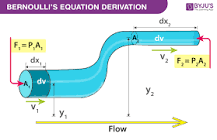
The reason they are treated the same is because öf Bernoulis principle:
an increase in the speed of a fluid occurs simultaneously with a decrease in pressure or a decrease in the fluid’s potential energy.
actually another interesting one is friction in engineering mechanics…suprisingly enough, its largely ignored in many calculations
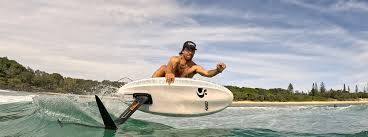
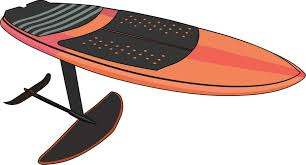
An interesting bit of history regarding this… the entire reason that the Australian boat won the Americas cup in 1983 was the introduction of a winged keel into the hull design yacht racing community…stupidly, the Americans didnt think about that, However, “Bondy’s boys” certainly did…they looked to the sky and wondered “what if boats could fly?” Turns out they can. We see foilboards everwhere these days, they have really revolutionised the recreation market.
Unless we have more than one fossil. Or more than one creature in the same fossil.
When I look at a fossil nest I tend to assume that all the eggs in it are from the same species. Perhaps I should abandon that assumption and consider the possibility that all the eggs in the nest were laid by different species, as were all the eggs in all the other nests, and that we cannot conclude from the presence of 300,000 fossil eggs that there was more than one of the species that they belong to.
The same applies to other fossil assemblages, from fossil coral reefs to fossil pollen beds, or even fossils of pregnant animals. We clearly shouldn’t conclude from finding a fossil of a pregnant ichthyosaur complete with fossil offspring inside her that there was more than one ichthyosaur of that species.
Alternatively, we can conclude that some-one hasn’t got the first idea about how many fossils there are, how they are situated or what they consist of.
1 Like
unless im missing something here…you two are arguing past each other. I dont read it that Richard is even making the statement you appear to be responding to there Roy. I dont think anyone claims that a fossil nest with eggs would be from a different species as the parent found also buried there…Richards point was,
“finding a fossil of one species doesnt tell us what species it evolved from or into”
(which is nothing like what you appear to be responding too…id suggest you misread what Richard said there)
1 Like
-
You quoted Gould directly, but it’s extremely unlikely you actually got that quote from something Gould wrote, instead of some on-line quote-mine collection - especially since you didn’t mention the work it came from. So you almost certainly didn’t cite your actual source.
-
By not citing the work that quote came from, you have given no sign that it’s nearly 50 years old. There have been a huge number of fossils found since then, and even if the quote was correct in 1977, it may be no longer.
-
It’s taken out of context. You can’t tell from just those two sentences what type of transitional forms Gould is referring to, or what types of organisms he’s talking about. You may not know. Furthermore, if you did get it from an online quote collection you can’t even be sure it’s genuine. About 50% of such ‘quotes’ are misleadingly taken out of context, about 25% are miscited and/or mistranscribed - often to the extent of changing the source or the meaning - and about 5% are wholly invented.
-
You haven’t mentioned that Gould later clarified his views on transitional fossils, explaining that the quote you have given is misrepresentative of them. You may, since quote-mine sites tend not to include the later quote where he complains about being quote-mined, be unaware of it. But that’s no excuse for not checking before posting.
So your use of Gould’s ‘quote’ was a case of dishonesty if you didn’t get it from Gould’s work, and also dishonest because you didn’t say how old it was, didn’t include the relevant context and didn’t mention that it was, as Gould himself later confirmed, misrepresentative of his actual views.
2 Likes
I wouldn’t describe my views on evolution as a ‘belief’.
2 Likes
This is an excellent example of why you should not use AI-generated text.
3 Likes
That is just stupid and you know it.
You cannot impose one view onto every find. I was basing it one the fact that the majority of finds are of a single skeleton. Sure, you have probaby some groups, but even you cannot be certain that they dies at exactly the same moment or that the rocks have not moved in the million or so years between formation and discovery.
See above (Insult deleted)
Richard
I was wondering if anyone would notice the reference to Evolution News (evolutionnews.org). Well spotted!
Personally, I think Evolution News is great.
I’ve highlighted the part of Richard’s post that I was replying to, so that you and others can be absolutely certain that Richard did make the statement that I was responding to, that you included that statement in your post, that I didn’t misread what Richard wrote, and that you have dishonestly focussed only on a part of what Richard wrote that I was not responding to.
I love your sense of humour!
And Adam was right. You read and replied to what you wanted to to prove your superiority over me.
Richard
You’re claiming that the eggs in a fossilised nest might not all have been buried at the same time, and that the fossilised embryos inside a fossilised ichthyosaur might not have been buried at the same time as the ichthyosaur they’re inside.
Yet you think I’m the stupid one.
P.S.:
Is that a fact? I’m not even sure it applies to large creatures like dinosaurs, let alone the small marine organisms that make up the majority of fossils.
“probab[l]y”?
You have no idea whatsoever what the fossil record actually looks like.
2 Likes
What percentage of all the organisms that have ever existed are represented in the fossil record?