Richard, I hear what you’re saying, but the reason I care is pretty simple: it’s because I care about the people who are stumbling over these barriers.
When a student or a skeptic looks at Genesis and walks away from faith because they think the Bible is just a collection of unscientific fairy tales, telling them “it doesn’t matter” or that they shouldn’t worry about it doesn’t help them. Paul writes in 1 Corinthians 9:22 that he became all things to all people so that by all possible means he might save some. If someone has a intellectual barrier to the text, meeting them where they are and showing them a logical bridge isn’t pandering—it’s loving your neighbor.
You’re absolutely right that “God is the Creator” is the core truth. For basic faith, that is enough. But if that was the only thing God wanted to communicate, Genesis 1 could have been a single sentence: “God created everything.”
Instead, the Holy Spirit gave us a detailed, sequential, six-day narrative filled with highly concrete physical descriptions—separating fluids, uplifting a solid platform, clearing skies, and bringing forth specific kinds of life. Why wrap the central message in such a precise structural sequence if the sequence itself has no grounding in reality?
I’m not trying to smash science and scripture together or force one to bow to the other. I’m just looking at the raw, concrete definitions of the Hebrew roots. When you let those words speak for themselves, they describe the physical history of our planet beautifully. It’s not about fooling anyone; it’s about discovering that the God of the spoken Word left His exact same fingerprints all over the physical world.
Hello, I welcome the insight in fact I’d been pondering whether someone would catch the trend the way you did.
I don’t think what you said was drifting to another subject at all. If anything, we have to talk about the cultural atmosphere and tell whether we could argue we’re living in an eschatological end-time or only at the beginning of things. There are plenty of cultural issues worth naming. Starting with the idolatry of technosolutionism and superintelligence, the homo deus talk that people like Yuval Noah Harari or Elon Musk keep trading in.
There need to be a debate around the presence or absence of peer pressure within the scientific community and whether it’s part of the zeitgeist or if we talk of an intellectual immune system gone rogue on believers. It would take a dedicated thread to separate the tares from the wheat, and hopefully to correct some conspiracies along the way while telling the truth about the great reversal of good and evil in modern societies.
Here’s the reflection I owed you,
The mystery of lawlessness was already at work in Paul’s own time it’s been floating around since the very birth of the church. Apostle John wrote to his own generation that it was the last hour and that many antichrists had already come. So yes, apocalyptic times since the very beginning, which means every generation of the church has lived inside your sentence.
Still I’d slow down a little on the line you quoted from my post, because it was doing humbler work than the job you’ve given it. I tried to describe what pulls people which is the sense of belonging within the scientific community.
Saying the foundations are being laid for the beast is a different kind of claim from a read of the human heart, I personally would tone it down a little because I’m not going to argue on the ground that science is actually owned by the devil (We would give YECs what they want from us)
The concealment you describe is a sad thing to see, and I’ve never treated it as small. A Christian scientist hiding his faith to keep a career is unjust, and I’m comfortable calling that cost anti-Christian. Whether whole societies are thereby antichristic in nature, I mean.. I’d leave to the church’s judgment instead of speculating on a blog post.
So that’s my take, I also think the days of Noah are always near enough that no generation is excused from watching, and never so near that the watching replaces the working inside our communities.
I love that you brought up Galileo, Pythagoras, and Gödel. It’s completely true that mathematics is the underlying language of the physical universe, but as Gödel proved, math cannot be its own arche (its own ultimate, self-contained origin). A system of numbers cannot write, ground, or explain itself.
This is exactly why the text doesn’t say “In the beginning was math.” It says, “In the beginning, God (Elohim—Supreme Power) created…” and John 1 says, "In the beginning was the Word (Logos—the spoken intent, the logic).
And as we looked at, God reveals His name as YHWH—the absolute, self-existent Source of all being. Math is the code, but YHWH is the active Programmer sustaining it. Gödel’s incompleteness doesn’t weaken faith; it logically demands a self-existent, transcendent mind outside the system to anchor it.
It is completely true that nature is red in tooth and claw. Evolution involves an immense amount of consumption, predation, and death. But we don’t need to escape into Gnosticism to explain this. This deep-time biological reality is exactly what the microscopic model of Eden reveals when you look at the text’s sequence.
Genesis 2:7 functions as a comprehensive summary of Adam’s creation process. Notice that verse 8 doesn’t say God placed the man who “became a living being” into the Garden; it explicitly states He took the “man He had formed.” The structural formation happens at the microscopic level inside that cellular environment.
It is upon leaving that prebiotic, microscopic Garden matrix that the corporate lineage fully transitions into the animal kingdom. God breathes into his nostrils the breath of life, and man becomes a living being (Hebrew: nephesh chayah). Structurally, this is the exact same animate life-force shared by all animals, arriving around ~747 million years ago. Single-celled organisms and plants are biologically alive, but they are not “beings” possessing an animal soul.
As the animal kingdom expanded, it was driven by a raw, self-serving flesh-nature (sarx)—a world of predation, competition, and survival of the fittest. The “serpent” (the parasitic/predatory behavior coded into life from the beginning) was running in the background for hundreds of millions of years. This deep-time biological reality is why nature looks like a nightmare when left to its own baseline mechanics.
God did not design a static, pain-free bubble that suddenly shattered because someone ate a piece of fruit. He engineered a dynamic physical arena where life could mature. An animal soul driven by instinct cannot bear moral responsibility or have true fellowship with a holy God.
To bridge that massive gap, a second, supreme transformation had to happen. The installation of the image of God doesn’t happen at the origin of the animal kingdom; it is a distinct, sovereign upgrade reserved for the very end of Day 6.
And that upgrade comes strictly through Jesus Christ.
As Paul lays out in 1 Corinthians 15:45: “The first man Adam became a living being; the last Adam became a life-giving spirit.” Think about the stunning parallel in John 20:22. After His resurrection, Jesus meets His disciples and completes the Day 6 creation blueprint in physical skin: “He breathed on them and said, ‘Receive the Holy Spirit.’”
The first breath in Genesis 2 lifted the lineage out of the microscopic matrix into the animal kingdom as living souls. But the second breath—the Pneuma of Christ at the end of Day 6—gives humans the actual supernatural power to rise above our baseline animal instincts and conquer the flesh-nature once and for all.
This is the real engine of Tikkun Olam** (the repairing of the world)** that you mentioned. We cannot repair a fractured creation under the steam of our old animal wiring; our biology defaults to selfishness and survival. It is only when the Master Engineer injects His own divine life-force directly into the system through Christ that we are transformed from passive products of evolutionary survival into the true, functional image of God—spiritually alive sons and daughters equipped to fulfill the mandate to bring heaven’s order to the earth.
Nearly all the countries that once formed the bedrock of Western civilization have turned their backs on Christ.
In many of these countries, you are far more likely to face severe, potentially life-ruining consequences for killing a violent aggressor in self-defense than for killing an innocent child. These are the very same countries in which virtually every conceivable measure has been taken to undermine the family and defy God’s laws in almost every possible way.
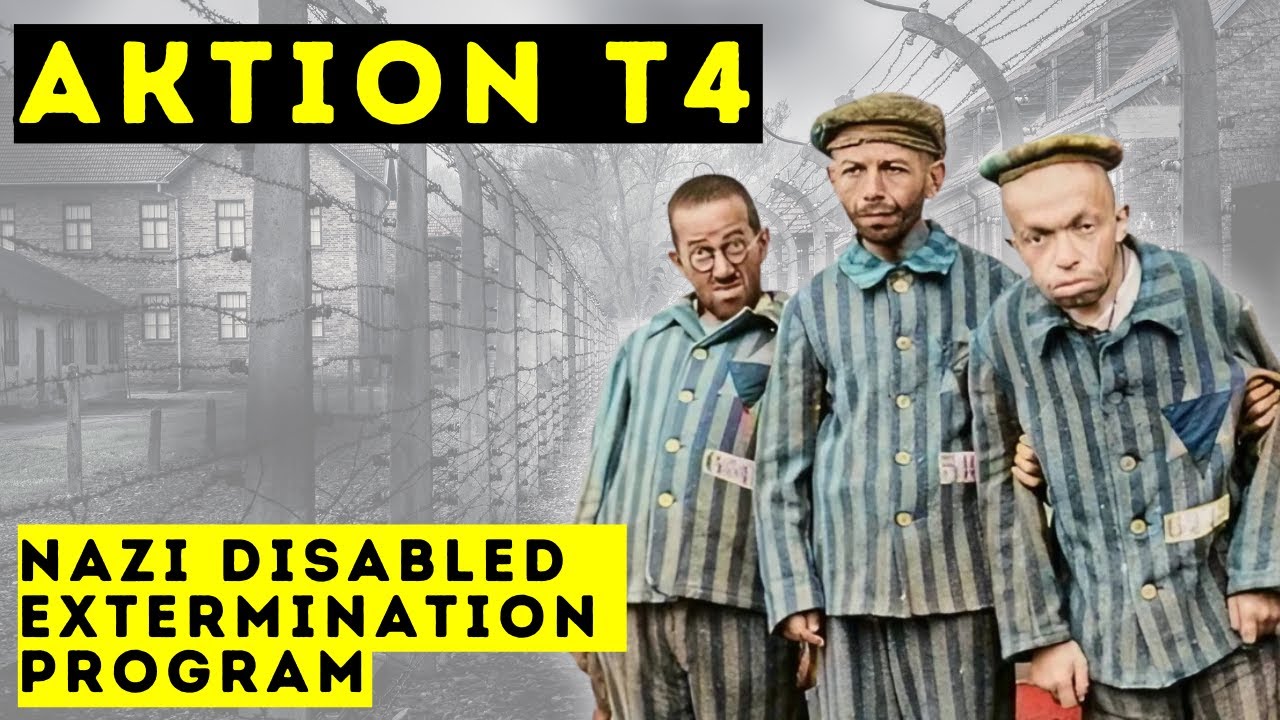
Are you aware, for example, that some countries (often celebrated as veritable paradises of progress) are now effectively “Down syndrome–free”?
And it is not difficult to imagine what comes next
Adolf would be proud.
The fact that there are still many Christians in the world does not mean that this will always be the case. As Scripture warns, the faithful will grow fewer and fewer—hence Christ’s haunting question concerning His return: “When the Son of Man comes, will He find faith on earth?”
Nor does the continued existence of millions of Christians change the fact that most Western societies are turning their backs on Him as thoroughly as they possibly can.
“Do we want to live in a world without Down’s syndrome? This isn’t just a theoretical question. It could soon become a reality. A new technique called non-invasive prenatal testing (NIPT), detects Down’s syndrome with 99% accuracy and it should soon be available on the NHS. It’s already being used in Iceland where 100% of Down’s syndrome pregnancies are terminated. The Danish health system declared the objective of being Down’s-free and introduced the test in 2006. The termination rate there today is 98%.”
And yet in those same countries if someone shouts SIEG HEIL they go to jail. Strange, isn’t it?
Actually, strange might not be the correct word. Disgustingly hypocritical, to the point that it genuinely makes me want to puke, is probably far more correct.
Like I said Arvis, I don’t think we’re living in the end times. Not yet. I think we might be at the very beginning of them (and like I said I also think it will take another few centuries for things to come to their eventual culmination).
I think there is a clear and tangible difference between this current era and previous ones.
I know. I just wanted to highlight that the very phenomenon you described could be the sign of something greater.
No no no no no, let me explain: i don’t think science is owned by the devil either . Science is a wonderful tool to explore and understand God’s creation. Scientism, though, it’s another thing entirely and I fully believe is being deliberately used to alienate people from their own souls and their relationships with the Creator.
I don’t know if you noticed but I have used the word “sect” many times, when talking about scientism.
And no, it wasn’t because I liked the sound of that word.
First, let’s look at the phrasing of the text itself. When God commands, “Let there be…” (Hebrew: Yehi), it does not imply a magical, instantaneous snap of the fingers where everything is instantly completed. Linguistically, it means “allow it to become” or “let it happen.” It sets a natural, physical process in motion that can be drawn out over vast stretches of time.
And that is exactly what the model’s math tracks. The 2 Peter mathematical clock runs on an independent astronomical variable—the physical slowing of the Earth’s rotation over time due to tidal friction. When you run that calculation straight back, it independently drops the Day 4 boundary right into the window between 1.33 and 0.87 billion years ago.
Geologically, this lands directly at the transition from the Mesoproterozoic to the Neoproterozoic. This is the exact era where the planet broke out of its long, low-oxygen stasis and entered the Neoproterozoic Oxygenation Event (NOE). Oxygen levels surged over hundreds of millions of years, chemically dismantling the thick methane and volcanic sulfur fogs that had blanketed the globe.
Let’s look at the actual text of Ezekiel 1. Ezekiel is absolutely not looking up at a global “sky dome.” He is describing a highly specific, localized vision happening inside a massive storm cloud moving in from the north. Inside this cloud, he sees a level, awesome crystal platform (raqia) physically carried overhead on four sides by the living creatures. The throne of God sits directly on top of this solid platform.
The text is unambiguous: the word raqia describes what it structurally is, not where it sits. It is a level, weight-bearing foundation.
The literal Hebrew root raqa means to beat out, stamp down, or hammer solid material into a firm sheet. When Genesis uses this exact structural word for the earth’s architecture, it is describing the beaten-out, compressed solid rock crust of our planet. The crust is the hammered-out rock foundation that bears the weight of the surface oceans, structurally separating them from the fluid mantle below. Ezekiel’s vision completely confirms this structural usage, proving that a raqia is a weight-bearing platform, a word that can have more than one application.
Think about the consequence of saying the text simply “gets the science wrong.” To a modern student, skeptic, or engineer, if a text claims to be a revelation from the Creator of the universe but gets the basic physical structure of that universe wrong, they conclude the text is unreliable.
Divine accommodation doesn’t mean God inspired a hidden code or forced a modern science textbook into the ancient writer’s head. It means God utilized the concrete, everyday vocabulary of the ancient world to describe physical realities in a way that held true across generations.
When God inspires an ancient writer to use concrete terms like aphar (pulverized particles), raqia (a solid structural platform), or adama (a collective grouping of living matter), He is accommodating their localized language. The ancient nomad understood those words in their everyday sense. But because those words describe real, structural properties, they beautifully accommodate the physical history we observe under a microscope or telescope today.
We don’t have to choose between theological truth and physical reality, Bill. The model doesn’t twist the text to fit modern science; it simply reveals that the concrete language God chose is accurate enough to hold the real history of His creation.
If you think the Genesis creation story is the biggest stumbling block you need to consider the other “fairy tales” in the Old Testament. Like a floating ax head, a talking donkey, a finger writing on the wall, etc, etc. Those are probably a bigger intellectual barrier. And before you invoke, “Well those are just miracles”, realize creation could also be considered a miracle.
Sorry but I am an engineer and have no problem with the way the Bible describes the universe. I understand the Bible isn’t a science book, doesn’t try to be a science book, and has no hidden scientific knowledge. It was written to an ancient audience using knowledge and concepts they understood.
Let’s not go down this rabbit hole again. If you remember you had to go back to mineral crystals which came out of solution and while you might get away with calling them microscopic particles you certainly can’t call them pulverized (oh wait, you tend to redefine things so you might).
Alright, I’ll bite now because I believe honesty is more important than loyalty and because I need to know how you feel about this.
Tomorrow is Reformation Day, and it is right to recall the prejudice people felt when the roles were reversed. Back in the day, there was an establishment holding the keys of knowledge, asserting its orthodoxy above the Scriptures, and taxing the belonging to Christianity through loyalty to a Tradition that had drifted further and further from its original purpose. The Reformation was the reckoning that followed that drift.
I believe nobody plotted the drift back then, so nobody needs to plot it now in the scientific establishment. What you read as ‘strategy’ may be the reversal of a tumultuous history, the same dynamic with different jerseys.
Have you considered that scientism now sits in the seat Catholicism once held, handling its dissenters the way dissenters were once handled?
That’s the parallel you set me up to reach for and I’d ask you to weigh it fully, whether scientism treats its ‘heretics’ the way Catholicism treated the Reformation, and whether the deliberate is just what the tumult looks like from inside now that the roles are reversed.
In which case, was the Enlightenment a plot or a reaction to a lack of compassion and accountability? Protestantism did a lot for modern science and where it took hold, the Galileo incident never became a recurring problem.
No – but trying to stuff it with modern science just makes it look silly. How about instead explaining what’s really going on? Like pointing out that thinking of the world as a flat disk with a solid dome over it was actually decent observational science at the time? And then telling them what those stories are really about?
The logical bridge isn’t to pretend that there’s modern science in the text, it;s to be honest about the text! Both those calling Genesis “fairy tales” and those trying to stuff it with modern science are lying, and lies are not helpful.
Again: how many years of study of the ANE have you had? and of ancient Hebrew?
You’re forcing MSWV concepts onto an ancient language.
Sometimes possibly. But with light, the force of the Hebrew is “Light – BE!” It is a command to something that doesn’t exist to come into existence.
That rapes the text. You’re basically saying that the writer was so dim he couldn’t keep eretz and raqia straight.
The earth’s crust is eretz, it is not raqia.
You’ve been told this often enough you’re a this point deliberately rejecting the text in favor of your scheme.
Why would I say that about a text that doesn’t involve science at all?
Only if they’re so ignorant they think that ancient literature is concerned about modern science.
Absolutely!
The opening Creation account shows no interest in modern science; it is a theological polemic about a YHWH-Elohim who conquers without fighting and that things people considered to be gods don’t even deserve to be named and how YHWH-Elohim built His own Temple and filled it and installed not an inanimate image but living ones.
I understood and don’t disagree with any of that. But the evolution of consciousness is far too broad a subject for me to tackle, which is one reason I limited myself to conscience, which is directly related to morality and human responsibility for “sinful” behavior.
I agree there’s no definitive answer, but I see no reason to think the boundary is as low as a mosquito. A certain amount of brainpower beyond mere stimulus-response seems logically necessary for a creature to think to itself “that hurt” merely than escaping the pain. Exactly where to draw that line is impossible to know definitively, as you point out, and it also cuts across so many species that the questions are endless. I can make some reasonable guesses, but that’s about it.
So far so good. I don’t consider the discussion about the emergence of consciousness as importantly as you do. In the “I-ought” conversation, many animals may possess the “I” portion of the equation, but none possess the “ought” to finish the thought.
Sure. As long as you understand that those capacities did not exist until H. sapiens around 60-75,000 years ago. “Right” and “wrong” are abstract categories that animals clearly don’t understand. The absence of such a capacity in the animal kingdom is related to its lack of language, specifically abstract nouns.
The question you must answer is this: What is the origin of a binding moral demand? Was it implanted in every human mind by God at birth, or did it originate through biological and cultural evolution?
The genius of Gen. 2-3 is that it’s universally applicable. Everyone in every time and culture can read the story and recognize themselves in Eve’s confrontation with the serpent.
Imagine a child born with no knowledge of God or his specific demands. When this child reaches maturity, does he/she have a conscience, a sense of “good” and “evil”? If the Creator hasn’t spoken directly to them (I don’t remember God speaking to me before I reached maturity), where did this sense of right and wrong come from? The obvious answer is that it’s cultural – descending first from parents, then elder relatives, siblings, peers, teachers, the wider community, etc.
The social “rules” learned from these human sources are as morally binding upon a child as an obligation tied to a Creator of whom they have no conscious awareness. As I quoted my article above, the child regards rules they were taught by adults as unchangeable and inalterable, as if they came from God himself. This is a moral demand that comes from parents and society, not God.
So I’m fine with the terminology and the distinction between a social rule and a moral obligation. I’m just saying a child can’t distinguish between the two. Look at the 10 Commandments. Outside of the first four, which regulate the worship of Yahweh for the Jewish people, the rest are things every parent teaches:
Respect your elders
Don’t hit/bite/be violent
Don’t steal
Don’t lie
Be loyal to those who love you
Don’t be jealous
The conscience is formed by culture, not given by God. That’s shown by Paul in the way he talks about conscience as being malleable. It’s capable of being hardened, softened, and reshaped by God after we are united with him through Christ.
I swear, when I used the word “sects,” I wasn’t referring to Protestantism. Not in the slightest. I did use the term derogatorily, but I was referring to non-Christian, indeed explicitly anti-Christian, sects.
I felt I should clear that up because your response, “I’ll bite,” made me wonder whether you’d taken it as a dig at Protestantism, but I cab assure you that wasn’t my intention at all. Honestly, Protestantism hadn’t even crossed my mind when I wrote it.
I agree that the Church had drifted further and further from its original purpose, but only in a limited sense. There was indeed widespread corruption within the Church at the time, which seriously undermined her credibility and damaged her mission of evangelization. That’s absolutely undeniable, and I’ve said many times that reform was desperately needed.
But acknowledging the need for reform is quite different from claiming that the Church had abandoned the faith, that ecumenical councils were inherently fallible and their doctrine could be judged and disputed, and so on. Those are entirely different propositions.
In other words, I think a very bad migraine was “cured” by decapitation.
I’m not so sure about that. I mean, the Bible is quite clear in its condemnation of divisions among Christians. And sola scriptura strikes me as inherently divisive, because it provides no final authority capable of settling disputes when conflicting interpretations of Scripture arise.
I think this problem could have been identified from the very beginning through simple logical reasoning, but five centuries of history have demonstrated it beyond reasonable doubt.
That’s why I find it logically impossible to believe that God would have established a Church incapable of defining and preserving orthodoxy, or that He would have been either unable or unwilling to protect the Church He founded from teaching doctrinal falsehoods as dogma, especially after Christ entrusted Peter with the responsibility of strengthening his brethren.
I also find it logically impossible to reconcile the Bible’s condemnation of division among Christians with the idea that God intended Scripture to be interpreted according to a principle that is itself inherently divisive.
And I don’t think the divisive nature of sola scriptura is merely a theoretical objection. We can see its consequences in the countless doctrinal disagreements and divisions that have characterized Protestantism throughout its history and continue to do so today.
And the divisions caused by conflicting interpretations of Scripture are hardly a thing of the distant past.
Consider what has happened within Protestantism in just the last few years.
In 2022, the Global Methodist Church was established amid the fragmentation of the United Methodist Church. According to the latter’s own official report, 25% of its congregations disaffiliated between 2019 and 2023.
Also in 2022, the Reformed Church in America experienced a major split, with 43 congregations initially joining the newly established Alliance of Reformed Churches.
That same year, conservative Anglicans in Australia established the Diocese of the Southern Cross, outside the Anglican Church of Australia, following doctrinal disagreements over marriage and sexuality.
In 2024–2025, the Christian Reformed Church in North America experienced further divisions over its binding doctrinal position on same-sex relationships, with 33 ministers formally transferring to the Reformed Church in America in February 2025.
And on a global scale, the Anglican crisis has deepened dramatically. In 2023, GAFCON and Global South Anglican primates declared that they could no longer recognize the Archbishop of Canterbury as an instrument of communion. In 2025–2026, GAFCON went on to establish an alternative global communion structure.
These aren’t obscure disputes inherited from the sixteenth century, they are contemporary divisions among Christians who profess the authority of Scripture but reach incompatible doctrinal conclusions.
Of course, I’m not suggesting that every Protestant schism is caused exclusively by sola scriptura. But that does nothing to resolve the underlying theological difficulty, which, as far as I can see, is ultimately insurmountable.
If Scripture is the supreme authority, yet Christians who sincerely acknowledge that authority arrive at mutually exclusive interpretations, who has the universally binding authority to settle the dispute?
Individual Protestant denominations can certainly make doctrinal decisions that are binding on their own members. But those decisions cannot bind Protestantism as a whole. And how could it be otherwise, when even ecumenical councils are not regarded as infallible in their own right? Those who reject a particular interpretation can simply leave and establish another denomination, as the recent examples demonstrate.
That is the problem I see with sola scriptura: not that Protestants are incapable of reaching doctrinal conclusions, but that their principle of authority provides no universally recognized means of definitively resolving disagreements between competing interpretations.
And the continued multiplication of ecclesial divisions, including several major schisms in just the past few years, demonstrates that this is far more than a theoretical objection. Five centuries after the Reformation, the fundamental problem remains unresolved: when two Christians appeal to the same Scripture but reach contradictory conclusions, who has the authority to determine which interpretation is correct, and on what grounds must the other accept that judgment? If the actual answer is “nobody can”, then we have established that the unity among Christian commanded by the Bible itself, repeteadly so, is factually impossible. And how could the Bible command something that is factually impossible?
First, I would say that dissenters should have been handled differently. I don’t approve some of the actions that some men of Church did in the past. I believe that errors should be firmly opposed through reasoned refutation and doctrinal condemnation, but that people who have fallen into error should always be treated with tolerance, respect, and love.
But we should also steer clear of idea that Protestantism somehow resolved the problem of persecuting dissenters, because it’s not really the truth.
Just a few examples:
In 1527, Felix Manz was drowned in Protestant Zurich for his Anabaptist beliefs.
In 1553, Michael Servetus was burned at the stake in Calvin’s Geneva for rejecting the Trinity.
In 1612, Edward Wightman was burned for heresy in Protestant England.
Puritan Massachusetts hanged the Quaker Mary Dyer in 1660, while John Bunyan spent approximately twelve years in prison in Anglican England for preaching outside the established Church.
The Salem witch trials of 1692, which resulted in twenty executions in a society profoundly shaped by Puritan religious culture.
These are just a few examples off the top of my head abd they weren’t acts of Catholic persecution, they were punishments inflicted by Protestant authorities upon people whose religious convictions they considered unacceptable.
And the distinction matters, especially when we’re discussing compassion, accountability and the treatment of heretics.
Of course, these weren’t repetitions of Galileo’s scientific controversy. But if the argument is that Protestantism established a fundamentally different relationship with dissent, these examples make that claim very difficult to sustain.
Nor did Catholic scientific achievement disappear after the Reformation. Catholic scholars continued to make major contributions to mathematics, physics, astronomy and medicine, from Mersenne and Grimaldi to Ampère, Cauchy, Mendel and Lemaître, and later Catholic Nobel laureates.
So I don’t think the historical evidence supports a simple division between a Catholic world that suppressed inquiry and a Protestant world that liberated it.
Both traditions produced remarkable scientific thinkers. Both also had authorities capable of serious intolerance.
And this brings me back to your original analogy. If your point is that institutions tend to defend their authority and sometimes mistreat dissenters, I can certainly agree with that. But if you’re suggesting that scientism has inherited a specifically Catholic role of suppressing heresy, while Protestantism represents the historical alternative, then I think the comparison rests on a rather selective account of history.
The tendency to enforce orthodoxy was never exclusively Catholic, and the Reformation certainly didn’t bring it to an end.
This statement warrants a much closer look.
Consider what happened at the University of Utrecht in 1642, just nine years after Galileo’s trial. Henricus Regius, a professor of medicine and an advocate of the new natural philosophy, came into conflict with the Calvinist theologian Gisbertus Voetius. The university subsequently prohibited Regius from teaching natural philosophy, either publicly or privately. The academic authorities, with the approval of the municipal government, also formally condemned Cartesian philosophy.
Nor was Utrecht an isolated instance. Leiden issued another official condemnation of Cartesian philosophy in 1647. Both Protestant condemnations are discussed in the Cambridge University Press volume Descartes’ Meditations, in its appendix on the condemnations of Cartesianism.
And the problem certainly did not disappear with the seventeenth century.
In 1886, James Woodrow, a professor of natural sciences at the Presbyterian Columbia Theological Seminary, was dismissed following a controversy over his acceptance of biological evolution, and his appeals ultimately failed.
In 2019, the seminary itself acknowledged the dismissal and its connection to the perceived threat Darwinism posed to Christian belief. The affair is also examined by historian Clement Eaton in The Journal of Southern History (1962, pp. 3–17).
Then there is the Scopes trial of 1925. Tennessee made it a criminal offence for public-school teachers to teach human evolution contrary to the biblical account of creation. John Scopes was prosecuted, convicted and fined. His conviction was later overturned on a procedural technicality, but the prohibition itself survived until 1967.
If your argument is that the Reformation effectively put an end to religious interference with scientific teaching, these historical examples plainly contradict it.
Protestant societies made extraordinary contributions to science. They also censored natural philosophy, dismissed scholars over scientific ideas and, in some circumstances, used criminal law to restrict science education.
Both parts belong to the historical record.
So I don’t think the evidence supports a simple contrast between a Catholic world that persecuted scientific dissent and a Protestant world in which that problem had been solved. The actual history is more complicated, and it deserves to be treated as such.
As for the extent of Catholicism’s contribution to science, three highly respected historians of science have examined the question in considerable depth
1. Lawrence M. Principe — Johns Hopkins University
In his chapter “That Catholics Did Not Contribute to the Scientific Revolution,” published in Ronald L. Numbers (ed.), Galileo Goes to Jail and Other Myths about Science and Religion (Harvard University Press, 2009, pp. 99–106), Principe challenges the claim that Catholicism was essentially an obstacle to scientific progress.
On page 102, he writes that: “the Catholic church has been probably the largest single and longest-term patron of science in history”.
He explains that Catholic institutions and intellectual traditions made important contributions to the emergence of modern science.
This included the establishment of scientific academies, extensive educational networks, international scientific correspondence and direct contributions to mathematics, astronomy, optics and experimental physics.
And on page 106, his conclusion is explicit: “Modern science is not a product of Protestantism”
Importantly, Principe also recognizes the essential contributions of Protestant scientists. His argument is that neither confession can claim exclusive credit for the Scientific Revolution.
2. John L. Heilbron — University of California, Berkeley
Heilbron was one of the leading historians of physics and astronomy of his generation.
In The Sun in the Church: Cathedrals as Solar Observatories (Harvard University Press, 1999), he makes a remarkable observation.
On page 3, he writes: “the Roman Catholic Church gave more financial and social support to the study of astronomy for over six centuries”
He goes on to argue that this support exceeded that of any other institution and probably even that of all other institutions combined.
That is an extraordinary conclusion, particularly given how frequently the Galileo affair is used to characterize Catholicism’s entire relationship with science.
And Heilbron was perfectly aware of Galileo’s condemnation, he discusses it explicitly, alongside ecclesiastical censorship.
On page 20, he even clarifies that his historical argument is not intended as an apology for the Catholic Church, his point is that the evidence doesn’t support reducing centuries of Catholic scientific patronage to a single notorious episode.
3. David C. Lindberg — University of Wisconsin–Madison
Lindberg was another exceptionally distinguished historian of science, a former president of the History of Science Society and recipient of its George Sarton Medal.
His conclusions are especially relevant to your suggestion that Protestantism was responsible for creating the conditions in which modern science could flourish.
In an interview published in Christian History, issue 76 (2002), Lindberg was asked about two explanations for the Scientific Revolution.
The first attributed it to the decline of Christianity and the secularization of European intellectual life.
The second attributed it to religious reform, specifically the Protestant Reformation.
His response, on page 45, was: “In my opinion, neither of these positions is defensible.”
He explained that the Scientific Revolution grew fundamentally out of medieval universities and the scientific traditions developed within medieval Christian civilization.
This is rather telling, as he basically argues that the intellectual and institutional foundations of the Scientific Revolution were already developing in medieval Christian Europe, well before Luther’s revolution.
Lindberg also developed his historical analysis in the scholarly chapter “Science and the Medieval Church,” published in The Cambridge History of Science, volume II (Cambridge University Press, 2013, pp. 268–285).
So I don’t dispute that Protestant scholars made major contributions to modern science, that would be blatantly erroneous, what i certainly dispute is the historical picture in which Protestantism emerges as the great liberator of scientific inquiry while Catholicism is relegated to the role of its principal enemy.
The evidence doesn’t support that distinction, not by a long shot.
Catholic institutions helped finance scientific research, establish universities, organize scientific communities and sustain intellectual traditions that were indispensable to the development of modern science.
Galileo’s condemnation was a genuine injustice, but it doesn’t erase that institutional history, and it certainly doesn’t establish that the Scientific revolution was a Protestant achievement from which Catholicism was somehow absent.