It might be interesting to see how this promise played out. When the Church split, then who had the Truth from the Holy Spirit? The western truth or the eastern truth or later the reformer’s truth?
1 Like
Look, let me try to approach this by asking a few simple questions rather than asserting a conclusion.
If Christ founded a visible Church and promised that the Holy Spirit would guide it into the truth, then that Church must be identifiable in history. Otherwise the promise would be impossible to locate.
So what would we expect to see?
First, we would expect continuity with the apostolic community, not a community that appears centuries later, but one that can trace itself back historically.
Second, we would expect apostolic succession, namely bishops standing in continuity with the apostles, since that is how leadership functioned from the earliest centuries.
Third, we would expect sacramental continuity, especially the Eucharist, because from the beginning Christianity was not only a set of ideas but a sacramental communion.
And fourth, we would expect some visible principle of unity. Not merely shared beliefs, but a concrete way to maintain communion across different regions.
Now, looking at history, the Reformers of the sixteenth century introduced structural and doctrinal breaks from the earlier sacramental and episcopal framework of Christianity. So unless one believes the Church disappeared for over a thousand years and was restored in the sixteenth century, that option seems historically very difficult, in my opinion, to reconcile with continuous guidance.
That leaves Catholicism and Orthodoxy.
Both maintain apostolic succession.
Both preserve ancient liturgical and sacramental life.
So the remaining question becomes more specific: in the first millennium, what functioned as the universal point of reference when disputes threatened unity?
When controversies arose, where did bishops appeal? What role did the bishop of Rome actually play in maintaining communion?
Writers like Irenaeus of Lyons, in the second century, speak of the Church of Rome in terms that imply much more than merely honorary importance. Later figures such as Augustine treat communion with the apostolic see as a significant marker of orthodoxy.
So the question gradually narrows, because If the early Church exhibited a universal center of communion connected to the successor of Peter, and if that element still exists today in only one communion, then that fact deserves, in my opinion, careful consideration.
The issue, then, is not that the Holy Spirit generated multiple competing truths. It is whether we can trace, historically and structurally, the same visible Church across the centuries.
I tink we do need the doctrine for these reasons
- Although not a New Testament term, so much of the relations between Jesus, the Father and Spirit in the four gospels lead to the conclusions.
- It’s not as difficult to understand and make sense of as some may imply. It really is simple.In eternity the “Being” of God without origin that we come to know as Father produces the Word as the first expression of “Himself” so becomes Father to the Word (the Son). The Father also produces the Spirit (Holy Spirit). In Western theology the Word is also involved in the production of the Spirit. Because both Word and Spirt share the same original Essence as the Father they are not so distinctly different that they are three Gods because they are share the same essence (or substance). The Word speaks to creation and calls it into existence and the Spirit empowers all the life of creation. The Word and Spirit always act together to do the will the Father and they are always expressions of Him.
- This means there is a dynamic communal nature in God that is bound in essence and love and not a singular commanding authority. The Word incarnate in Jesus shows the full self sacrificing nature of divine love that is the essential nature of all of them.
- This image of the Trinity is self offering love to each other is the foundation to understanding of what God calls us to be as “made” in the divine image. Because God is communal in love we are made (evolved /created) to have that communal love and exist with and in that love. We are at our best when we are.
1 Like
Your answer represents a worldview based on the RCC teaching. The explanation appears to be logical within that worldview but does not work well outside it. I comment on the four points you mentioned:
First: did Jesus establish a visible church?
Yes in the sense that the followers of Jesus were expected to and did form a group that assembled together.
I am much more critical towards the suggestion that Jesus established a hierarchical organization that calls itself ‘the Church’, especially if that includes the thinking that ‘we are the only true church of Christ’ - that is an attitude that is typical to cults and sects.
Second: I am critical towards the basic way how ‘apostolic succession’ is used. A chain of leaders nominated by the leaders before them is not a sufficient or even necessary part of keeping the apostolic tradition. What matters is the teaching; the apostolic tradition should be transferred to the next generations without changing it.
The basic idea of leaders transferring the teaching to the following leaders is good. The weakness is that a chain of persons is not a quarantee that the teaching stays the same. If it stays, that is very good. A comparison of current teachings with the documented early tradition suggests that there has happened changes that can be questioned.
In addition, was the position and authority of Peter and the other apostles intended to be a heritable position that can be transferred to any person the leaders chose? That is an interpretation where there are disagreements.
Third: ‘sacramental’ continuity is a claim that can be understood in many ways. The early followers of Jesus gathered together, listened to teaching, prayed and worshipped together and they were also eating together. This formed a good model for the following generations, although it is not presented as a rule in the Acts.
One separated part of the eating together was remembering what Jesus did in the symbolic way taught by Jesus: sharing the bread and wine that symbolized the body and blood of Jesus that were given for us. It does not matter whether we call it ‘a sacrament’ or something else, whether we call it Eucharist, Holy Communion or something else. It is a symbolic way to remember and proclaim what Jesus did and also that we who eat the bread are one body. All who are part of the ‘one body’ can and should participate, eat of the bread and drink of the wine.
There are also other symbolic/‘sacramental’ practices we have adopted because of what Jesus told, like baptism in water.
These are found from practically all Christian churches, although the theological interpretations about these practices differ between denominations (what is it and how should we do it).
Fourth, there should be unity between the followers of Jesus. Because of the differing interpretations, a single organization is not currently a realistic goal. What matters is how we treat the other followers of Jesus. Exclusive denominations that have their ‘own tables’ instead of the table of Jesus are hindering, not helping the building of unity.
For example, in our denomination the Holy Communion is understood as the table of Jesus and all who are followers of Jesus (believe and confess that Jesus is their (personal) Savior and Lord) are free to participate. No denominational borders.
Looking from outside of RCC, the conclusions are different than what you concluded.
2 Likes
Thank you for your reply.
You suggest that my reasoning works only within a Roman Catholic worldview. I would respectfully argue that the criteria I used are not uniquely Roman Catholic, rather, they arise from historical Christianity itself. Let me explain why.
It is certainly true that the earliest Christians formed assemblies. But the historical question is whether this assembly quickly developed a structured, authoritative leadership understood as divinely instituted.
By the early second century, within living memory of the apostles, we already see a threefold structure: bishop, presbyters, and deacons. Ignatius of Antioch (c. AD 110) speaks repeatedly of unity around the bishop as essential to the Church’s identity.
This is not medieval Catholicism. It is extremely early Christianity.
The question then becomes: was this structure a corruption, or was it a development consistent with apostolic foundations?
If it was corruption, then corruption occurred universally and very early, across East and West alike, without any record of a competing non-episcopal Christianity surviving from the apostolic age.
That is historically difficult, to say the least, to demonstrate.
Ad for your second argument: you are right that a mere chain of persons does not automatically guarantee fidelity. However, the second-century appeal to succession was not naïve. It was an anti-gnostic argument. Irenaeus of Lyons, in Against Heresies (Book III, Chapter 3), argues that apostolic teaching can be verified in churches founded by the apostles and led by their successors.
His reasoning is public and historical:
- The apostles entrusted teaching to identifiable communities.
- These communities preserved that teaching through public succession.
- Novel doctrines lacking such continuity are suspect.
This is not a Roman medieval innovation. It is a second-century method of theological verification.
If succession is irrelevant, then the early Church’s primary anti-heresy argument collapses.
You then describe the Eucharist as symbolic remembrance. But when we examine early Christian sources, the language goes far beyond symbolism.
Justin Martyr (mid-2nd century, First Apology, ch. 66) explicitly states that the Eucharistic food is not ordinary bread and drink but becomes the flesh and blood of Christ.
Ignatius speaks of the Eucharist as “the flesh of our Savior Jesus Christ.”
These are not isolated metaphors; they reflect a sacramental realism deeply embedded in early Christian worship.
The question, then, is not whether the word “sacrament” was used. It is whether the early Church understood these acts as merely symbolic reminders or as real participations in divine grace.
Historically, the latter seems more accurate.
You then rightly emphasize unity and charity. That is essential.
But in the New Testament, unity is not merely emotional or relational; it is doctrinal and ecclesial. Paul warns in Epistle to the Galatians 1:8–9 against alternative gospels. The Pastoral Epistles stress the preservation of sound teaching through appointed leaders.
In the early centuries, unity was expressed through: shared Eucharistic communion; shared episcopal structure; shared doctrinal confession; communion between regional churches.
It was not defined simply as “all sincere believers.”
So when we look at modern denominational pluralism,with mutually contradictory doctrines, we must ask whether that model reflects the early Church’s visible unity.
You say that from outside the RCC, different conclusions are reached. That is understandable. It is factual. But the key question is whether the criteria themselves are Catholic inventions.
Are these criteria uniquely Roman? 1.Historical continuity. 2 Apostolic succession. 3. Sacramental realism. 4. Visible unity
Or are they observable features of early Christianity?
If they are historically present in the early centuries,before medieval developments, then the argument does not depend on accepting later Roman theology. It depends on how one interprets the historical data.
The debate, then, is not “Catholic worldview versus others.”
It is about whether modern ecclesiologies align with the structure and self-understanding of the early Church.
That is a historical and theological question open to examination, not merely an internal Roman Catholic assumption.
The formation of the internal structure of churces is an interesting question. AFAIK, there was a historical development towards more and more hierarchical structures.
What information we have from the first (local/regional) churches suggests that they had a leading group of elders that could be called either ‘episcopos’ or ‘presbyteros’. Although the local churches had connections to other churches, each local/regional church was practically independent (not supervised by other churches, except perhaps for a short period after the establishment to help the start).
Using modern terminology, the first model of church organization was ‘congregational’.
In a fairly short time period, the leadership of a group of elders was replaced with the leadership of one ‘episcopos’, where the ‘episcopos’ could be the leader of a regional church (many local groups/congregations within a region). Using modern terminology, there happened a switch from the ‘congregational’ to the ‘episcopal’ model.
I have been thinking why this change happened. AFAIK, there are at least two factors involved.
Perhaps the primary reason was that local/regional churches adopted the model of the surrounding culture. The Greek-Roman world (and most cultures around it) was a hierarchical and patriarchal culture. The model of the culture was that one leader (male) had the authority and there were some hierarchy below the top leader. If there were organizations led by a group of leaders rather than one leader, those were rare (I do not know any). To accommodate to the surrounding culture, local churches adopted the model: one leader on the top, some hierarchy below the top leader.
A secondary, supporting reason was probably a fear of divisions. The logic was that if all follow one leader, there should be no divisions - where the leader is, there is the church, as Ignatius wrote.
The initial phase seemed to be that one episcopos lead the regional(/local) church. The second step was the formation of the hierarchy below the episcopos. Presbyteros became the second level, diakonos were dropped as the third level. Diakonos had been an influential position and an episcopos could send a diakonos as the substitute to an important meeting if he could not go. At the time point of the First ecumenical council (Nicaea), the hierarchical model had rooted so widely that the councils gave rules (canons) to keep the hierarchy.
With the hierarchy, the members who were not in the top three positions dropped to an almost insignificant position - there formed a division between clergy and laymen.
That situation seemed to continue until the historical events (Emperor moved to Constantinople and the western Rome was conquered) lifted the bishop of Rome to a locally/regionally important role. The bishop seemed to be a talented person both in leadership and political negotiations and he gained more prestige through it. His prestige in the political ad church arena grew and finally, the church/bishop of Rome started to demand that others should acknowledge the leading role of their bishop. Stepwise, western bishops gave up and accepted the leading role of the talented bishop. The rest is history: there formed a new top level above the bishop but only within the western parts of the former Rome. The eastern bishops refused to accept any of the demands of the church/bishop of Rome, which pushed east farther from west.
As the factors in the development of the church hierarchy were not theological, at least initially, I think that both the ‘congregational’ and the ‘episcopal’ models are basically ok. As is natural for a person that is not a member of RCC, I do not support the leadership demands of the bishop of Rome.
1 Like
Actually, when we look at the earliest testimonies from the Church Fathers, we find that not only did episcopal leadership become established very early, but a distinctive role for the Church of Rome (rooted in apostolic foundation and recognized by other churches ) is also attested already in the second century.
Here are several such attestations:
The letter traditionally known as 1 Clement (c. 96 AD) is addressed from the Church of Rome to the church in Corinth to settle a dispute. The letter’s very existence as an authoritative communication from one church to another reflects a recognized leadership role of Rome in resolving serious matters.
Moreover, 1 Clement presents the Roman church as upholding apostolic tradition and doctrinal order. Early commentators note that it is the first clear witness to the Church of Rome’s exercise of authority among other churches.
Even historians sympathetic to non-Catholic interpretations acknowledge that Clement’s letter was taken seriously throughout early Christianity as a normative corrective to Corinth. This is not a late invention; it dates to the very first century.
Ignatius, one of the earliest post-apostolic Fathers, writes to the Romans in a way that acknowledges their distinctive role among the churches: “You have envied no one, but others have you taught. I desire only that what you have enjoined in your instructions may remain in force.” (Epistle to the Romans 3:1)
This is not neutral or merely polite language: it reflects a recognized acknowledged leadership of Rome among early Christian communities.
Irenaeus of Lyons (late 2nd century) gives perhaps the clearest early testimony. In Against Heresies (Book III, Chapter 3, §2), he describes the Church of Rome this way: “…the greatest and oldest church known to all, founded and established at Rome by the most eminent apostles Peter and Paul… with which all the churches must agree, because of its superior origin, that is, the faithful everywhere preserve the tradition which comes down to us from the apostles.”
He uses precise language: “greatest and oldest church known to all”; “founded and established at Rome by Peter and Paul”; “all the churches must agree with it”.
This is not merely cultural prestige. It is an early theological claim about apostolic authority and doctrinal continuitycentered in Rome.
Importantly, Irenaeus also lists the succession of Roman bishops from Peter onward, indicating that this succession was taken seriously as a sign of continuous apostolic teaching.
That is not social prestige; it is historical and doctrinal testimony.
Even Tertullian, though later not always in communion with Rome, explicitly references the primacy of Peter and the Roman church when discussing authority given by Christ: “…the Lord said to Peter, ‘On this rock I will build my Church…’” - On Modesty 21:9–10, referring to Matthew 16:18–19, treating Peter’s role as foundational.
This shows that by the early third century, the primacy of Peter, understood by the Fathers as connected to Rome, was part of theological reflection, not just sociological structure.
Also Cyprian of Carthage (mid-3rd century): while Cyprian is sometimes cited in Protestant contexts as resisting Roman authority, his own theology illustrates how early Christians linked unity and apostolic authority: :If anyone does not hold fast to this unity of Peter, can he still hold the faith?” ( The Unity of the Catholic Church §4.)
This presumes a chair of Peter as a marker of unity, again showing that early Christians thought in terms of visible apostolic continuity, not merely congregational opinion.
So the claim that Rome’s authority was merely a later sociological adaptation does not align at all with patristic evidence. Instead, we find: clear early attestations of Roman primacy from Clement, Ignatius, Irenaeus, and others; and a line of reasoning that ties this to apostolic foundation rather than to later circumstances
This shows that the early Church already understood Rome to have a distinctive role in maintaining unity and doctrinal continuity, long before the political factors you mentioned entered the picture.
And even John Meyendorff (an Orthodox theologian) acknowledges in Byzantine Theology (New York: Fordham, 1974), pp. 98–102, that Rome enjoyed a recognized primacy in the early Church, grounded in its apostolic foundation and its position as the Church of Peter and Paul.
Now, regarding the Emergence of the Monoepiscopate
By c. AD 110, Ignatius of Antioch clearly presupposes the single-bishop structure in his letters (e.g., Letter to the Smyrnaeans 8; Letter to the Magnesians 6–7).
J.N.D. Kelly discusses the rise of the monoepiscopate in Early Christian Doctrines, 5th ed. (1977), pp. 37–41. Kelly notes that by the early second century the single bishop was widely established and regarded as normative across diverse regions.
Kelly does not describe this as a late corruption, but as a very early consolidation of Vhurch order.
If this structure were merely a cultural borrowing, one would expect alternative non-episcopal structures to survive in parallel. Yet historically, they do not.
So real question is the following: If early Christianity was originally congregational and structurally independent, why do we find:
- Monoepiscopal leadership universally established by the early second century?
- Roman intervention in other churches by the end of the first century?
- Second-century appeals to Rome as possessing special authority?
And where are the documented communities that preserved a purely congregational apostolic model in opposition to this alleged structural deviation?
The historical record does not show parallel non-episcopal apostolic churches resisting an imposed hierarchy.
Yep, obviously.
After thinking more deeply about the matter, I found what is really my biggest hurdle in accepting classical trinitarian doctrine. It is not a complicated verse or hard saying of Jesus. It is basically a very simple and plain statement of Jesus that perhaps need no interpretation. It is perhaps just a statement of fact from Jesus.
Matthew 24:36 “But concerning that day and hour no one knows, not even the angels of heaven, nor the Son, but the Father only.
Before I put forth my argument, there are several premises for this statement from Jesus.
- I believe Jesus was fully God and fully man in His incarnation and therefore when he spoke or taught about the Kingdom of God, He was talking as someone who knew (as God)
- This sentence is part of the larger passage of Matthew 24 where Jesus was talking about the sign for the end times. Jesus talked about tribulation, the abomination of desolation, the false christs, and the second coming of Jesus, Then Jesus said this very sentence.
- Jesus knew “the angels of heaven do not know the day and hour of that second coming.”
- Jesus knew “even the Son” do not know.
- Jesus knew that only the Father knew.
- Thus, Jesus was talking about a subject matter (second coming) that is eternally true and will be fulfilled in the future.
- Thus, Jesus was talking about a subject matter that is only known by Him (as God).
- Thus, what Jesus was talking should be taken in eternal instead of temporal sense.
- Yet there is definitely one thing that only the Father knows.
- Therefore, there is a discrepancy of what the Father knows and what the Son knows.
- Here the thrust of the argument contradicts the classical trinitarian doctrine.
There I say it. There are of course several other passages that indicate pretty much similar issues, but I think the logical premises should be the same.
please feel free to enlighten me if these premises that I mentioned are not true. That will be most helpful in my searching for truth.
The short answer is, no, a Xn can’t do without the Trinity because it’s the basis for the Incarnation. As one theologian put it: Out of love for us, “God imposed on himself a really diverse mode of existence.” Thank of an amoeba. It is one organism, but can have “feet” it puts forward in order to move. They have the same cytoplasm as the rest of it. So there is one God, and all three persons have the same divine nature. But there is a difference between the Son and the Spirit which both have their source from the Father. The Father “begets” the Son, and the Spirit “proceeds from” the Father. The distinctness of the Son is what makes it possible for him be incarnated, pray to the Father, and breathe the HS into his disciples. Are there things about that we can’t understand? Sure. So what? There are unknowns about everything we know including ourselves.
Look at your own words: “No one can define it perfectly or understand it completely.” But it is defined, though it’s not understood completely. Nothing is.
1 Like
This is actually not a trivial objection, and Christians have wrestled with Matthew 24:36 from the earliest centuries.
You affirm that Jesus is fully God and fully man. Classical Trinitarian doctrine agrees, but it also insists on something equally important: the distinction between Christ’s two natures.
The Council of Council of Chalcedon defined that Christ is one Person in two natures, divine and human: “without confusion, without change, without division, without separation.”
This means that what is true of Christ according to His humanity is not automatically true of Him according to His divinity.
Now if we go back to Matthew 24:36, the real question is: in what sense does “the Son” not know?
If Jesus is truly God, then in His divine nature He possesses omniscience. That is not optional; omniscience belongs to the divine essence. If the Son lacked omniscience in His divinity, He would not be fully God.
But Jesus also has a real human intellect. A real human mind does not possess infinite knowledge. If Christ’s human consciousness automatically contained all divine knowledge in a limitless way, He would not truly share our human condition.
So the classical explanation, found already in Augustine of Hippo (De Trinitate, I.12) and later in Thomas Aquinas(Summa Theologiae, III, q.10–12), is this:
Christ, in His human nature, could truly say He does not know the day or hour.
Christ, in His divine nature, eternally knows all things.
This is not a contradiction unless we assume there is only one mode of knowing in Christ.
Now when you make the following logical step: “Thus, what Jesus was talking should be taken in eternal instead of temporal sense.” Well, that conclusion does not necessarily follow.
Jesus often speaks according to His incarnate mission. For example His wisdom grows (Luke 2:52); He says the Father is greater than Him (John 14:28); He becomes tired, hungry, and sorrowful.
These are not denials of divinity, but they are affirmations of real humanity.
Similarly, in Matthew 24:36, He speaks within the economy of His incarnate role.
There is also another element: in biblical language, “to know” can imply “to reveal” or “to make known.” Some Fathers interpret the passage to mean that the Son does not make the hour known, rather than lacking knowledge absolutely.
But even without that interpretation, the two-natures distinction is sufficient.
Then you say that this creates a discrepancy between what the Father knows and what the Son knows.
That would only be true if the Son, in His divine nature, lacked knowledge the Father possesses.
But classical Trinitarianism holds that the Father and the Son share the same divine essence. If the Father knows something as God, the Son knows it as God.
The distinction in Matthew 24:36 applies to the incarnate Son in His mediatorial role, not to the eternal Son in His divine nature.
In other words:
- If Jesus did not have a human intellect capable of limitation, He would not be fully human.
- If Jesus did not possess divine omniscience, He would not be fully God.
The verse shows the reality of His humanity, not the denial of His divinity.
One final point.
If Matthew 24:36 disproves the Trinity, then we must also explain passages like John 1:1: “the Word was God”, John 5:23 “that all may honor the Son just as they honor the Father”, John 10:30 : “I and the Father are one”
The New Testament presents both realities: real distinction; real unity; real humanity; real divinity.
As I told you, Church’s doctrine is not built on ignoring difficult verses, but on holding all of them together without collapsing one into the other.
And without choosing (as I told you heresy derives from the Greek hairesis which is exactly that: a choice) one at the expense of the other. 
I hope I have been of help, if not let me know.
1 Like
- In some reading I’ve been doing lately on the intellectual world behind texts like the Wisdom of Solomon, one feature keeps standing out: Second-Temple Jewish writers were already comfortable speaking about God’s Wisdom, Word, and Spirit as active expressions of divine action while still affirming strict monotheism. In other words, Jewish theology already had conceptual room for multiple modes of divine agency without abandoning the oneness of God.
- It’s also notable that Wisdom (Sophia) is personified in feminine terms. So while the historical institutions that preserved and transmitted these traditions were largely male, the theological imagination itself was not limited to male imagery or mediation.
- It is also worth remembering that Jewish tradition not only personified Wisdom (Sophia) in feminine terms but later spoke of the Shekhinah—the indwelling presence of God—in feminine language, which suggests that the theological imagination from which Christianity emerged was never limited to exclusively male imagery or mediation of the divine.
- For that reason, I’m not convinced that the present direction of this conversation or the present direction of the Church—toward locating doctrinal certainty primarily in the primacy of Peter, Rome, and the papacy—should be treated as the inevitable endpoint of Christian reflection. That model has certainly played a significant role in Christian history as one way of preserving continuity and unity. But given the broader conceptual background out of which Christianity emerged, it seems entirely possible that the visible mediation of authority in the Church could develop in ways that are less centralized geographically and less exclusively male, while still affirming that the Spirit continues to guide the Church into truth.
8 Likes
You made a lot of incredibly interesting points. I’ll get back to you later. 
1 Like
This is where the Greek philosophy so many modern Christians try to brush aside is profoundly important to Christianity. The trinity and incarnation, our two most cherished beliefs, are entirely immersed in Greek thought and language. “The intellectual architecture of orthodox Christianity is inextricably bound to classical Greek philosophy.”
Vinnie
1 Like
Thanks for laying out your reasoning so cleanly. That makes it possible to test the premises. I think the key issue is that several of your steps don’t follow from the text.
-
“Jesus was fully God and fully man, therefore when He teaches He speaks with divine omniscience.”
- That doesn’t follow from “fully God and fully man.” The Gospels explicitly portray Jesus “growing in wisdom” (Luke 2:52). So “fully God” does not entail “the incarnate Son exercises omniscience at every moment in the same way.” The incarnate life includes real human development and limitation.
-
“He knows angels don’t know, therefore He must be speaking ‘as God.’”
- He could know that by revelation from the Father, or simply by asserting the point of the saying (“no created being knows”), without implying He is currently exercising omniscience. The text does not require the inference “therefore He is speaking with the full divine mode of knowledge.”
-
“Because the subject is future/eschatological, the statement must be eternal rather than temporal.”
- The subject (the Day) is future; but the speaker’s condition (incarnation, humiliation, mission) is not eternal. A statement made during the incarnate mission can be true in that situation without describing the Son’s eternal divine life.
-
“Therefore there is a discrepancy in what the Father knows and what the Son knows, contradicting classical trinitarian doctrine.”**
- This conclusion only follows if you assume: whatever is predicated of the Son during incarnation must be predicated of the Son’s divine nature eternally. That’s the real hidden premise. Classical Christology has always distinguished, as far as I know, between what is true “according to his humanity” and what is true “according to his divinity”, without dividing Christ into two persons.
- In other words, “the Son does not know” can be understood as:
the Son, in his incarnate human consciousness and mission, does not know/is not commissioned to disclose that day, while not denying the divine omniscience of the Word.
-
One more textual note (minor but relevant):
- In Matthew 24:36, “nor the Son” is missing in some manuscripts, likely due to scribes being uncomfortable with the implication; many scholars think the words are original in Matthew, and in any case Mark 13:32 unquestionably contains them.
- So the issue can’t be solved by removing the phrase—but it does show that early readers also felt the tension and tried to “fix” it.
- So I’d say your argument turns on a premise that needs defending:
- that the incarnate Son must be omniscient in the same way at all times, and therefore “does not know” must be eternal.
- But the Gospels themselves (e.g., Jesus’ growth in wisdom) strongly cut against that premise.
- If you want to keep it strictly within the text: Luke 2:52 + Matthew/Mark “nor the Son” forces us to account for real incarnational limitation without leaping to “therefore the Son is a lesser deity eternally.”
4 Likes
You are correct. How much this will help is uncertain but I think it goes like this:
The Trinity: three persons, one nature.
The Incarnation: two natures, one person.
This of course strongly depends on the Greek metaphysics of ousia and hypostasis. Nature (ousia) is more of a “what” and doesn’t act. A person (hypostasis) acts, not humanity as a concept. So the person of Jesus consists of two whats. It is believed that God took on a second nature, not gave His divinity up. Many heresies and controversies were dispensed with to come up with these views.
Another problem concerned the will. The resolution was that the will is a faculty of nature but it’s the person that expresses this faculty. Since Jesus has two natures he has two wills which are expressed by the one person. There is no conflict between these two wills because Jesus was without sin. That is the hypostatic union.
The classic prooftext:
Father, if you are willing, remove this cup from me. Nevertheless, not my will, but yours, be done."
If Jesus had one will he would be talking to himself.
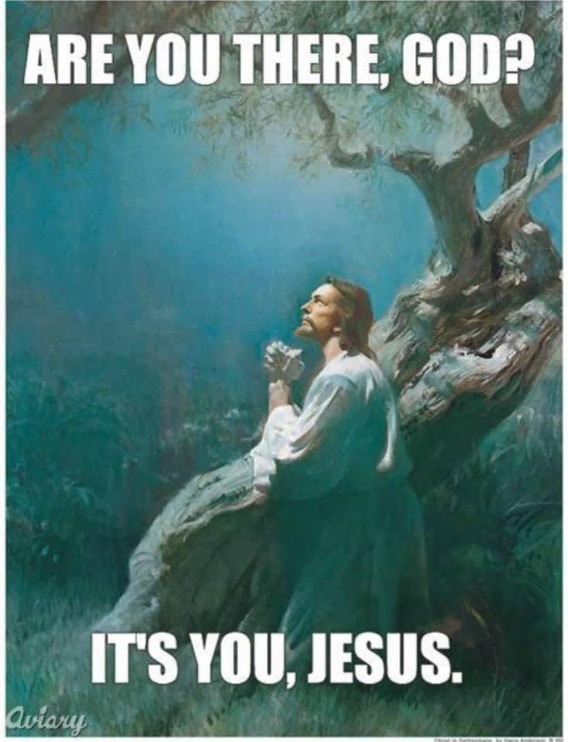
Father Jesus its me you, if you me are willing can I you remove this cup from you me. Nevertheless, not my your will but mine yours be done.
Of course, the Triune-Godhead shares one will since it has one nature. If the Triune Godhead possessed three wills we would be tri-theists.
Vinnie
1 Like
Your argument is really peculiar and interesting, because you are not arguing that Roman primacy is false, you are instead arguing that, given the conceptual world of Second-Temple Judaism (where divine Wisdom, Word, and Spirit functioned as differentiated expressions of God’s activity ) ecclesial authority need not culminate in a single centralized form in order to preserve unity.
That is a very interesting claim, but we should be careful and see if it really holds up. In Second-Temple Judaism, the plurality you describe operated at the level of divine agency, that is, how the one God acts and is spoken of.
But those differentiated expressions (Wisdom, Word, Shekhinah) did not constitute parallel covenantal authorities within Israel.They were not alternative centers of governance, nor competing mediations of communal order. They were theological ways of articulating God’s presence and action. So the move from “plurality of divine self-expression” to “plurality of ecclesial authority structures” is not automatic.The question is not whether unity can coexist with plurality in the life of God — clearly it can. The question is whether the historical mediation of unity within a covenantal community can dispense with a visible principle of coherence.
Even within the Jewish world you reference, theological richness coexisted with identifiable structures of covenantal authority. The plurality of divine imagery did not translate into decentralized communal governance. So your argument establishes conceptual possibility, but it does not yet demonstrate that centralized ecclesial authority lacks theological rationale.
The issue, then, is not inevitability in a deterministic sense. It is whether the historical development toward visible centers of unity reflects a theological instinct intrinsic to covenantal life rather than merely one option among many.
And personally I think it may not be simply one option among many.In the biblical tradition, in fact, covenantal life is never purely abstract or diffused. God’s self-revelation certainly transcends structures, but His covenantal dealings with His people are consistently embodied, visible, and concrete.
In Israel, divine presence could be described through rich and varied imagery yet covenantal unity was always anchored in identifiable realities: one Torah, one covenant, one sanctuary, one priesthood. The theological imagination was expansive, but covenantal life was not structurally indeterminate.
That pattern continues, and intensifies, in Christianity. The Incarnation itself is radically concrete. God does not save through dispersed symbolic expressions alone; He saves through a single historical body, a single cross, a single resurrection. The Church is not merely a network of spiritual insight but the Body of Christ, visible, sacramental, historically continuous.
And here, in my opinion, the Eucharist becomes truly decisive.In First Epistle to the Corinthians 10:16–17, Paul writes: “The cup of blessing that we bless, is it not a participation (koinonia) in the blood of Christ? … Because there is one bread, we who are many are one body.”
The unity of the Church is not merely psychological or moral. It is sacramental. It flows from participation in one and the same Body.
Likewise, in Gospel of John 6:53, Christ declares: “Unless you eat the flesh of the Son of Man and drink his blood, you have no life in you.”If this is taken seriously, as both Catholic and Orthodox traditions do, then the Eucharist is constitutive of ecclesial existence.
The Church exists as Eucharistic communion.As the Orthodox theologian John Zizioulas argues in Being as Communion (St. Vladimir’s Seminary Press, 1985), especially pp. 141–168, the Church’s very being is realized in the Eucharistic assembly presided over by the bishop. The Church is not an invisible network; it is a concrete Eucharistic event.
Similarly, in Catholic theology, the Second Vatican Council in Lumen Gentium §11 calls the Eucharist “the source and summit of the Christian life.” Henri de Lubac, in Corpus Mysticum (Notre Dame, 2006 English ed., pp. 88–115), demonstrates how, in the patristic tradition, the Eucharist “makes the Church.” If that is so, then unity is not merely conceptual agreement. It is sacramental participation. And if sacramental participation defines the Church’s very being, then its integrity must be safeguarded.
This brings us back to the earlier question: If the Church is the continuation of Christ’s incarnate presence in history, can a body remain visibly one without a visible principle of unity?
This is not about centralization for its own sake. It is about sacramental coherence. A community bound by shared Eucharistic life and apostolic confession will inevitably confront disputes about doctrine, validity, and communion. When such disputes arise, the community must either appeal to a recognizable principle of unity or risk fragmentation at the very level of its sacramental life.
History shows that early Christians sensed this instinctively. The move toward identifiable centers of communion was not merely political consolidation; it reflected an awareness that visible Eucharistic unity requires visible reference. In that sense, the emergence of a central principle of unity is not arbitrary. It arises from the logic of covenantal embodiment: if grace is mediated through visible means (Word, Sacrament, apostolic ministry) then unity also requires a visible mode of preservation.
The Eucharist also carries an eschatological dimension. In Second Epistle to the Thessalonians 2:6–7, Paul speaks of “what restrains” (katéchon) the full manifestation of lawlessness, which will be embodied in a man, in the end times. Throughout Christian history, interpretations of the katechon have varied — from the Roman Empire (as in Tertullian and John Chrysostom) to broader notions of divinely instituted order.
While neither Catholic nor Orthodox theology dogmatically identifies the Eucharist as the katechon (even if it is the opinion of many theologians and also mine that the Eucharist is indeed the Katechon) both traditions affirm that the Eucharist is the real, sacramental presence of the risen Christ in history.
As Alexander Schmemann writes in The Eucharist: Sacrament of the Kingdom (St. Vladimir’s Seminary Press, 1987, pp. 26–40), the Divine Liturgy is not merely remembrance but the actual manifestation of the Kingdom within time. Likewise, Joseph Ratzinger (later Pope Benedict XVI), in Eschatology: Death and Eternal Life (CUA Press, 1988 English ed., pp. 186–192), reflects on the Church’s role as the historical bearer of Christ’s presence in the world.
If the Antichrist represents, as First Epistle of John 4:3 suggests, the denial of the Incarnation, then the Eucharist, as the sacramental prolongation of the Incarnation, stands as its theological opposite. In that sense, one may coherently argue that as long as the Eucharist is celebrated, Christ remains truly present in history. And as long as Christ remains sacramentally present, the full collapse into apostasy is restrained.
Thus, the question is not whether decentralized models are logically conceivable. They are. The question is whether they are equally stable within a covenantal, sacramental, incarnational framework, especially one in which the Eucharist is constitutive, not optional.
If unity is purely spiritual and invisible, then structural plurality poses no problem. But if unity is sacramental and embodied, which I definitely argue it is, if it flows from participation in one Eucharistic Body, then some visible principle of cohesion appears less like an optional arrangement and more like a theological necessity flowing from the very nature of the Church.
1 Like
And regarding the Eucharist the real issue is whether an understanding of the Eucharist as primarily symbolic or commemorative can:
-
Sustain the ontological weight attributed to it in the New Testament,
-
Align with the consensus of the early Church,
-
Coherently function as the constitutive principle of ecclesial unity.
If it cannot, then such an interpretation represents not merely a theological option, but a substantive departure from early Christian faith, imho. In First Epistle to the Corinthians 10:16 Paul writes, as I noted above: “The cup of blessing that we bless, is it not a participation (koinonia) in the blood of Christ?”
The term koinonia indicates real sharing, not mere mental recollection. In First Epistle to the Corinthians 11:27–29, Paul warns: “Whoever eats and drinks without discerning the body eats and drinks judgment upon himself.” The severity of this warning presupposes an objective reality. One cannot incur guilt against a metaphor. Similarly, in Gospel of John 6:53–56, Jesus speaks in starkly literal terms: “My flesh is true food, and my blood is true drink.” While Protestant exegesis often interprets this spiritually, the historical reception of this passage in early Christianity is…well…overwhelmingly realist.
Ignatius of Antioch writes in Letter to the Smyrnaeans 7: (They abstain from the Eucharist because they do not confess that the Eucharist is the flesh of our Savior Jesus Christ.”He identifies denial of Eucharistic realism with heresy (specifically Docetism).This is extraordinarily early, within living memory of the apostles. A purely symbolic reading is absent.
Justin Martyr writes in First Apology 66: “We do not receive these as common bread and common drink… but as Jesus Christ our Savior being incarnate.” This is not metaphorical devotional language. It is ontological.
Irenaeus of Lyons in Against Heresies IV.18.5: “The bread, having received the invocation of God, is no longer common bread, but Eucharist.”For Irenaeus, Eucharistic realism is tied to the doctrine of the Incarnation itself. Denial of one undermines the other.
Cyril of Jerusalem in Mystagogical Catecheses 4.3: “Do not regard the bread and wine as simply that; for they are, according to the Master’s declaration, the body and blood of Christ.”
Across East and West, from Syria to Rome to North Africa, the language is consistent. There is no evidence of a widespread purely symbolic interpretation in the first millennium.
Even non-Catholic scholars acknowledge the strength of early Eucharistic realism.
J.N.D. Kelly, in Early Christian Doctrines (5th ed., 1977, pp. 440–443), affirms that the early Church universally held a realistic understanding of the Eucharist.
The Anglican scholar J.B. Lightfoot, in his commentary on Ignatius (The Apostolic Fathers, Part II, Vol. II, 1889), notes that Ignatius’ Eucharistic language presupposes a real identification, not metaphor.
The consensus of patristic scholarship is clear: memorialism does not represent the dominant early Christian view.
And this is where the real crux of the matter is, because If the Eucharist is primarily symbolic: It expresses unity; It does not constitute unity; It does not require ontological continuity of ministry; It does not require apostolic succession.
But if the Eucharist is truly the Body and Blood of Christ: It is the Church’s ontological center; Its validity matters; Its integrity matters; Its communion defines ecclesial boundaries. A purely symbolic interpretation removes the Eucharist from the center of ecclesial ontology and relocates unity into shared belief alone. That model may function sociologically, sure, but it does not reflect patristic sacramental realism. The early Church did not treat the Eucharist as optional symbolism. It treated it as the decisive locus of Christ’s continued presence. And that difference changes everything, absolutely everything, in my opinion.
And like I said i’m also of the opinion that the Eucharist is the Katéchon as I have argued here Doubt & Faith - Evolution, Afterlife & History - #146 by 1Cor15.54 nearly a month ago.
1 Like
It’s 2:25 AM here but there is no way I can sleep and I feel inspired so I decided to write on the identity of the man of lawlessness and the structure of his kingdom although this will include some personal speculations.
In Second Epistle to the Thessalonians 2:3–4, Paul describes the man of lawlessness as the one “who opposes and exalts himself against every so-called god… so that he takes his seat in the temple of God.”
In Book of Revelation 13:7, the Beast “was allowed to make war on the saints and to conquer them.”
The early Church consistently identified these figures as the same eschatological person.
Irenaeus of Lyons, Against Heresies V.25–30 (ANF Vol. 1, pp. 553–560), treats the Beast and Paul’s “man of lawlessness” as one final Antichrist.
Hippolytus of Rome, On Christ and Antichrist §§6–15 (ANF Vol. 5, pp. 204–209), likewise describes a future tyrant who arises at the end of history.
Thus, the Beast is not merely symbolic of evil systems. He is a literal embodiment of anti-divine forces.
I’m aware that It is often argued that the Beast refers to Nero because of the number 666, yet, while Nero may function as a historical prototype, I argue that he absolutely cannot exhaust the prophecy.
Iraeneus (AH V.30.3, ANF Vol. 1, p. 559) speaks of the Beast as someone who “shall come”, writing over a century after Nero’s death. Revelation 13:7 describes authority over “every tribe and people and language and nation.”G.K. Beale (The Book of Revelation, Eerdmans, 1999, p. 702) argues that this universal language far transcends localized Roman persecution. George Eldon Ladd (A Commentary on the Revelation of John, Eerdmans, 1972, p. 188) similarly states that Roman emperors form the background, but the Beast represents an ultimate eschatological manifestation.
In Second Epistle to the Thessalonians 2:8, the man of lawlessness is destroyed at Christ’s coming: Nero’s death did not coincide with the Parousia.
Augustine, City of God XX.19 (Penguin, 2003, p. 930), places the Antichrist immediately before final judgment. Thus, Nero is prototypical, not definitive.
If we take seriously the portrait given in Book of Revelation 13 and Second Epistle to the Thessalonians 2, the reign of the Beast is not merely political domination. It is a totalizing reordering of human society under a counterfeit sovereignty.
The Beast’s rule has depth, not just scale. As already noted, Revelation 13:7 describes authority “over every tribe and people and language and nation.”
This suggests not merely influence, but coordinated jurisdiction.
His reign would likely exhibit:
- Centralized executive authority
- Weakening or absorption of national sovereignties
- Emergency-based legal consolidation
- Permanent states of exception
Historically, concentrated power often emerges during crisis. Political theory confirms that prolonged emergency conditions enable extraordinary authority to become normalized. Thus, the Beast’s regime will likely arise not as sudden tyranny, but as:
- A stabilizing response to global disorder
- A solution to fragmentation
- A guarantor of peace
Initially, it will probably appear necessary. Revelation 13:3 notes that “all the world marveled and followed the Beast.” His rule is not imposed at first by terror alone, but by admiration. His legitimacy will be psychological before it becomes coercive.
Revelation 13:16–17 also introduces economic control: “So that no one can buy or sell unless he has the mark.” This implies that economic participation becomes conditional.
The Beast’s reign will therefore include:
- Integrated financial systems
- Conditional access to commerce
- Compliance-based economic inclusion
- Exclusion as punishment
In a digitally integrated world, such control is technically conceivable in ways unprecedented in earlier history.
But the deeper point is theological: economic life becomes a tool of spiritual conformity. The most defining feature of his reign will not be economics or geopolitics: it will be worship.
Revelation 13:15 states that those who refuse to worship the image of the Beast are killed.This is crucial.The Beast will not simply demand obedience, He will demand sacralized allegiance.
The Beast’s reign will also reshape moral language. Revelation 13:4 says people will ask: “Who is like the Beast, and who can fight against it?”
This indicates:
- Awe
- Fatalism
- Moral resignation
Under such a regime conformity becomes virtue, dissent becomes treason, martyrdom becomes irrational extremism The “war against the saints” (Rev 13:7) will likely unfold in stages: first marginalization, then legal restriction, then economic exclusion, criminalization and finally violent suppression.
The saints are “conquered” in the sense that their institutions apparently collapse, their public presence disappears, their sacramental life is driven underground But Revelation 12:11 clarifies that their spiritual fidelity remains intact.
If Daniel 8:11’s abolition of sacrifice is connected to the Antichrist (as Irenaeus of Lyons interprets in Against HeresiesV.25.2), then the suppression of Eucharistic worship becomes central.
Under such a regime public liturgy will be outlawed, priestly ministry will be criminalized, Sacramental assembly will be treated as subversive. Why? Well…because the Eucharist is a proclamation of Christ’s kingship, a visible transnational communion, an act of ultimate allegiance, and a totalizing regime cannot tolerate a community whose primary loyalty is not directed to it.
Despite its totalizing character, Revelation makes clear that the Beast’s authority is “allowed” (13:7). It is derivative, not ultimate, and his ultimate destruction will be brought with Christ’s return (2 Thess 2:8; Rev 19).
Theologically, his kingdom is a parody:
- A false incarnation (man claiming to be God)
- A false kingdom
- A false peace
- A false communion
Where Christ reigns through sacrifice, the Beast will reign through coercion; where Christ gathers worship freely, the Beast will enforce it.
Yet it will remain provisional, because its power would not arise from divine life, but from permitted rebellion. The Lamb will prevail.
Rev 17:8: “The beast that you saw was, and is not, and will ascend out of the bottomless pit and go to perdition”
Rev 15:2: “And I saw what looked like a sea of glassglowing with fire and, standing beside the sea, those who had been victorious over the beast and its image and over the number of its name.They held harps given them by God”
Daniel 8:25: “By his cunning he shall make deceit prosper under his hand, and in his own mind he shall become great. Without warning he shall destroy many. And he shall even rise up against the Prince of princes, and he shall be broken, but by no human hand.”
- That’s a meaty response.
- One clarification from my side: in the Jewish theological environment I was referring to, Hokmah (Wisdom), the devar-YHWH (“the Word of the LORD,” by which God creates; cf. Psalm 33:6), and the Shekhinah (the perceivable glory and presence of God) were understood as distinct modes or agents of Yahweh’s activity while still referring to the same one God. They were not rival authorities, of course, but differentiated ways of speaking about how the one God acts and is present.
- My point was simply that this conceptual world already allowed for plural expressions of divine mediation without compromising unity, which is why I hesitate to treat a single centralized institutional form as the inevitable endpoint of Christian development.
3 Likes
You’re absolutely right that Hokmah, the Word, and the Shekhinah were not rival authorities but differentiated expressions of the one God’s activity, I fully agree, but that actually reinforces the distinction I was trying to make: those plural mediations operated at the level of divine self-expression, not at the level of covenantal governance; they did not generate parallel structures of authority within Israel; the Temple remained one; the priesthood remained one; the covenantal center remained concrete and identifiable. So the conceptual room for plural divine mediation does not automatically translate into structural pluralism in covenantal authority.
The question, then, is not whether plurality is compatible with unity, because it clearly is. The question is whether covenantal unity, especially in an incarnational and sacramental framework, can remain stable without some visible principle of coherence.