C.S. Lewis' argument from desire

I wouldn’t call those desires but rather symptoms of a desire. I think I explained the difference in an earlier post. The desire here would be for a world ‘greater’ than the mundane existence we know.

Yeah – I always reacted to the whole “unmoved mover” and other “proofs” with, “So?” I couldn’t see that it proved anything more than an impersonal force that had an urge to create, and entity even less than that of the Deist.

1 Like

And that’s different from the wish for a specific food, although we do get cravings for particular foods; for example while I’ve been fighting this viral bronchitis I’ve had an intense craving for ripe berries along with one for milk.

And that’s an important distinction. Lewis’ version may convince some people, but as it isn’t a solid proof, if used it should be introduced as something that made you stop and think, or that many found it convincing, not as a proof.

For more than a couple of years now, maybe since before retirement, my desire has been for what is true and right; this drives me to take the text of the scriptures more seriously right down to the particulars than even how I approached any ancient text in grad school. My conviction is that since the Holy Spirit is the prime mover behind the scriptures and has His imprimatur via canonization then each clause and even each word has to be taken seriously as what He approved and wants us to rely on. I thus reject any claims to some “overall intent” argument that dismisses the particulars – though I also reject it as false because the particulars are what carry the meaning of passages in the first place.

2 Likes

Or more so!

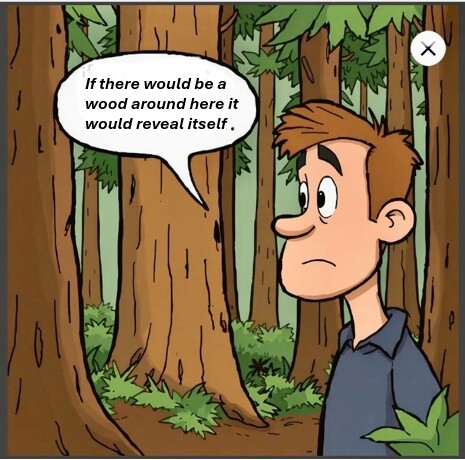
A guy at a university next to where I was in St. Louis committed suicide by jumping from a bridge. The note he left said he thought it more likely that there really was a Narnia than that he could ever be happy.

E.g. the Tanakh’s Yahweh and Islam’s Allah: there is no way that both can even exist, let alone be the same deity.

One summer at a conference/campout we were taking turns reading from Lewis during breaks, and when that paragraph was read there was a substantial period of silence as we digested it.

2 Likes

Found a small beetle in the sand at the beach

2 Likes

This topic was automatically closed 6 days after the last reply. New replies are no longer allowed.

Posted accidentally before finished. Sorry.

I want to return to the OP and the heart of the “argument.”

You’ve worked hard, @Vinnie, to support this strategy as well as Christian thinkers who have proposed it in an attempt to explain that there is reason to believe that God has made us for his purposes. I am not a logician, philosopher or apologist; so I won’t speak about the topic as they do. I am, however, a Christian. Yet, I find the attempt to use human desires an inadequate argument for faith outside of faith.

I think, most simply, it relies on unprovable contingencies, too many “If-then” statements. In the end, we are left with no more than If-Then.

It relies on fuzzy definitions or concepts – particularly “religious desires” or even “desires.” There are many things that could be classified as “religious desires” which Christians would see as such, but which can be seen in other ways as well. They can indicate a great many things

It relies on theological assumptions and explanations, when others are adequate.

As I’ve seen discussed here, it demands a system of classification of desires in order to negate valid objections to what is stated. This feels like the rules of the game are being defined as we go in order to benefit the house.

You asked about benefit of the doubt. I think this might matter most and beyond the scope of the discussion of Lewis’ argument from desire. If an apologetic argument is intended to provide a convincing explanation or defense of the faith, it needs to do that without the benefit of the doubt. Allowing someone to make their argument is one thing. Requiring the hearer to give the benefit of the doubt is another. If the hearer is unconvinced, or sees and identifies all sorts of logical problems, why keep hammering on defending the argument? The argument is not the point.

Moving even farther from Lewis’ argument, and to the topic of the related thread (Is apologetics (often) a waste of time), I want to address what is for me a serious problem with argument-focused apologetics. As I see them here and elsewhere, eventually they focus on the argument, logic, strategy, rules of argumentation. In doing that, I find that rather than building faith, they build resistance to faith.

I see this in myself, and I see it in the threads as well. I’ve experienced it with formal apologetic arguments I’ve heard from other christians and even from elders at church. When I am confronted with a statement like the OP, which logically tastes off to me, I immediately start trying to understand why. Even if I can’t articulate in formal terms of logic, I can understand for myself, what the problem is.

By the end of the process, there is one less reason to believe.

3 Likes

I have to look up the reference, but I have gone through a study which quotes Alister McGrath to say that he did not think CS Lewis really meant that argument as an apologetic, and that he recognized it was not powerful as such.

In medicine, one sees a lot of unhealthy or benign, and sometimes even beneficial, delusions.

They fulfil desires for solutions, security, and many other impulses.

I would love to study a year or two in this area and other branches of psych . There is so much I do not know

1 Like

Divine hiddeness is a problem of desire, the desire that God has to do as I say. He either provides me with the evidence good enough for me to accept - or he doesn’t love me which means that an all loving God does not exist. :slight_smile:

The original sin all over again – wanting to set the terms rather than let anyone else do it.

“God shouldn’t hide Himself.”
“Why not?”
“Well, He wants me to believe in Him, right?”
“Maybe He doesn’t want the you that would only believe on your terms.”

2 Likes