Yes. Analogies have pedagogical value to use the familiar to gain a toehold of understanding of new concepts. But is best not to stop there. The deeper value of analogies is in coming to appreciate exactly where and why they ultimately fail. If something is like something, appreciating where they are different yields greater insight. After all, nothing is so like a thing as the thing itself, so eventually the discussion must progress from analogy to the particulars and details of the actual subject under discussion.
20 minutes or so, though I could probably have done it quicker if I hadn’t been writing the steps down and organising them readably.
Of course. I partly worked backwards. That’s why I finished with ‘antidisestablishmantarianism’ and not ‘contrafibularities’ or ‘honorificabilitudinitatibus’. It doesn’t matter, since either would have been just as good from an ‘evolutionary’ p.o.v., as would many many others. Because:
False. Evolutions doesn’t have to construct a particular complex system, only one of the myriads of useful ones. Setting a specific goal makes it harder than evolution has to manage.
I didn’t have billions of years or vigintillions of options or quadrillions of chances or the freedom to accept any good enough result. Evolution has all of those
It wouldn’t have mattered since your challenge is largely irrelevant to biological evolution.
It didn’t.
Nature most certainly does have the ability to generate and gather together biological components.
It might have been interesting if the changes had been random rather than ones you selected. I am sure the end result would have been the same but it might have reflected better your larger timescale. Not only that, it would have created tangents that were irrelevant.
Perhaps that is because you are not interested in what I was trying to demonstrate
By going backwards you basically cheated. it meant you knew where to aim for, not only the finish but stages before it. Only going forward would have been mentally more challenging because you would have had to envisage what words were needed nearer the end,
So the reason you think it is not relevant is because you were not imitating evolution at all. You were solving the problem.
IOW you were not attempting to let the analogy work, you were only interested in showing that it didn’t and that you could beat it.
Unfortunately for analogies to work they need to strike a chord or two. You are not interested in me doing that, so, unless you come down from your high horse, we cannot engage.
With any luck, just the exchanges we have has will make some who are less blinkered think. I do not care whether they come down on the side of ToE or not, as long as they are thought about rather than indoctrinated
Richard
T_aquaticus
(The Friendly Neighborhood Atheist)
25
You also cheated by requiring a specific outcome. That’s not how evolution works because it is not a process that is aiming for a specific outcome. It only produces the outcomes that are found through random changes (scientifically speaking) passed through selection.
So a better analogy would be to start with a small seed word, apply random changes (substitutions, additions, deletions), select based on the presence of the letter combinations in a dictionary, and repeat for many, many rounds.
There are 20 standard amino acids (before additional chemical modification, etc.) Thus, the probability of getting any particular string of 8 amino acids randomly is (1/20)^8, or about 1 in 4*10^-11 (one in 400 billion). But the chance of getting a string of 8 amino acids if you attach amino acids randomly is 100%. You get a sequence. Within the cytochrome oxidase 1 gene for most freshwater mussels, the one-letter abbreviations for amino acids spells out GAINFIST. But how many possibly meaningful 8-letter sequences exist?
Evolution does not have an intrinsic, “scientific” goal. As Genesis 1 emphasizes, natural processes are merely how God runs the universe. They aren’t gods with their own goals. Of course, God can be working towards a goal through evolution, but I need to study God, not evolution, to figure that out [apart from the somewhat tautological conclusion of “here’s what things are like, therefore that must have been part of God’s goal”. Natural (and other) selection checks if the genetic directions in an organism work for it to survive and reproduce, not whether it is approaching a specific target. Lamarck was wrong to think that evolution is working to “advance” organisms. All evolution asks is “did it work?” No knowledge of a goal is necessary.
T_aquaticus
(The Friendly Neighborhood Atheist)
31
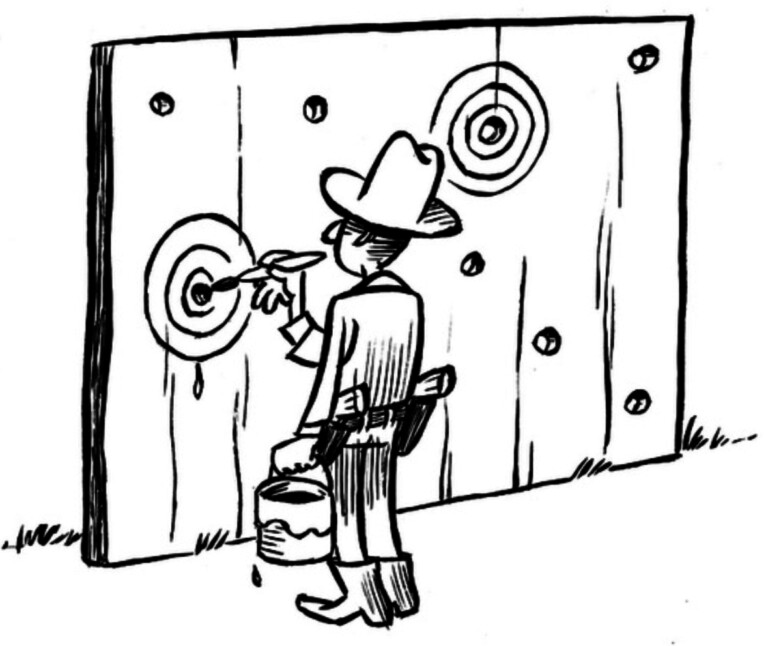
No, they are an outcome. If you had predicted their emergence before they emerged then you may have an argument to stand on, but that isn’t what happened. You are painting the bullseye around the bullet hole.
The essential outcomes for life to persist are 1) gain energy, and 2) reproduce. How those outcomes are met are not specific, but can be satisfied in alternate ways with various degrees of constraint, which is why there is such diversity in nature. On Earth, there has been a succession of distinct species which have filled the same ecological niches.
From a friendly theist (but not in your Neiborhood), I am trying to show that there are many sides to this debate(s) put under the banner of ‘biological evolution’. I do not want to get into ways some entities may be arranged, as an even greater improbability is introduced when we include the need for optically pure isomers that make up the combinations discussed .. indeed, an impossible challenge. The interplay between molecular handedness and system-level complexity remains a vibrant frontier at the crossroads of chemistry, biology, and philosophy.
Perhaps you could explain how you think it is possible to imitate evolution without a population.
Do you think individuals evolve?
(I’m reminded of an incident where Walter Remine was criticising the performance of an evolutionary algorithm - probably a ‘weasel’ one - and some-one noticed he’d inadvertently set the population to be just 5. Merriment ensued.)
As far as I know procreation, where evolution happens, involves two creatures. Herd dynamics do not come into it.
How are you going to merge more than two genomes in one go?
At its start, it is a change in the genome to create different characteristics. Small steps. A deviation or jumbling of the DNA.
When does this change occur?
When the zygote is formed.
How is the Zygoet formed?
By combiing an egg and a sperm.
When is this done?
By the copulation of two creatures.
All the res of Evolution is Natural or other selection and duplicatin or not.
YOU ARE BOTH WRONG!
You cannot change basic procreation to suit your need to combine more than one feature together to make an IC.
Therefor @Roy IF I had stipulated that the las change before the final result had to be two words, would you have still been able to complete it?
And the previous step no more than 4 words?
How about if I had stipulated that you cannot juggle letters willy nilly? Does DNA completely jumble or are there consistent sequences?
It would seem that you do not fully integrate all of the natural processes together before making your assertions (as I have always claimed) You ignore basic procreation, basic physiology, complex ecology, the fact that not all creatures live in groups (herd dynamics). Some creature mate for life so theer can only ever be a combination of two genomes in that line of creatures. Inbreeding cause its own anomalies. A herd does no gather together to make one offspring it is still the combination of two of them.
You do not think things through. Yiu just make grandios assertions and Iam ignorant and
You look up sex! It is so basic even you must know what it is!
Richard




 The interplay between molecular handedness and system-level complexity remains a vibrant frontier at the crossroads of chemistry, biology, and philosophy.
